
UKGC enforcement actions: how gambling fines and licence decisions work
The UKGC publishes gambling enforcement actions when operators breach their licence conditions. This page collects every recorded action, classifies each by action type, and scores severity on a consistent 1-5 scale. Understanding what enforcement means and what patterns it reveals is the foundation of how Saferwager rates operator safety.
Filter Enforcement Actions
Enforcement Statistics
Enforcement Actions List
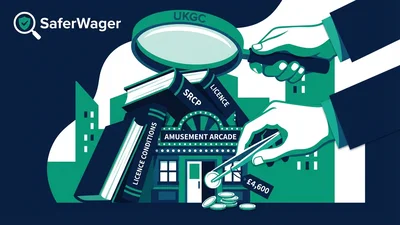
David Llyn Thomas & Mehmet Emin Serin
Moderate Financial PenaltyFollowing an investigation, the Gambling Commission found that David Llyn Thomas and Mehmet Emin Serin breached Licence Condition 15.3.1 and failed to comply with several Social Responsibility Code...
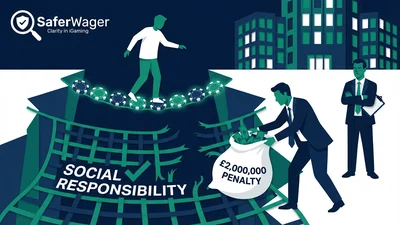
Betfair Casino Limited
Significant Regulatory SettlementA licence review following a compliance assessment found failings in the operator's Social Responsibility (SR) controls, specifically regarding remote customer interaction. As part of a regulatory ...
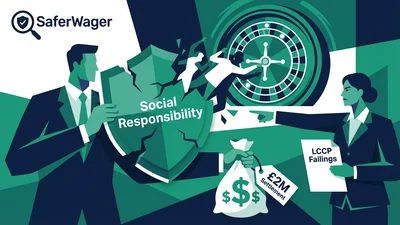
TSE Malta LP
Significant Regulatory SettlementFollowing a compliance assessment, TSE Malta LP and three other related licensees were found to have failings in their Social Responsibility controls, specifically regarding remote customer interac...
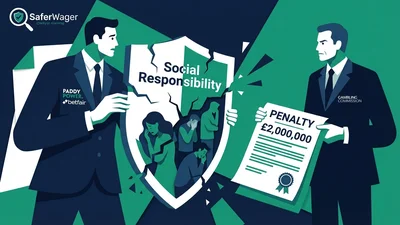
PPB Entertainment Limited
Significant Regulatory SettlementFollowing a compliance assessment, PPB Entertainment Limited and related licensees (trading as Paddy Power Betfair) were found to have failings in their social responsibility controls. The licensee...
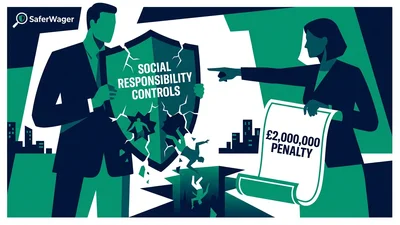
PPB Counterparty Services Limited
Significant Regulatory SettlementFollowing a compliance assessment, the Gambling Commission found social responsibility failings across four licensees trading as Paddy Power and Betfair. The licensees, including PPB Counterparty S...
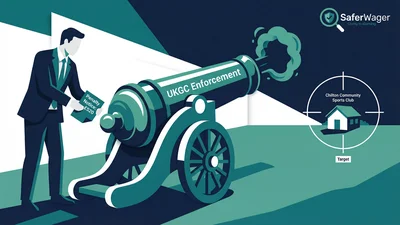
Chilton Community Sports And Social Club Limited
Moderate Financial PenaltyFollowing an investigation, the Gambling Commission found that Chilton Community Sports And Social Club Limited breached Licence condition 15.3.1 concerning general and regulatory returns. As a res...

Biddle Jack Robert
Critical License RevocationThe Commission revoked Mr. Jack Robert Biddle's Personal Functional Licence following a review. The decision was based on concerns about his suitability, competence, and integrity following gross m...
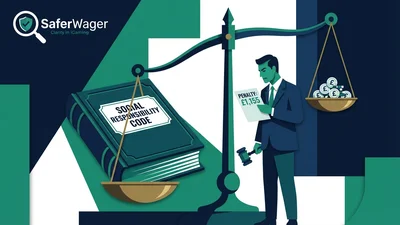
J And J Norman LLP
Moderate Financial PenaltyFollowing an investigation, the Gambling Commission found that J & J Norman LLP failed to comply with Social Responsibility Code Provision 3.5.1. As a result of these failings, the Commission impos...
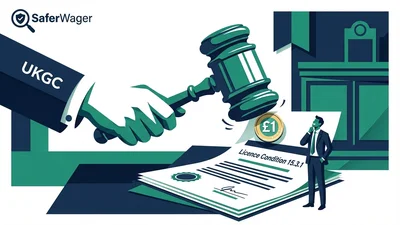
Sportito SRL
Moderate Financial PenaltyFollowing an investigation, the Gambling Commission found that Sportito SRL breached Licence Condition 15.3.1 concerning general and regulatory returns. Consequently, the Commission imposed a finan...
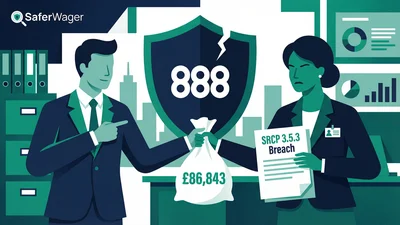
888 UK Limited
Moderate Financial PenaltyFollowing a self-reported investigation, 888 UK Limited was found to have breached Social Responsibility Code Provision 3.5.3 related to self-exclusion. The failure was attributed to human error an...
Deeside Bookmakers Limited
Moderate Financial PenaltyFollowing an investigation, the Gambling Commission found that Deeside Bookmakers Ltd breached Licence condition 15.3.1 regarding general and regulatory returns. As a result, the Commission imposed...
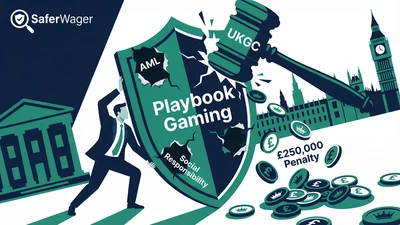
Playbook Gaming Limited
Moderate Financial PenaltyFollowing a review, Playbook Gaming Limited was found to have breached licence conditions related to anti-money laundering, customer interaction, and customer identification between August 2023 and...
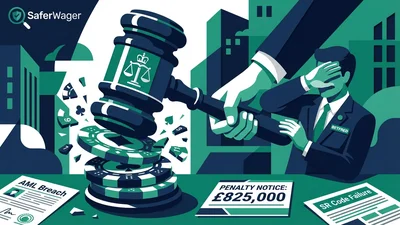
Done Brothers (Cash Betting) Limited
Significant Financial PenaltyDone Brothers (Cash Betting) Limited, trading as Betfred, was found to have breached anti-money laundering and social responsibility code provisions between May 2024 and March 2025. Consequently, t...
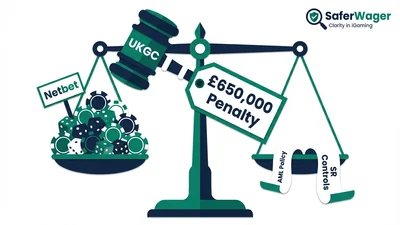
Netbet Enterprises Limited
Significant Regulatory SettlementA regulatory review found failings in Netbet Enterprises Limited’s Anti-Money Laundering (AML) and Social Responsibility (SR) controls between October 2023 and July 2024. The operator failed to c...
Kevins Cloth Emporium Limited
Moderate Financial PenaltyFollowing an investigation, the Gambling Commission found Kevins Cloth Emporium Limited breached Licence condition 15.3.1 regarding general and regulatory returns. As a result, the Commission impos...

Videoslots Limited
Significant Financial PenaltyThe Commission found that Videoslots Limited breached anti-money laundering and social responsibility code provisions between October 2023 and February 2024. As a result, the operator was issued a ...
Fire Brigades Union
Moderate Financial PenaltyFollowing an investigation, the Gambling Commission found that Fire Brigades Union breached Licence condition 15.3.1 concerning general and regulatory returns. Consequently, the Commission imposed ...
Webmedia Development N.V.
Moderate Financial PenaltyFollowing an investigation, the Gambling Commission found that Webmedia Development N.V. breached Licence condition 15.3.1 concerning general and regulatory returns. As a result, the Commission imp...
Stay on Course Ltd
Moderate Financial PenaltyFollowing an investigation, the Gambling Commission found that Stay on Course Ltd breached Licence condition 15.3.1 concerning general and regulatory returns. Consequently, the Commission imposed a...
Platinum Gaming Limited
Critical Financial PenaltyPlatinum Gaming Limited was found to have breached anti-money laundering and social responsibility code provisions between January 2023 and May 2024. As a result, the Commission imposed a £10,000,...
What UKGC enforcement action means
UKGC enforcement action is a formal regulatory process. It isn't a criminal prosecution, and it doesn't work like a court case. When the UKGC investigates an operator, it's exercising powers granted under the Gambling Act 2005 to hold licence holders accountable for how they run their operations.
Investigations can start in several ways. The UKGC conducts thematic reviews across sectors, responds to patterns in consumer complaints, and acts on whistleblower disclosures. An operator can also self-report a failure, which may influence how the case is handled but doesn't remove the possibility of formal action.
When the UKGC investigates an operator
Not every UKGC contact with an operator becomes a public enforcement action. The regulator can engage informally, issue guidance, or raise concerns without proceeding to formal sanction. A public enforcement action means the UKGC found evidence of a licence condition breach serious enough to record and publish.
The conditions in scope come from the Licence Conditions and Codes of Practice, known as the LCCP. The LCCP covers how operators run their anti-money laundering controls, how they identify and interact with customers showing signs of gambling harm, and how they present terms and promotions. Most enforcement actions trace back to failures in one of these areas.
The difference between regulatory and criminal proceedings
This distinction matters. A UKGC enforcement action doesn't result in a criminal conviction. The regulator can impose financial penalties, suspend or revoke a licence, or issue a formal warning, but it can't imprison individuals or pursue criminal prosecution directly. Where evidence of criminal conduct exists, the UKGC can refer cases to law enforcement agencies. That referral is separate from the regulatory action itself.
The practical effect for consumers is that an operator facing enforcement action will usually continue to trade unless its licence is suspended or revoked. A fine, however large the headline figure, leaves the operator active in the market.
What licence conditions are in scope
- Social responsibility conditions
- Operators must have systems to identify customers at risk of gambling harm, interact with them appropriately, and apply protections such as deposit limits and time-outs. Failures here are the most frequently cited category in UKGC enforcement.
- Anti-money laundering conditions
- Operators must apply controls to detect and report suspicious financial activity, including source-of-funds checks on high-spending customers. AML deficiencies are the second most common violation category.
- Fair and transparent terms
- Operators must ensure their bonus terms, withdrawal conditions, and marketing claims are clear and not misleading. This category has been the focus of specific UKGC thematic reviews in recent years.
- Management and governance
- Operators must maintain accurate records, report material changes, and ensure their key personnel meet fit-and-proper requirements. Governance failures often appear alongside AML or social responsibility breaches rather than in isolation.
The four types of enforcement action
Not all enforcement actions carry the same weight. The UKGC has four distinct tools available, and they differ in what they signal and what consequences follow. Reading enforcement records without understanding those differences produces a misleading picture of an operator's compliance history.
| Action type | Effect on licence | Typical application | Reversible? |
|---|---|---|---|
| Licence revocation | Permanent removal of licence | Repeated serious breaches, fundamental failure of fit-and-proper, criminal referral | No — requires a new application |
| Licence suspension | Temporary restriction, operator can't trade | Serious breach where remediation is possible; pending investigation outcome | Yes — conditional on completing required remediation steps |
| Formal warning | No change to licence status | Isolated or less serious breach where the operator has taken corrective steps | N/A — licence remains active |
| Financial penalty / regulatory settlement | No change to licence status | Breach where harm or loss is established; settlement under Section 117 of the Gambling Act 2005 | N/A — licence remains active |
Licence revocation and suspension
Revocation is the most serious outcome the UKGC can impose. It's rare, and it's reserved for operators where the regulator has concluded that continued licensing can't be justified. Suspension sits below revocation on the severity scale. It's a conditional restriction, meaning the operator is prevented from trading until it meets specific requirements set by the UKGC. Suspension often precedes a final decision on whether revocation follows.
Formal warnings and requirements
A formal warning is a regulatory rebuke. It records that a breach occurred, but the operator keeps its licence and can continue operating. Warnings are often paired with requirements, meaning specific steps the operator must take within a defined period. Failing to meet those requirements can escalate the matter to a more serious action.
Financial penalties and regulatory settlements
A financial penalty is imposed directly by the UKGC following formal proceedings. A regulatory settlement under Section 117 of the Gambling Act 2005 is different. It's a negotiated outcome that typically includes a payment in lieu of penalty, agreement to remediation steps, and a payment directed to a UKGC-approved third party rather than to the regulator itself. Settlements don't require a formal finding that the operator is guilty of the breach. That distinction matters when you're reading enforcement records, because settlement and direct penalty aren't equivalent outcomes.
How Saferwager scores enforcement severity
Listing enforcement actions without a common scale makes them hard to compare. A formal warning and a licence suspension are both public enforcement outcomes, but they don't represent the same level of regulatory concern. Saferwager's severity scoring gives every recorded action a score from 1 to 5, using four inputs: action type, violation category, evidence of customer harm, and whether the operator has prior enforcement history.
The 1-5 severity scale and what each level indicates
| Score | Description | Typical profile |
|---|---|---|
| 1 | Minor | Formal warning, isolated incident, no evidence of customer harm, first action |
| 2 | Low | Warning with requirements, or small financial penalty, limited harm, single violation category |
| 3 | Moderate | Financial penalty or regulatory settlement, identifiable harm, two or more violation categories |
| 4 | Serious | Significant financial penalty, AML or social responsibility failures with customer harm, or repeat action within five years |
| 5 | Critical | Licence suspension or revocation, widespread customer harm, criminal referral, or persistent repeat violations |
Factors that increase a severity score
Action type sets a baseline. A formal warning starts lower on the scale than a financial penalty, which starts lower than a licence suspension. From that baseline, two factors can push the score upward.
AML failures carry more weight than most other violation categories because they indicate a systemic breakdown in financial controls, not just a customer-facing error. Social responsibility failures that involve customers who suffered demonstrated harm also increase the score. And any operator that appears in the enforcement record a second time within five years receives an additional uplift, because a repeat action signals that the first outcome didn't produce lasting compliance change.
Common violation categories and their typical scores
Social responsibility failures and AML deficiencies together account for the bulk of recorded enforcement actions. That pattern reflects where the UKGC has directed its most intensive scrutiny, but it also reflects the structural difficulty operators face in running compliant safer gambling and financial crime controls at scale.
A social responsibility failure with no evidence of specific customer harm typically scores 2 or 3. The same category failure with documented harm to identifiable customers scores 4. AML deficiencies follow a similar pattern. Missing a source-of-funds check on a handful of customers is a different compliance failure from operating without a coherent AML policy for years. Saferwager's scoring tries to reflect that difference rather than treating all AML actions as equivalent.
Enforcement history and operator Trust Scores
Every enforcement action in this hub connects directly to the Trust Score for the relevant operator's page. Enforcement history isn't a separate track. It's one of the explicit inputs into how Saferwager rates an operator's overall safety for consumers.
How past enforcement actions enter a Trust Score
When an enforcement action is recorded, the operator's Trust Score goes under review. The severity score from the action feeds into the calculation, with actions from the past five years carrying more weight than older ones. A single score-1 warning from eight years ago has a limited effect on a current Trust Score. A score-4 action from last year has a material one.
Operators don't earn their way back to a full Trust Score automatically. The recency weighting means older actions diminish over time, but a clean compliance record following a serious action is what drives the recovery. An operator that received a serious enforcement action and then received another one shortly after won't see that first action age out at the same rate.
Why fine size alone isn't a reliable measure of risk
Headline fine figures get reported as a proxy for how seriously the UKGC treated a case. That's a poor proxy. A £6 million penalty against an operator generating hundreds of millions in annual gross gambling yield is arithmetically different from the same figure against a much smaller licensee. The proportional burden, and so the deterrent effect, isn't the same.
Fine size also doesn't tell you what the operator did wrong. Two operators could receive the same financial penalty for entirely different violation types, with entirely different implications for how they treat customers going forward. Saferwager's severity scoring uses the violation type, the evidence of harm, and the action type as the primary inputs, not the fine amount.
What repeat enforcement signals about an operator
An operator that appears more than once in the enforcement record carries a materially elevated risk signal. A single enforcement action can reflect an isolated failure, meaning a specific system that broke down or a gap that's since been closed. Two enforcement actions within a short window suggest something different: that the compliance function isn't producing durable change, or that the organisation's approach to regulatory requirements is deeply inadequate.
Holding a valid UKGC licence doesn't mean a high Trust Score. An operator can hold a current licence in good standing and still carry a materially reduced Trust Score on Saferwager because of its enforcement history. Licence status and Trust Score are separate assessments. The UKGC's job is to maintain minimum standards across the market. Saferwager's Trust Scores are designed to help consumers identify which operators consistently exceed those minimum standards.