
UK licensed online casinos: what the data shows
Every UK online casino listed here holds a Remote Casino Operating Licence from the UKGC, but licensing is only the starting point. Saferwager cross-references each licensed casino site with Domain Score analysis, operator Trust Scores, and corporate records from Companies House, giving a picture of platform quality and accountability that the UKGC register alone doesn't provide.
Filter by Site Type
Online Casinos List
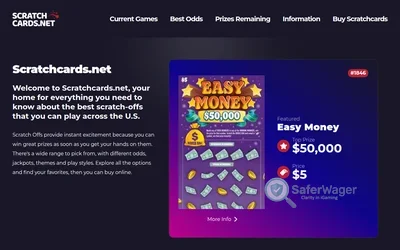
Scratchcards.net
Active
123Spins
Active
All Star Games
Active
Amigo Slots
Active
Aztec Wins
Active
BacanaPlay
Active
Bezy
Active
Big Ben Slots
Active
Big Thunder Slots
Active
Big Win Vegas
Active
BJS Games
Active
Daisy Slots
Active
Dove Casino
Active
Metal Casino
Active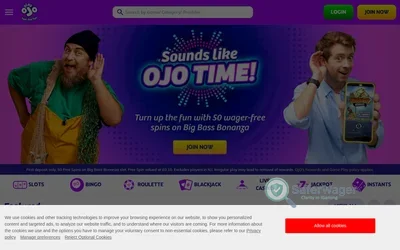
PlayOJO
Active
Slots Racer
Active
Yeti Casino
Active
BB Casino
Active
Casino Game
Active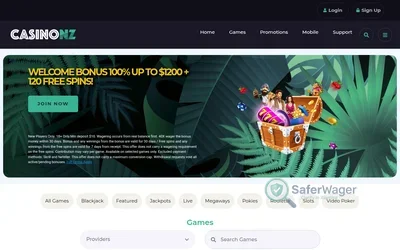
Casino NZ
Active
Cozino
Active
Crystal Slots Casino
Active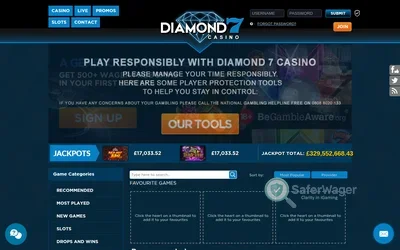
Diamond 7 Casino
Active
Dream Vegas
ActiveThe Remote Casino Operating Licence and what it covers
Running an online casino for UK consumers requires a Remote Casino Operating Licence under the Gambling Act 2005. It's one of the most tightly scoped licence types the UKGC issues. The licence authorises games of chance, which includes slots, table games like blackjack and roulette, and live dealer products delivered via video stream. Each category sits within the same licence type but carries specific product obligations.
What the licence certifies — and what it doesn't
Obtaining a Remote Casino Operating Licence requires the operator to pass UKGC fit-and-proper checks on its directors, demonstrate adequate financial reserves, and submit its anti-money laundering and responsible gambling procedures for scrutiny. The UKGC also runs checks on source of funds and corporate structure. That's real regulatory scrutiny applied at the point of authorisation.
But a licence isn't a rolling quality audit. After authorisation, it's the operator's responsibility to maintain compliance with LCCP Licence Conditions and Codes of Practice. The UKGC monitors and enforces, but it doesn't continuously certify that every technical and procedural standard is being met. Enforcement action only follows identified breaches. A casino can operate within its licence in many respects while falling short on technical infrastructure or transparency.
RNG testing and game fairness certification
Games of chance depend on Random Number Generators. The UKGC requires that RNGs used in licensed casino products are tested and certified by an approved test house. These include organisations such as eCOGRA, BMM Testlabs, and iTech Labs. The test house certifies that outcomes are genuinely random and not influenced by the operator. Certification doesn't happen once and get filed away. Approved test houses carry out periodic re-testing when games are updated or platforms change.
What this means practically is that a game's mathematical mechanics are audited, but that audit is separate from the site's technical infrastructure or the operator's broader compliance record. A casino can have fully certified RNGs and simultaneously carry a poor Domain Score driven by weak SSL configuration. These are independent assessments measuring different things.
Live dealer products and additional obligations
Live dealer casinos stream real-time video of physical game tables, typically operated from studios in regulated jurisdictions. They sit within the Remote Casino Operating Licence but introduce additional considerations around streaming integrity, the employment and licensing of dealers, and the jurisdictions from which the studio operates. Operators sourcing live dealer products from third-party B2B suppliers must ensure those suppliers also hold appropriate UKGC approvals.
White-label platforms, proprietary casinos, and what Domain Score reveals
Not every online casino is built from scratch. The UK market contains a mix of proprietary platforms, where an operator has built and maintains its own casino infrastructure, and white-label operations, where an operator licenses a platform from a B2B technology supplier and runs their brand on top of it. Both can hold a Remote Casino Operating Licence. Both appear in this listing. The platform model behind a site matters more than most consumers realise.
How proprietary and white-label casinos differ
A proprietary casino platform gives the operator direct control over the technology stack, including SSL configuration, DNS management, and the security infrastructure that Domain Score assesses. When something goes wrong technically, the operator is directly responsible for fixing it. White-label operations are different. The operator controls the brand and the customer relationship. The platform provider controls the underlying technology. SSL configuration, server infrastructure, and domain handling may be managed by a third party.
This creates a real pattern in the data. White-label casinos sharing a common platform tend to cluster at similar Domain Score levels, because they're running on the same underlying infrastructure. A platform provider that configures SSL correctly benefits all its operator clients. One that doesn't can drag down the Domain Scores of multiple seemingly unrelated casino brands.
Corporate structure and accountability
Domain Score's WHOIS transparency component looks at whether a casino domain's registered ownership is publicly visible. For a proprietary operator, WHOIS transparency is straightforward: the company is already publicly licensed and Companies House-registered. There's rarely a reason to conceal domain ownership. For white-label operations, WHOIS records sometimes reflect the platform provider rather than the licensed operator, or are obscured entirely. That doesn't indicate wrongdoing, but it does complicate who's accountable for what.
When a white-label casino carries WHOIS privacy and a recently registered domain, it can be harder to trace accountability back through the corporate chain. Saferwager's operator pages cross-reference company data with Companies House records, so you can follow the ownership structure even when the domain registration doesn't surface it directly.
Domain Score patterns across casino types
Domain age is one of the lower-weighted components in Domain Score, but it reads differently for casino platforms. A long-established proprietary casino domain reflects years of continuous operation under a consistent ownership structure. A new domain operated by a long-standing corporate entity via a white-label platform presents a mixed picture: the operator has a track record, but the specific domain doesn't. Domain Score captures this distinction because domain age is assessed at the individual URL level, not the operator level. The operator's history sits in Trust Score. The domain's history sits in Domain Score.
LCCP obligations specific to casino operators
The LCCP sets out licence conditions and social responsibility codes that all licensees must follow, but some provisions hit casino operators with particular force. The interaction design of slot machines and table games creates specific compliance obligations that don't apply to betting or bingo products in the same way.
Safer gambling requirements in casino products
UKGC's LCCP Social Responsibility Code 3.4.1 requires licensees to interact with customers showing signs of gambling-related harm. For casino products, this creates specific product design obligations. Operators are required to make it easy for players to set deposit limits, loss limits, and session time limits. The UKGC has issued formal guidance on auto-play features, spin speeds, and features that speed up gameplay, all of which have historically been used to design around time perception in slot products.
Enforcement actions in this category tend to be costly. Several of the highest-value UKGC fines in recent years arose from casino-specific failures around customer interaction obligations and anti-money laundering processes. Those enforcement records feed directly into operator Trust Scores on Saferwager.
Bonus and promotion transparency under the CAP code
Online casino promotions, including welcome bonuses and free spins, are subject to ASA/CAP code requirements on clarity and non-misleadingness. CAP Code Section 16 specifically addresses gambling advertising, including promotional terms. An offer that features a headline figure without prominence for qualifying conditions fails this standard. The UKGC's LCCP Licence Condition 7.1.1 also requires bonus terms to be made available before a customer commits to accepting them.
This distinction matters because it's an area where enforcement action has been taken by both the UKGC and the ASA. Casino operators found to have misrepresented bonus terms have faced both regulatory sanction and advertising bans. That enforcement history is visible through Saferwager's enforcement section, cross-referenced to the relevant operators.
Game integrity and player fund protection
Under LCCP Licence Condition 4.2.1, operators are required to keep player funds in a separate account from operating funds, at one of three protection levels: basic, medium, or high. High protection means funds are held with a third party and would be returned to players in the event of insolvency. Casino operators vary considerably in which protection level they've adopted, and that information is publicly available on the UKGC register. It's also a component in operator Trust Score.
How casino site data is presented on Saferwager
The sites listed on this page are assessed individually, not grouped by operator. A company that runs four casino brands under one licence will have four separate site entries, each with its own Domain Score. That matters because platform decisions, domain management, and SSL configuration can vary between brands even within the same corporate group.
What each site entry shows
Each casino site in this listing links through to its individual site page, which shows the full Domain Score breakdown: SSL grade, DNS maturity, domain age, WHOIS transparency, regulator confirmation, and site presence. The site page also links to the associated operator. From the operator page, you can access the full Trust Score, licence history, any enforcement record, and the corporate structure cross-referenced with Companies House.
- Domain Score
- A technical assessment of the individual gambling domain. Scored algorithmically from SSL grade, DNS security configuration, domain age, WHOIS transparency, and whether the domain maps to a UKGC-licensed operator. Scored at the site level, not the operator level.
- Operator Trust Score
- A company-level assessment covering six dimensions: enforcement history, corporate structure, licence age, licensing continuity, technical factors, and transparency. Scored algorithmically from publicly verifiable data. A casino brand's Trust Score reflects the operator who holds its licence.
- Remote Casino Operating Licence
- The UKGC licence type required to offer casino games, including slots, table games, and live dealer products, to UK consumers remotely. Issued to the operating company, not to individual brands or domains.
Screenshots and site presence verification
Every site in this listing has a screenshot captured at the time of assessment. The screenshot confirms the domain was serving active gambling content and wasn't pointing at an error page, a parked domain, or an unrelated site. It's one component in Domain Score. It also provides a record of what the site looked like at the point of assessment, which can be useful when brands change ownership or rebrand.
Following the data through to operator pages
Domain Score and Trust Score are designed to be read together. A casino site with a high Domain Score and a high Trust Score is in the strongest position across both dimensions. A high Domain Score alongside a poor Trust Score means the site's technical infrastructure is sound but the operator carries regulatory history worth investigating. The site page always includes a direct link to the operator, and the operator page lists all domains that operator runs, so you can compare Domain Scores across a corporate group in one view.