
UK licensed betting sites: licence types, operators, and the data behind the odds
UK betting sites listed here hold a Remote General Betting Operating Licence from the UKGC, covering fixed-odds sportsbooks, in-play wagering, and traditional bookmakers. Saferwager cross-references each licensed betting site with Domain Score data, operator Trust Scores, and corporate ownership records, showing what a licence check on the UKGC register doesn't surface on its own.
Filter by Site Type
Betting Sites List

GullyCricket
Active
Q88Bets
Active
AK BETS
Active
BetstGeorge
Active
BetWright
Active
Joe Jennings Bookmakers
Active
LiveScore Bet
Active
Stakemate
Active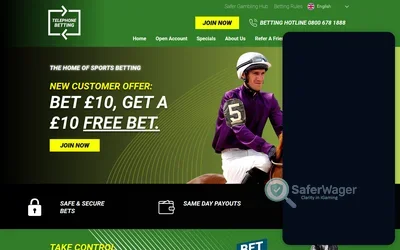
Telephone Betting
Active
AccaTap
Active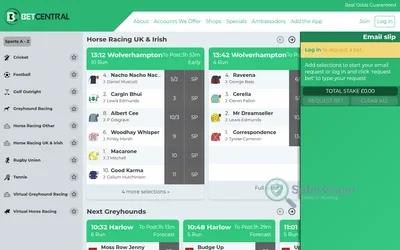
BetCentral
Active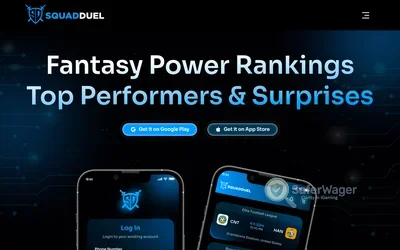
SquadDuel
Active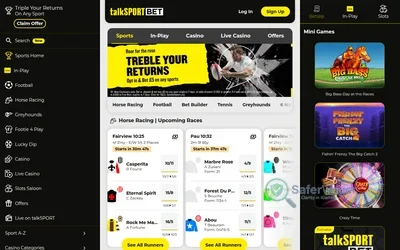
Talksport Bet
Active
TextBet
Active
Betpoint
Active
Betzi
Active
Dabble
Active
Tote
Active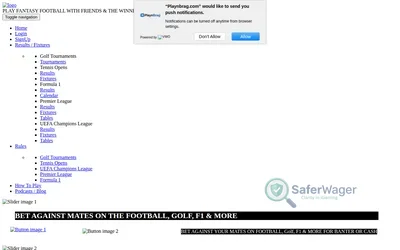
Playnbrag Limited
Active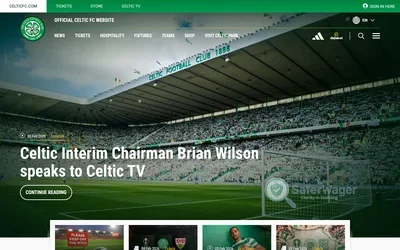
Celtic FC Bet
Active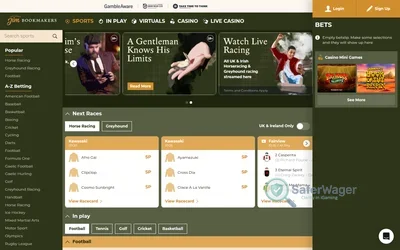
GentlemanJim
Active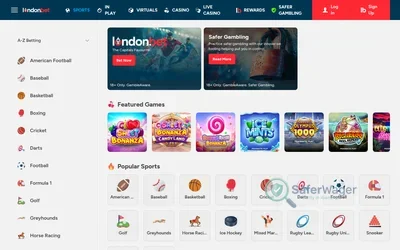
London Bet
Active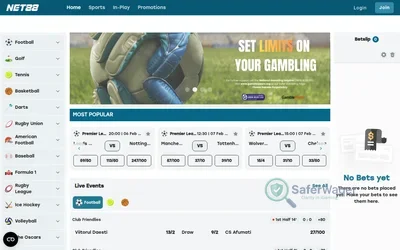
net88.uk.com
Active
Sweepmate
ActiveThe Remote General Betting Operating Licence and how betting regulation works
Offering fixed-odds sports betting to UK consumers online requires a Remote General Betting Operating Licence from the UKGC. This is distinct from the Remote Casino Operating Licence, though many large operators hold both. The general betting licence covers wagers on the outcome of events at fixed odds, which includes sportsbooks covering football, horse racing, and other markets, as well as spread betting products handled under a separate FCA regime for financial instruments.
Fixed-odds betting and in-play regulation
Fixed-odds betting means the odds are agreed at the time the bet is placed. The operator quotes a price and the customer accepts it. That sounds straightforward, but in-play betting, where odds update in real time during an event, creates a more complex regulatory picture. The speed of price changes, the use of bet delays, and the handling of void bets when events are suspended all fall under LCCP obligations around fair and open betting.
UKGC's LCCP Ordinary Licence Condition 2.1 requires that betting products are conducted fairly and openly. For in-play markets, this includes requirements around the consistency of settlement rules and the transparency of voiding decisions. Enforcement actions against betting operators have included failures in in-play settlement processes where rules were applied inconsistently.
Betting exchanges versus fixed-odds bookmakers
Not all entities in the betting category are traditional bookmakers. Betting exchanges, of which Betfair is the most recognised in the UK market, operate differently. Rather than quoting odds themselves, exchanges facilitate wagering between customers. One customer backs an outcome, another lays it, and the exchange earns a commission on net winnings. This model requires a Remote Betting Intermediary Licence rather than a general betting licence, though the two are closely related and both fall under the broader UKGC betting framework.
The exchange model has distinct regulatory implications. An exchange isn't assuming the same financial risk as a fixed-odds bookmaker, so the customer fund protection requirements apply differently. Saferwager's operator pages identify the specific licence type held, so you can distinguish bookmaker operators from exchange operators within this listing.
Odds compilation and the absence of standardised pricing
Unlike casino games, where RNG certification provides a verifiable randomness standard, odds in sports betting are compiled by the operator. There's no regulatory requirement for odds to reflect any particular payout percentage. Margin is set commercially, and it varies by operator, market, and event type. The UKGC doesn't regulate odds levels directly. What it does regulate is how those odds are displayed, what changes can be made after a bet is accepted, and how disputes are handled.
Corporate consolidation in UK sports betting: what the operator data shows
The UK sports betting market is far more concentrated than its surface variety suggests. Dozens of betting brands exist, but most trace back to a small number of parent companies. Entain plc operates Ladbrokes, Coral, Bwin, and Sportingbet, among others. Flutter Entertainment plc operates Paddy Power, Betfair, and Sky Bet. William Hill is owned by 888 Holdings. The brands present differently to consumers but sit under a shared corporate structure, shared licence holder, and often shared technology infrastructure.
How consolidation shows up in Saferwager's data
When a parent company holds a UKGC Remote General Betting Operating Licence, all brands operating under that licence share the same Trust Score components that depend on the licence holder: enforcement history, operator longevity, licensing continuity, and the corporate structure assessment. A fine issued to the operating company affects the Trust Score of every betting brand it runs, because the enforcement record belongs to the licence holder, not the individual brand.
Consumers who see different betting brands as separate entities may not realise they share the same regulatory record. A UKGC enforcement action recorded against an operator is reflected in the Trust Scores of all domains linked to that operator on Saferwager. The operator page shows the full enforcement history and links to every associated site.
Customer fund protection across consolidated operators
LCCP Licence Condition 4.2.1 requires betting operators to hold customer funds at one of three segregation levels. For large consolidated groups, the fund protection level declared with the UKGC covers all brands under that licence. A consumer depositing with a betting brand owned by a major group is relying on the parent company's financial practices and the declared fund protection level, not some brand-specific arrangement. That declared level is publicly available on the UKGC register and feeds into the operator Trust Score.
B2B suppliers and technology infrastructure in the betting sector
Smaller betting operators often license their platform technology from B2B suppliers, similar to the white-label pattern in casino. The supplier handles odds feeds, bet processing, and often the front-end. The licensed operator maintains the customer relationship and regulatory responsibility. Domain Score patterns across smaller betting brands sometimes reflect the platform provider's infrastructure decisions rather than the individual operator's technical management. Sites built on the same underlying platform tend to show similar SSL configuration patterns, visible in Domain Score data.
LCCP obligations that specifically affect betting operators
The LCCP's requirements cover all gambling categories, but several provisions carry specific implications for fixed-odds betting that don't translate directly to casino or bingo products. Odds-related transparency, advertising standards for betting promotions, and the handling of customer winnings all create regulatory obligations where the betting sector has attracted enforcement attention.
Advertising and promotion rules for betting offers
Free bet promotions are the dominant promotional mechanic in UK sports betting. Most free bet offers carry a stake not returned condition: if the free bet wins, you receive the winnings but not the stake amount itself. This is a material term. ASA/CAP Code Rule 16.1 requires that gambling promotions don't mislead, and a free bet offer that doesn't display the stake-not-returned condition prominently enough can breach this standard. The UKGC's LCCP Licence Condition 7.1.1 also requires bonus terms to be clearly disclosed before a customer claims them.
Several betting operators have received ASA rulings for promotional ads that failed to make the qualifying conditions sufficiently clear. Those ASA decisions are publicly available and feed into Saferwager's enforcement context where they intersect with UKGC-licensed operators.
Account restrictions and customer treatment obligations
Bookmakers have historically restricted or closed the accounts of consistently winning customers. This practice isn't prohibited under UKGC licensing, but it does intersect with consumer protection obligations. LCCP Social Responsibility Code 3.4.3 requires operators to treat customers fairly. The UKGC has signalled increasing attention to this area, and the Gambling Review has examined whether account restrictions are consistent with consumer fairness obligations. It's an area where the regulatory direction of travel matters.
Self-exclusion and the GAMSTOP scheme
All UKGC-licensed betting operators are required to participate in GAMSTOP, the national online self-exclusion scheme, under LCCP Social Responsibility Code 3.5.3. A customer who registers with GAMSTOP is excluded from all participating licensed operators for the period they choose. For betting sites specifically, this covers fixed-odds betting, in-play markets, and any ancillary casino or games products the same operator offers under its licences.
What the betting site listing on this page shows
Betting sites in this listing each carry an individual Domain Score, independent of whether they're operated by a major consolidated group or a smaller standalone operator. The Domain Score reflects the technical infrastructure of the specific betting domain, not the corporate group it belongs to. Two brands owned by the same parent company can have meaningfully different Domain Scores if one is running on a better-configured platform.
Reading Trust Score alongside Domain Score for betting sites
Because corporate consolidation is more pronounced in UK sports betting than in any other gambling category, the connection between a betting site's Domain Score and its operator's Trust Score is especially worth understanding. A betting brand with a modest Domain Score may sit within a corporate group whose parent operator has a clean enforcement record and a high Trust Score. Conversely, a well-configured domain can sit under an operator with a history of UKGC enforcement actions.
| Score type | What it assesses | Applies at |
|---|---|---|
| Domain Score | SSL grade, DNS security, domain age, WHOIS transparency, site presence, regulator confirmation | Individual domain level |
| Operator Trust Score | Enforcement history, licensing continuity, operator longevity, corporate structure, technical factors, transparency | Licensed operator level |
Licence type identification on site pages
Individual site pages for betting domains identify the specific UKGC licence type held by the associated operator: Remote General Betting Operating Licence, Remote Betting Intermediary Licence, or a combined licence where the operator also holds a Remote Casino Operating Licence. Large bookmakers frequently hold multiple licence types and offer both sports betting and casino products under a single operator entity. The site page and operator page together show exactly which licences are held and what products are authorised under each.
Following enforcement records through the corporate structure
Enforcement actions issued by the UKGC are recorded against the legal entity that holds the licence, not the brand name the consumer recognises. Saferwager's enforcement section lists cases by licensed operator name. From any betting site page, you can follow through to the operator and see whether enforcement actions are on record, what the breach categories were, and the severity scores applied to each case. For consolidated groups where a single operator runs multiple betting brands, a single enforcement record affects the Trust Score of all associated sites.