
UKGC: Safer Gambling Breach Data 'Too Costly' to Release
Regulator withholds information on enforcement of key player protection rules, citing retrieval costs, and admits it does not track algorithm checks.
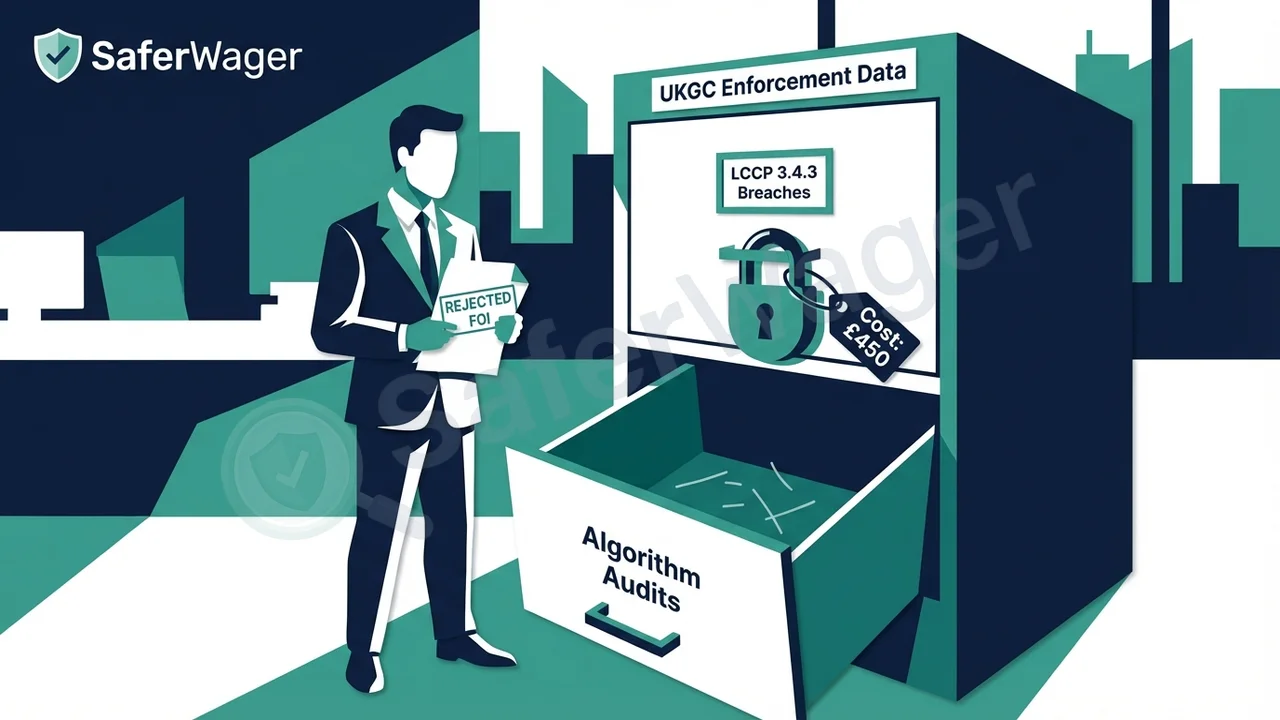
A Freedom of Information request has revealed the UK Gambling Commission (UKGC) is unable to provide data on its enforcement of key safer gambling rules, citing the cost of retrieval. The regulator also admitted it does not specifically track when it investigates the algorithms operators use to monitor players for harm.
Article Content
UKGC Withholds Key Enforcement Data
The UK Gambling Commission (UKGC) has withheld information on its enforcement of critical safer gambling rules, stating that retrieving the data would be too costly. In response to a Freedom of Information (FOI) request dated 2 July 2025, the regulator also revealed it does not specifically record when its investigations assess the algorithms operators use to monitor players for harm.
The request sought detailed statistics on compliance assessments and breaches related to specific Licence Conditions and Codes of Practice (LCCP) provisions designed to protect vulnerable customers since 1 June 2022.
What Information Was Withheld?
The FOI request asked for specific figures on the UKGC's enforcement activities concerning two key player protection rules:
- LCCP 3.1.1: A broad provision requiring operators to interact with customers in a way that minimises the risks of gambling-related harm.
- LCCP 3.4.3: The specific rules for remote customer interaction, which mandate how online operators must identify, interact with, and act to protect customers showing signs of risk.
Crucially, the request asked for the number of assessments and breaches found for Requirement 4 (identifying signs of harm) and Requirement 11 (taking appropriate action) of the remote customer interaction code. It also sought to find out how many of these assessments involved scrutinising the personal data processing and algorithms used in operators' automated safer gambling systems.
Why Was the Request Refused?
The UKGC confirmed that it holds information relevant to most parts of the request but refused to provide it. The regulator invoked Section 12 of the Freedom of Information Act, which allows public bodies to refuse requests where the cost of compliance would exceed £450, equivalent to 18 hours of staff time.
The Commission stated that an initial search "retrieved a large number of records" and that reviewing them all to extract the specific data would take longer than the permitted time limit.
Significantly, the UKGC also stated that it does not record the information requested about investigations into operators' data processing and algorithms. This suggests the regulator does not specifically track when it audits the underlying technology that operators use for their player safety systems.
What This Means for Consumers
LCCP 3.4.3 is one of the most important regulations for protecting online gamblers in the UK. It underpins the systems operators must have in place to monitor for risky behaviour and intervene when necessary.
The Commission's inability to easily report on how often this rule is assessed and breached raises questions about regulatory transparency and oversight. Without this data, it is difficult for the public, researchers, and parliament to gauge how effectively the rules are being enforced and whether operators are being held accountable for failures.
The admission that the UKGC does not track its own investigations into the algorithms driving these safety systems is particularly noteworthy. As the industry relies more heavily on automated technology to meet its obligations, the lack of specific regulatory data on these systems is a significant gap in the public record.