
UKGC: Gambling Suicide Data 'Too Costly' to Find
Regulator refuses to provide data on contacts from bereaved families, citing difficulty in searching its own records.
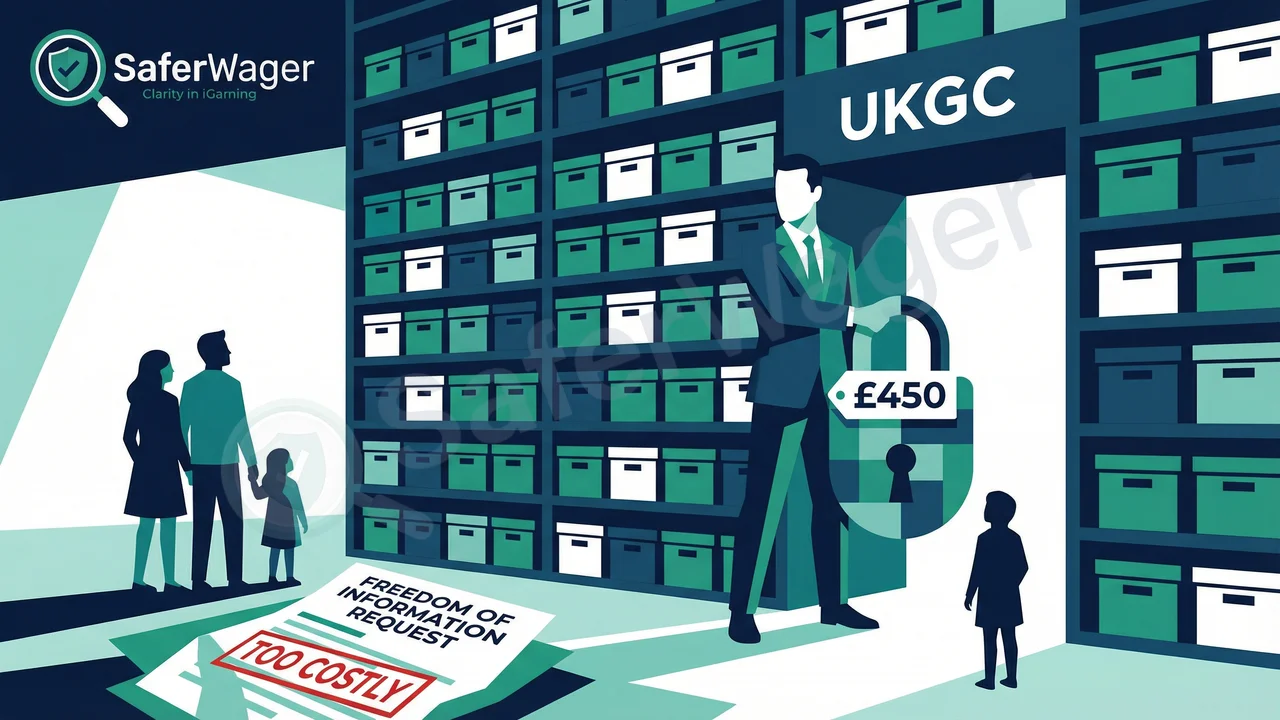
The UK Gambling Commission has stated it cannot provide data on how many bereaved families have contacted it about gambling-related suicides. A Freedom of Information request was refused because the regulator claims the cost of manually searching its records is too high.
Article Content
The UK Gambling Commission (UKGC) is unable to quantify how many times it has been contacted by bereaved families regarding gambling-related suicides, a Freedom of Information (FOI) response has revealed.
In a disclosure published on its website, the regulator refused a request for this data, stating that the cost of retrieving the information from its own systems would be too high. The outcome raises questions about the Commission's ability to track and analyse the most severe consequences of gambling harm.
The Request and Refusal
The FOI request, dated 18 December 2025, asked the Commission for the number of bereaved families who had raised concerns about gambling and suicide in the last year, and for the same data covering the last five years.
In its response, the UKGC explained that while it does record correspondence from bereaved relatives, the details are entered into a ‘free text’ field within its records management systems. This information is not categorised or tagged in a way that makes it easily searchable.
Consequently, the Commission stated that fulfilling the request would require a manual review of individual records. It estimated this process would take more than 18 hours, exceeding the £450 cost limit for responding to FOI requests as stipulated by Section 12 of the Freedom of Information Act 2000.
The UKGC wrote: "We estimate, in order to identify, locate and retrieve the information relating to the above request, it would take in excess of 18 hours to determine appropriate material and locate, retrieve and extract any relevant information in reference to your request."
Why This Matters for Consumers
Data on the link between gambling harm and suicide is a critical indicator of the industry's impact on public health. For consumers, transparency from the regulator is essential for building trust and understanding the risks involved.
The Commission states that information from the public, including complaints and correspondence, is used to "inform our regulatory approach and determine whether any action may be necessary." However, the inability to easily quantify contacts related to suicide suggests a significant gap in its data analysis capabilities.
Significance for Regulation
The refusal highlights a potential weakness in the UKGC's data infrastructure. If the regulator cannot easily track the frequency of the most tragic outcomes associated with gambling, it becomes more challenging to assess the effectiveness of its own policies aimed at preventing harm.
While the Commission does receive and record this vital information, the lack of a structured system for its retrieval means that a key metric for measuring severe gambling harm is not readily available to the regulator, policymakers, or the public. The UKGC did note that the requester could submit a refined request, but it would be treated as a new enquiry and there would be no guarantee that other exemptions might not apply.