
UKGC public statements: what they are, what they aren't, and how to read them
A UKGC public statement is a formal regulatory communication, but it's not a finding of breach or a concluded enforcement process. Understanding what triggers one, what it confirms, how it differs from formal action, and why media coverage frequently conflates the two is the starting point for reading any gambling regulatory statement accurately.
Filter by Source Type
Public Statements List
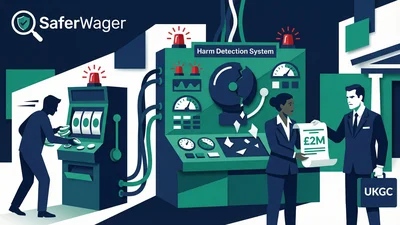
Paddy Power Betfair Pays £2M for Player Protection Breaches
Paddy Power Betfair has agreed to a £2 million regulatory settlement after a UK Gambling Commission investigation uncovered significant social res...
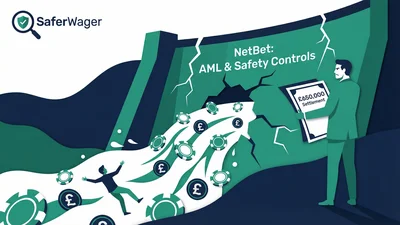
NetBet Fined £650,000 for AML and Safety Failures
NetBet Enterprises Limited will pay a £650,000 regulatory settlement after a UK Gambling Commission investigation found serious breaches in its an...

Maple Ventures Pays £360k for AML & SR Breaches
Online gambling operator Maple International Ventures Limited will pay £360,000 after a UKGC investigation found serious anti-money laundering and...
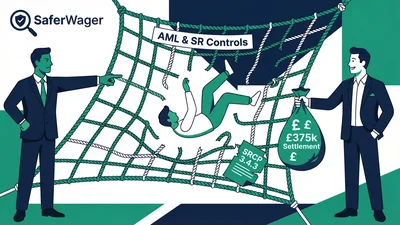
Football Pools Pays £375k for AML & SR Breaches
Football Pools Limited will pay a £375,000 regulatory settlement after a UK Gambling Commission investigation found serious anti-money laundering ...
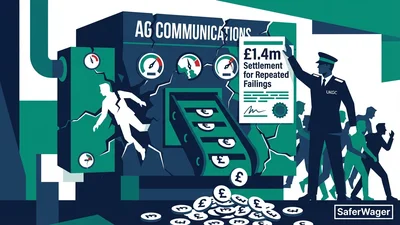
AG Communications Fined £1.4m for Safety Failings
The UK Gambling Commission has ordered AG Communications to pay £1.4 million for significant social responsibility and anti-money laundering failu...
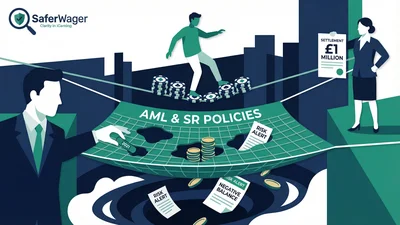
Greentube to Pay £1 Million for Repeat Failings
Greentube Alderney Limited will pay a £1 million regulatory settlement for significant anti-money laundering and social responsibility failures, t...
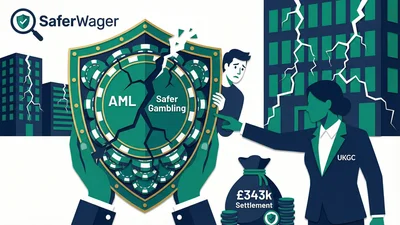
Hillside (UK Gaming) Pays £343k for AML & SR Failures
Hillside (UK Gaming) ENC has agreed to a £343,035 regulatory settlement with the UK Gambling Commission. The action follows an investigation that ...
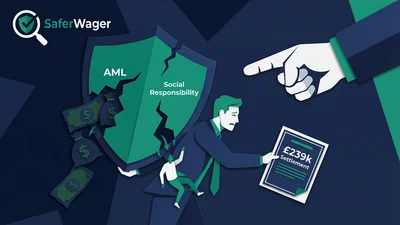
Hillside (UK Sports) to Pay £239k for Safety Failures
Hillside (UK Sports) ENC, the company behind bet365, will pay a £239,085 regulatory settlement for anti-money laundering and social responsibility...
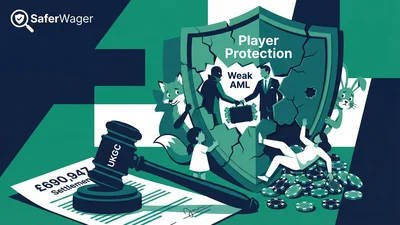
Lindar Media Fined £690,947 for Failures
The operator of MrQ, Lindar Media Limited, will pay a £690,947 regulatory settlement following a UKGC investigation. The penalty addresses signifi...
Done Bros Fined £3.25m for Safety Failures
Done Bros (Cash Betting) Limited, the operator of Betfred's betting shops, has agreed to a £3.25 million regulatory settlement for significant ant...
Videoslots Fined £2 Million for AML & Safety Failures
Online gambling operator Videoslots Limited has been ordered to pay a £2 million penalty by the UK Gambling Commission for serious anti-money laun...

Skill On Net Fined £305,150 for Safety & AML Failures
The UK Gambling Commission has ordered Skill On Net Limited to pay £305,150 for social responsibility and anti-money laundering failures. The inve...
William Hill to Pay £3m for Social & AML Failures
William Hill has agreed to a regulatory settlement of nearly £3 million following a UK Gambling Commission investigation. The regulator found wide...
Mr Green to Pay £3.75m for AML & Safety Failures
Online gambling operator Mr Green Limited has been ordered to pay £3.75 million by the UK Gambling Commission for serious anti-money laundering an...
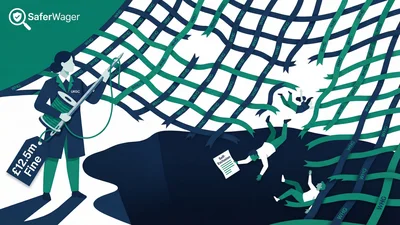
WHG (William Hill) Fined £12.5m for Major Failings
The UK Gambling Commission has ordered WHG (International) Limited, operator of William Hill Online, to pay a £12.5 million settlement following a...

Blue Star Planet to pay £620k for safety failures
Gambling operator Blue Star Planet Limited will pay £620,000 after a UK Gambling Commission investigation uncovered serious anti-money laundering ...
What triggers a UKGC public statement
The Gambling Commission issues public statements in a range of regulatory contexts, and the trigger matters as much as the content. A public statement accompanying a voluntary settlement is a different document from one issued during an ongoing licence review, which is itself different from a policy clarification published without any specific operator in mind. All three are called public statements, but they carry different regulatory weight.
The UKGC has discretion over when it publishes statements and what they contain. There's no statutory provision that requires the UKGC to publish a statement in every circumstance. What you see in the public record reflects a combination of the UKGC's policy on transparency and its judgement about which communications serve a regulatory purpose.
Licence review-related statements
When the UKGC opens a formal licence review under Section 116 of the Gambling Act 2005, it may or may not publish a statement at the time of opening. Reviews that generate significant public interest are more likely to be acknowledged in public communications. But an acknowledgement that a review is open isn't a finding. The UKGC is confirming that it's examining an operator's conduct, not that it has concluded anything about that conduct.
Statements published at the point of review closure, where the UKGC explains what it found and what the outcome is, are different in character. These carry more regulatory weight because they document a concluded regulatory assessment, even if that assessment didn't produce a formal penalty. The distinction between an opening acknowledgement and a closure statement is frequently lost in secondary reporting.
Statements accompanying voluntary settlements
Many UKGC public statements are the formal public record of a regulatory settlement. Under Section 117 of the Gambling Act 2005, when an operator agrees to a payment in lieu of formal proceedings, the UKGC publishes a statement describing the regulatory concerns and the agreed outcome. This statement doesn't conclude that the operator breached its licence conditions. It documents what the regulator observed and what the operator agreed to do in response.
Settlement-related statements typically describe the LCCP areas where the UKGC had concerns, the duration of those concerns, and the remediation commitments the operator made. They're the closest thing to a formal regulatory record that the settlement process produces, but they're not equivalent to an enforcement decision.
Policy and market conduct statements
The UKGC also publishes statements that aren't tied to any specific operator. These cover interpretations of licence conditions, clarifications of LCCP requirements, observations about market conduct across the licensed sector, and guidance on how the regulator expects operators to approach specific compliance areas. These have regulatory significance because they set out what the UKGC expects, but they don't imply any specific operator is under review.
- Licence review opening statement
- Confirms the UKGC is examining an operator's conduct. Doesn't indicate the outcome or the specific LCCP conditions under review at that stage.
- Settlement statement
- Published after a Section 117 settlement. Describes regulatory concerns and agreed remediation but doesn't confirm LCCP breaches were found.
- Licence review closure statement
- Issued when a review concludes without formal enforcement action. May describe what the UKGC examined and what changes the operator agreed to implement.
- Policy clarification statement
- Addresses LCCP interpretation or compliance expectations across the licensed sector, not tied to a specific operator review.
The distinction between a public statement and a formal enforcement action
This is the distinction that matters most when reading UKGC regulatory communications, and it's the one most consistently blurred in media coverage. A formal enforcement action and a public statement are not interchangeable outputs. They sit in different parts of the Gambling Act 2005, they produce different legal records, and they carry different implications for the operator named in them.
Getting this wrong has a real cost. If you read a UKGC public statement as equivalent to a formal enforcement action, you're attributing a regulatory conclusion that doesn't exist in the document. If you read a formal enforcement action as no different from a public statement, you're understating the regulatory finding on record.
What a formal enforcement action confirms that a public statement doesn't
A formal enforcement action under Part 6 of the Gambling Act 2005 is a concluded regulatory process. The UKGC has investigated, considered representations, reached a finding of breach, and imposed a stated penalty. The published enforcement record names the specific LCCP conditions breached, states the grounds for the penalty, and sets out the penalty amount. The operator has the right to appeal to the First-tier Tribunal (General Regulatory Chamber).
A public statement doesn't contain any of that. It doesn't state that specific LCCP conditions were breached. It doesn't impose a named penalty. It doesn't produce an appealable decision. It's a formal communication about a regulatory matter, but the legal character of the two documents is different.
Comparing the two mechanisms directly
| Feature | UKGC public statement | Formal enforcement action |
|---|---|---|
| Statutory basis | UKGC regulatory discretion and transparency policy | Part 6 of the Gambling Act 2005 (Sections 116-119) |
| Confirms LCCP breach? | No | Yes, named conditions stated explicitly |
| Imposes a penalty? | No | Yes, financial penalty or licence action stated |
| Operator right of appeal? | No formal appeal route exists | Yes, appealable to First-tier Tribunal (GRC) |
| Process concluded? | Not necessarily: may accompany an ongoing review | Yes, process is concluded at publication |
| What it confirms about the operator | UKGC had concerns and communicated them formally | UKGC found breach and imposed a consequence |
Why the absence of a public statement doesn't mean no review occurred
The UKGC doesn't publish a statement every time it opens or closes a regulatory review. Licence reviews that conclude without significant findings or agreed changes may not generate any public communication at all. The absence of a public statement isn't regulatory clearance. It means the UKGC either didn't open a review, or opened one and closed it without material findings, or closed one without choosing to publish a public communication. All three are possible, and the public record doesn't distinguish between them.
Common categories of UKGC public statements
Public statements tend to cluster around a set of recurring regulatory concerns. That clustering reflects which LCCP conditions generate the most regulatory activity and which compliance failures the UKGC most commonly encounters during licence reviews. Knowing these categories helps you identify what a statement is addressing before reading the detail.
The categories aren't mutually exclusive. A statement about AML concerns often touches on social responsibility at the same time, because the compliance failures that create AML risk frequently affect customer interaction systems as well. The UKGC's LCCP structure acknowledges this overlap, and public statements often reflect it.
AML and financial crime concerns
Anti-money laundering concerns appear in a significant proportion of UKGC public statements about named operators. The relevant LCCP conditions require operators to maintain policies, procedures, and controls to prevent money laundering and terrorist financing. Statements in this category typically describe inadequate customer due diligence processes, gaps in enhanced due diligence for high-value customers, or failures in transaction monitoring.
AML-related statements are often accompanied by remediation commitments involving new customer monitoring systems, revised policies, and in some cases the appointment of external auditors to verify compliance changes. The specific technical requirements the UKGC expects are set out in its published AML guidance, and statements frequently reference that guidance in describing what the operator's systems should have achieved.
Social responsibility and safer gambling observations
Statements about social responsibility concerns address whether operators have adequate systems to identify and interact with customers displaying indicators of harm. The LCCP social responsibility conditions require operators to have proactive customer interaction systems, deposit limit mechanisms, and self-exclusion procedures that meet specific standards.
Social responsibility statements vary in specificity. Some describe particular system failures, such as an absence of interaction with customers displaying markers of harm over extended periods. Others describe a systemic absence of adequate safer gambling infrastructure without naming specific incidents. The severity of the concern varies accordingly.
Corporate governance and market conduct statements
A smaller category of UKGC public statements addresses corporate governance, ownership structure, and market conduct. These typically arise where licence holders have made changes to their corporate structure without adequate UKGC notification, or where conduct affecting consumer confidence in market integrity has come to the UKGC's attention.
- Change of control notifications: Licensed operators must notify the UKGC of significant ownership changes under LCCP conditions. Statements in this area document cases where the notification process wasn't followed correctly.
- Advertising standards: Statements about advertising practices reference the LCCP conditions on responsible advertising and the CAP/BCAP codes. These typically address targeting practices rather than individual advertisement content.
- Data and system security: A smaller category addresses operator failures to maintain adequate technical and security standards, referencing the LCCP technical standards conditions.
- Regulatory cooperation failures: The most serious governance statements concern operators who didn't cooperate adequately with UKGC investigations, which is itself an LCCP breach.
How Saferwager analyses public statements alongside enforcement and Trust Score data
A UKGC public statement read in isolation tells you a limited amount. Read alongside an operator's enforcement history, Trust Score, and company record, it tells you considerably more. The analytical value of a public statement increases when it can be positioned within a wider regulatory picture. Saferwager's approach is to provide that positioning as a standard part of the analysis, not as an optional extra.
The direction of the relationship matters. An operator with a clean enforcement record and a high Trust Score where a UKGC public statement identifies AML concerns raises different questions than an operator with multiple prior enforcement actions where a public statement identifies the same concerns. The statement is the same type of document in both cases, but its implications differ depending on the context it sits in.
Connecting statements to Trust Score components
Trust Scores on Saferwager have sub-components that map onto the categories of regulatory concern a public statement addresses. AML-related statements feed into the Compliance sub-score. Social responsibility statements affect the Safer Gambling sub-score. Corporate governance issues affect Transparency. A public statement that addresses one of these areas doesn't automatically reduce the operator's score by a fixed amount. The analytical question is whether the statement reveals a pattern or a contained issue, and whether the operator's remediation commitments are credible.
The articles that analyse specific public statements document which sub-score components are affected and why. That connection makes the score traceable to the primary regulatory documents rather than a black box, which is how Saferwager's scoring methodology is designed to work.
Why media coverage conflates public statements with enforcement actions
The conflation happens for a predictable reason. Both a public statement and a formal enforcement action are published by the UKGC, both name an operator, and both describe regulatory concerns. From the outside, especially in a news context, they look like versions of the same thing. The legal distinction between a concluded enforcement process and a formal regulatory communication isn't self-evident to a reader who hasn't mapped the Gambling Act 2005 structure.
How to check what you're reading: When news coverage refers to the UKGC acting against an operator, check the original UKGC source. A formal enforcement action will appear in the UKGC's enforcement record and state a specific penalty figure and named LCCP condition breaches. A public statement will describe regulatory concerns without those elements. The presence or absence of a penalty figure and named breach findings is the fastest way to distinguish the two. If the original source isn't accessible, the distinction can't be reliably drawn from secondary coverage alone.
The analytical value of a statement alongside enforcement history
An operator with a UKGC public statement but no formal enforcement history is in a different position from an operator where a public statement sits alongside one or more concluded enforcement actions. In the second case, the statement's description of regulatory concerns reads against a background of confirmed prior failures. That context shapes what the statement signals about the operator's compliance trajectory, even if the statement itself doesn't constitute a finding.
Saferwager's operator profiles display enforcement actions, public statements, and Trust Score components together. The combined view is where the analytical value is, not in reading any single document in isolation. Articles in the public statements section provide the interpretive layer that connects those individual data points into a regulatory picture.