
UK gambling regulatory insights: FOI disclosures and what they reveal
Saferwager analyses UK Gambling Commission FOI responses and regulatory public statements, primary documents that reveal what the regulator holds, discloses, and declines to release. The articles indexed here examine those disclosures directly, providing independent regulatory analysis of how UK gambling regulation operates in practice.
Filter Insights
Insights
UKGC Hides Omaze Lobbying Info
The UK Gambling Commission has refused to confirm or deny whether it held meetings or exchanged emails with lobbyists about Omaze. Citing a law enforcement exemption, the regulator's response sugge...

UKGC: How the Millionaire Maker Draw Really Works
A Freedom of Information request has clarified how the National Lottery's UK Millionaire Maker winners are chosen. The UK Gambling Commission confirmed the draw uses a Random Number Generator, guar...
UKGC Redacts BACTA Talks Data
A Freedom of Information request has revealed the extent of redactions applied to correspondence between the UKGC and trade body BACTA. The regulator withheld significant information, citing exempt...

FOI: UKGC Holds No Roulette Table Inspection Data
A Freedom of Information response has revealed the UK Gambling Commission holds no records of inspecting physical roulette tables in UK casinos for the past five years. The disclosure raises questi...

UKGC: No Data on Big Lottery Win Locations
A Freedom of Information request has confirmed the UK Gambling Commission does not collect data on the retail locations of major National Lottery wins. This means there is no central, official reco...

UKGC Withholds Evolution Gaming Complaint Data
The UK Gambling Commission has refused to confirm or deny holding complaint data about live casino giant Evolution Gaming. Citing a law enforcement exemption, the regulator stated that disclosure c...
UKGC Blocks Release of Local Bingo Spending Data
The UK Gambling Commission has refused a Freedom of Information request for a local breakdown of bingo spending, known as Gross Gambling Yield. The regulator cited commercial sensitivity, arguing t...

FOI Reveals UKGC Interest in Irish Gambling Reforms
A Freedom of Information disclosure shows the UK Gambling Commission is monitoring gambling reforms in Ireland. An internal document references key Irish research in the context of public health me...
UKGC Withholds National Lottery Sales Data
The UK Gambling Commission has refused to release detailed geographical sales data for National Lottery products, following a Freedom of Information request. The regulator cited commercial confiden...

UKGC: No Legal Challenges to Self-Exclusion Data
A Freedom of Information request has revealed that the UK Gambling Commission holds no records of legal action from land-based operators or trade associations aimed at preventing the publication of...

FOI Reveals UKGC's £48k Annual Mobile Phone Contract
A Freedom of Information request reveals the UK Gambling Commission spends £48,000 annually on its mobile phone contract with BT. The contract covers 280 devices, at an average cost of just under ...

UKGC Contact Centre Has Just 12 Agents, FOI Reveals
A Freedom of Information request reveals the UK Gambling Commission's contact centre is staffed by only 12 agents. The regulator also confirmed it offers no live chat or social media support channe...

UKGC Can't Isolate Prize Draw Complaints
A Freedom of Information request has revealed the UK Gambling Commission cannot quantify complaints about unregulated prize competitions due to its data logging methods. Over 5,600 reports were fil...
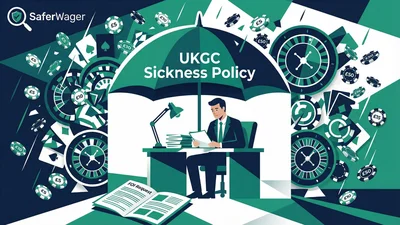
UKGC Staff Sick Pay: 6 Months Full Pay
A Freedom of Information request has revealed the UK Gambling Commission's employee sick pay policy. After a probationary period, staff are entitled to up to six months of full pay, followed by six...
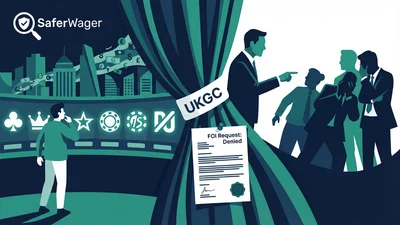
UKGC Refuses to Name Firms in Special Measures
The UK Gambling Commission has refused a Freedom of Information request to name operators placed under 'special measures' for compliance failings. The regulator argued that disclosure would harm it...
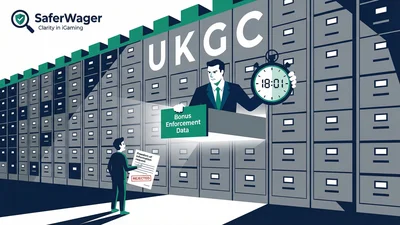
UKGC Withholds Data on Bonus Rule Enforcement
The UK Gambling Commission has refused to release data on its enforcement of rules governing customer bonuses and rewards. Citing excessive costs, the regulator withheld information on the number o...

FOI: UKGC Staff Business Miles Up 14.5% in 2023-24
A Freedom of Information request shows UK Gambling Commission staff drove nearly 20,000 business miles in personal vehicles in 2023-24, a 14.5% increase. The data suggests a rise in fieldwork, with...

UKGC: No Data on Lottery Winner Ethnicity
The UK Gambling Commission does not collect or hold data on the ethnicity of National Lottery winners claiming prizes over £50,000. A Freedom of Information response confirmed the information was ...

UKGC Held No RTP Misunderstanding Research (2017-21)
A Freedom of Information request shows the UK Gambling Commission held no specific research on how consumers misunderstand Return to Player (RTP) from 2017 to 2021. This raises questions about the ...

UKGC Redacts Details on Harms Research Funding
The UK Gambling Commission has released partially redacted documents following a Freedom of Information request. The files detail its communications with UK Research and Innovation about new gambli...
What FOI requests reveal about UK gambling regulation
The UK Gambling Commission is a public authority under the Freedom of Information Act 2000. That means it's legally obligated to respond to valid requests for information, including records it wouldn't choose to publish on its own. The distinction between what the UKGC proactively releases and what FOI compels it to disclose is where much of the most useful regulatory analysis begins.
Most people encounter the UKGC through its press releases and published enforcement decisions. These are documents the regulator chose to make public, framed the way it wanted. FOI responses are different. They surface data holdings, internal policy positions, correspondence, and statistical records that exist outside the regulator's curated communications. Reading them alongside official announcements gives a more complete picture.
How the Freedom of Information Act 2000 applies to the UKGC
Under the Freedom of Information Act 2000, any person can submit a written request to the UKGC asking it to confirm whether it holds specific information, and to release that information if it does. The regulator has 20 working days to respond. It can comply in full, provide a partial disclosure, or refuse. But it can't simply ignore a valid request.
Partial disclosures are common. The UKGC releases some records while redacting others under specific exemptions. Each exemption it cites carries analytical weight, because it tells you what category of information the regulator considers sensitive enough to withhold.
Why FOI responses differ from official announcements
Official UKGC announcements are written with a specific purpose: communicating the regulator's position on its own terms. FOI responses don't have that luxury. They're required to address whatever question was asked, within the scope of what the regulator actually holds. That creates a different kind of document. It's often less polished, occasionally contradictory with other published material, and sometimes more informative precisely because the regulator didn't design it for public consumption.
The gap between the two source types is real. An official press release about enforcement might highlight the UKGC's action and the operator's remediation commitments. A FOI response on the same matter might reveal what data the regulator used to reach its conclusions, or confirm that it doesn't hold certain data at all.
What FOI refusals disclose about regulatory scope
A refusal isn't a dead end. It's a disclosure about what the UKGC holds and what it's protecting. The two exemptions that appear most frequently in UKGC responses are Section 31 (law enforcement) and Section 43 (commercial interests). When the UKGC refuses a request under Section 31, it's confirming that the information exists and that releasing it would affect ongoing regulatory or enforcement activity. That's informative on its own.
Cost-limit refusals are different. Under Section 12, the UKGC can refuse a request if responding would cost more than £450 (roughly 18 hours of work). These refusals sometimes reveal that the information exists but isn't held in a format that's easily retrievable, which says something about how the regulator organises its own data. The articles indexed here treat all three response types as sources, not obstacles.
- Full disclosure
- The UKGC releases all information within the scope of the request. Relatively rare for contested regulatory matters, more common for procedural and statistical questions.
- Partial disclosure
- Some records are released and others are redacted or withheld under a named exemption. The exemption cited is itself analytically useful.
- Section 12 refusal (cost limit)
- The UKGC won't process the request because responding would exceed the cost threshold. Often indicates the data exists but isn't held in a retrievable form.
- Section 31 refusal (law enforcement)
- The information exists but releasing it would prejudice law enforcement or regulatory activity. Confirms the subject matter is under active consideration.
- Section 43 refusal (commercial interests)
- Release would prejudice commercial interests, either the UKGC's or a third party's. Common in requests about specific operator data.
How public statements differ from enforcement actions
One of the most common misreadings of UKGC output is treating a public statement as equivalent to a formal enforcement action. They're not the same thing. A public statement is a formal regulatory position on a matter. It doesn't by itself mean the UKGC found a breach, imposed a penalty, or concluded an investigation.
Getting this distinction right matters if you're trying to assess what a UKGC disclosure actually confirms about an operator's regulatory standing. A licence review that produces a public statement is a very different outcome from a formal enforcement action with a named financial penalty and stated breach findings.
The regulatory purpose of a UKGC public statement
The UKGC issues public statements to communicate its position on regulatory matters where it wants to be on record without that record constituting a formal finding of breach. A public statement might accompany a voluntary settlement, where an operator agrees to changes in practice without the UKGC concluding a formal enforcement process. It might set out the regulator's interpretation of a licence condition, or document the UKGC's awareness of an issue under ongoing review.
What a public statement doesn't do is confirm that the operator broke the rules. The UKGC's framing in public statements typically focuses on what it observed and what it expects, not on what it concluded wasn't a breach. That omission is informative, but it's also easy to misread.
Distinguishing public statements, licence reviews, and formal sanctions
| Mechanism | What it confirms | Does it mean a breach was found? | Typical LCCP conditions involved |
|---|---|---|---|
| Public statement | Formal regulatory position on a specific matter | Not necessarily | Variable, often social responsibility or AML |
| Licence review | Active investigation into operator conduct | No, ongoing process with no finding yet | Usually SR or AML conditions under LCCP |
| Formal enforcement action | Concluded regulatory process with stated penalty | Yes, specific breaches named and penalised | Stated explicitly in the enforcement record |
| Voluntary settlement | Agreed remediation without formal finding of breach | No finding, but the UKGC identified concerns | Often SR, AML, and safer gambling conditions |
What a public statement doesn't confirm about an operator
A public statement won't tell you whether the UKGC investigated and found nothing. The regulator doesn't typically publish statements about matters it reviewed and closed without action. So the absence of a public statement doesn't mean there was no review, and the presence of one doesn't mean there was a breach.
Regulatory note: When news coverage refers to a gambling operator facing UKGC scrutiny, it's often conflating three distinct regulatory mechanisms as if they're interchangeable. A formal enforcement action is a concluded process with a stated penalty and named LCCP (Licence Conditions and Codes of Practice) breaches. A licence review can end without any finding. A public statement can accompany either. Reading the original UKGC document rather than secondary coverage is the only reliable way to know which mechanism applies.
Data gaps the disclosures document
Not every informative FOI response contains data. Some of the most analytically useful responses are the ones where the UKGC confirms it doesn't hold information on a specific question. That's a negative disclosure, and it maps the limits of UK gambling regulation as precisely as any positive finding.
The UKGC's regulatory powers are defined by what data it collects and retains. When a FOI request reveals that the regulator doesn't track a specific metric by individual operator, that's a structural fact about oversight, not just an administrative gap.
When the UKGC confirms it doesn't hold data
A negative disclosure happens when the UKGC confirms it holds no information within the scope of a request, rather than refusing to release information it does hold. The distinction matters. A refusal under Section 31 tells you the information exists but is protected. A negative disclosure tells you the information doesn't exist in the UKGC's records at all, or doesn't exist in a form that would enable release.
The practical meaning varies. Sometimes it reflects a deliberate policy decision not to collect granular data at the operator level. Sometimes it reflects data retention limits on older records. And sometimes it reflects the boundary between what the UKGC tracks and what it leaves to licensed operators to self-report.
Recurring categories of undocumented regulatory activity
Across FOI responses, a set of recurring data gaps appears. These aren't one-off gaps in individual records. They're patterns that reflect how the UKGC structures its data collection.
- Complaint resolution rates by individual operator. The UKGC collects aggregate complaint data and publishes sector-level statistics. FOI responses have confirmed it doesn't hold granular resolution rate data broken down by individual licensee in a form that enables operator-level comparison.
- Audit records for specific game mechanics. Requests for audit or testing records for individual game types typically result in negative disclosures or Section 43 refusals. The technical audit function sits with approved test houses, not with the UKGC directly.
- Historical enforcement correspondence. Records relating to licence reviews from earlier periods are subject to data retention limits. Correspondence from investigations concluded before a certain point isn't available for disclosure, regardless of its analytical relevance.
- Domain-level registration and market access records. Whether the UKGC tracks specific operator domains in a way that would enable disclosure by domain name isn't consistently confirmed across responses. This creates gaps in understanding how the regulator monitors UK market access for operators licensed elsewhere.
What data gaps reveal about the limits of oversight
The data the UKGC doesn't hold isn't random. It tends to cluster around operator-level granularity. The regulator collects sector-wide statistics but isn't always positioned to answer questions about individual operator conduct at the level of detail that a consumer or researcher might want.
That's not a failing unique to the UKGC. It's a structural feature of how public sector regulators operate within data protection constraints and resource limits. But it's worth knowing, because it means that some questions about how a specific operator handles complaints, or what its audit history shows, can't be answered from UKGC records alone. The articles indexed here document specific instances where that gap appears, so the pattern is visible rather than assumed.
How insights connect to operator and enforcement records
Articles in the insights section don't exist in isolation. Each one connects to structured data elsewhere on Saferwager, including operator profiles, enforcement records, and company pages, so the written analysis has quantitative context alongside it. Understanding how that connection works makes the articles more useful.
The analytical loop runs in both directions. An article about a UKGC FOI disclosure on complaint handling points to the operator's Trust Score, where the Transparency sub-score reflects similar signals. Going back the other way, a reader who notices an operator's Trust Score has dropped can find the article that explains what the UKGC disclosure contributing to that change actually showed.
Articles cross-referenced to operator profiles and Trust Scores
When a FOI response or public statement concerns a named operator, the article links directly to that operator's profile page. The profile shows the Trust Score, the Enforcement Severity rating, the Domain Score, and the company structure. These are quantitative signals that sit alongside the article's interpretive analysis.
The Transparency sub-score within the Trust Score is directly relevant to FOI findings. It reflects whether an operator's public profiles and registration records are open. FOI disclosures about that operator's regulatory correspondence can inform how that signal reads. A high Transparency sub-score and an open FOI record point in the same direction. A divergence between the two is worth examining.
Enforcement severity and what public statement analysis adds
Formal enforcement actions get an Enforcement Severity rating based on the structure of the penalty, the LCCP conditions breached, and the regulatory context. That rating is a quantitative signal. The article that analyses the underlying UKGC public statement or enforcement document provides the interpretive layer, explaining what the regulator's stated rationale reveals about which conditions were at issue and how the action fits patterns visible across the dataset.
The severity rating won't tell you whether the UKGC's framing of the breach matches the detail of its own enforcement record. The article does. Both are worth reading.
Using the insights index alongside structured regulatory data
How to get the most from this section: The structured data on operator and enforcement pages shows where an operator sits on standardised scoring. The articles here explain what specific UKGC disclosures contributed to that position, and what those disclosures don't confirm. For operators where a FOI response or public statement is a relevant data point, the article provides the primary source analysis that a score alone can't carry. The methodology page documents the connection between disclosure signals and scoring weights for readers who want to understand the full analytical basis.
Company profiles add a further layer. The UKGC licences operators, but parent companies often hold licensed entities across different brands. FOI responses about a parent company's regulatory correspondence can affect how individual operator profiles read. Articles that cover corporate-level disclosures connect to company pages rather than individual operator profiles where that's the right relationship.