
UK gambling licence revocations: the UKGC's most severe enforcement outcome
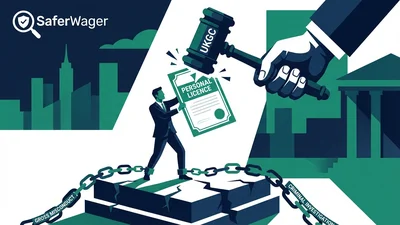
A UKGC licence revocation is the most severe outcome in UK gambling regulation. The operator permanently loses authority to provide gambling services under a GB licence, with immediate consequences for customers, staff, and any related entities operating under the same corporate structure.
Filter by Action Type
Licence Revocations List
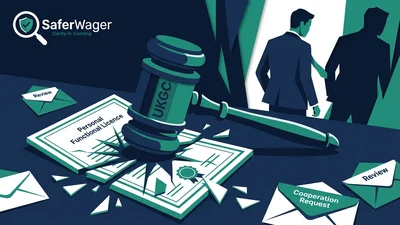
Biddle Jack Robert
License RevocationThe Commission revoked Mr. Jack Robert Biddle's Personal Functional Licence following a review. The decision was based on concerns about his suitability, competence, and integrity following gross m...
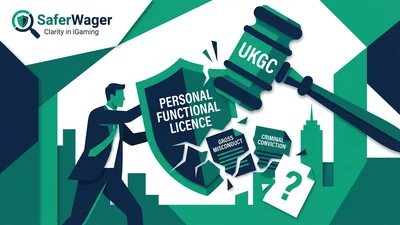
Hughes, Alexander Daniel Laurence
License RevocationThe Commission revoked the Personal Functional Licence of Mr. Alexander Daniel Laurence Hughes following a review. The decision was based on his dismissal for gross misconduct, failure to report a ...
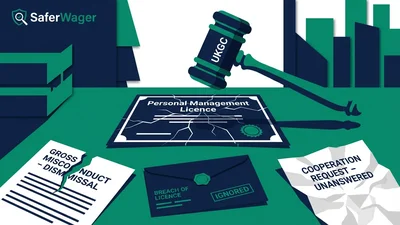
Kalinowski Lukasz
License RevocationThe Commission revoked the Personal Management Licence of Mr Lukasz Kalinowski following a review. The decision was made because the circumstances of his dismissal for gross misconduct were inconsi...
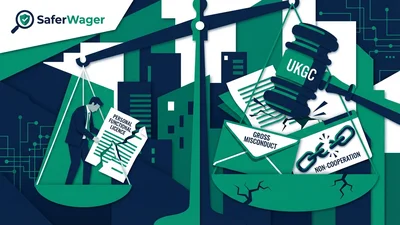
Barbu Theodoru Ionut
License RevocationThe Commission revoked the Personal Functional Licence of Mr Theodoru Ionut Barbu. The decision was made because the licensee failed to advise the Commission of his dismissal for gross misconduct a...
Rainey Ryan Anthony
License RevocationThe Commission revoked the Personal Functional Licence of Mr. Ryan Anthony Rainey following a review. The decision was based on concerns about his suitability, competence, and integrity following a...
Whitlock Adam John
License RevocationThe Commission revoked the Personal Functional Licence of Adam John Whitlock following a licence review. The decision was based on findings that he breached licence conditions by failing to notify ...
Wray Daniel Lincoln
License RevocationFollowing a licence review, the Commission revoked the Personal Functional Licence of Mr Daniel Lincoln Wray. The decision was based on findings that his dismissal for gross misconduct was inconsis...
Surampudi Hema Kiran
License RevocationThe Commission revoked the Personal Functional Licence of Ms Hema Kiran Surampudi following a licence review. The revocation was due to the circumstances of her dismissal being inconsistent with li...
Howard Mason David
License RevocationThe Commission revoked the Personal Functional Licence of Howard Mason David following a review. The decision was made because the circumstances of his dismissal for gross misconduct were inconsist...
Vanipenta Anusha
License RevocationThe Commission revoked the Personal Functional Licence of Ms Anusha Vanipenta following a licence review. The revocation was due to her failure to report a dismissal for gross misconduct and a fail...
Thomas Leshante Lakim Romeo
License RevocationThe Gambling Commission revoked the Personal Functional Licence of Thomas Leshante Lakim Romeo following a review. The licensee was found to have breached a licence condition by failing to notify t...
Heaven James Ronald
License RevocationThe Commission revoked the Personal Functional Licence of James Ronald Heaven following a review. The licensee was found to have breached a licence condition by failing to notify the Commission of ...
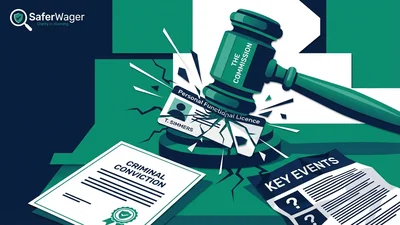
Tamara Simmers
License RevocationThe Commission revoked the Personal Functional Licence of Tamara Simmers following a review. The licensee was found unsuitable after repeatedly failing to report Key Events and being convicted of r...
Svagzdys Rokas
License RevocationThe Commission revoked the Personal Functional Licence of Mr Rokas Svagzdys following a review. The decision was based on his dismissal for gross misconduct being inconsistent with licensing object...
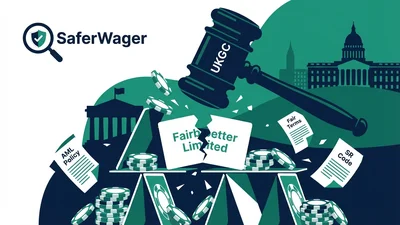
Fairbetter Limited
License RevocationThe Gambling Commission revoked Fairbetter Limited's operating licence following a review. The operator was found to have breached several licence conditions and social responsibility codes, includ...
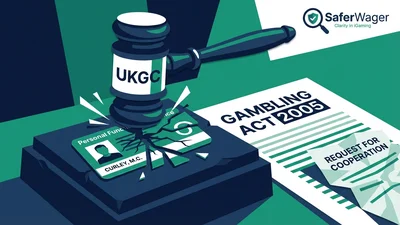
Curley Matthew Christopher
License RevocationThe Commission revoked the Personal Functional Licence of Mr. Matthew Christopher Curley following a review. The decision was based on his dismissal for gross misconduct, which was inconsistent wit...

Geelen Antonius Paul
License RevocationThe Gambling Commission revoked the Personal Functional Licence of Mr Antonius Paul Geelen following a licence review. The review found that he breached a condition of his licence by failing to not...
Johnson Glenn William
License RevocationThe Commission revoked Mr. Glenn Johnson's personal license following a review. The licensee breached a condition of his license by failing to notify the Commission of his dismissal for gross misco...
What triggers a licence revocation and how it differs from other enforcement outcomes
Revocation isn't the automatic result of a single breach. The UKGC's enforcement framework is structured as a graduated response, with revocation reserved for circumstances where the Commission concludes that the operator is fundamentally unfit to hold a licence. That conclusion can be reached through several routes, but they share a common thread: the failures aren't isolated or correctable. They reflect something systemic about the operator's conduct, corporate structure, or ownership.
The three principal routes to revocation are repeated serious breaches despite prior enforcement action, fundamental fit-and-proper failures relating to key personnel or beneficial owners, and evidence of criminality or financial crime within the business. Each route produces a different enforcement narrative, but all lead to the same conclusion: that holding a GB gambling licence is no longer appropriate for this entity.
Repeated serious breaches and the escalation pathway
Most revocation cases involving repeated breaches follow a period of prior enforcement activity. The UKGC issues a financial penalty or settlement, attaches additional licence conditions, and makes clear what remediation is required. Where an operator fails to remediate, or where a subsequent review finds the same categories of failure persisting after the prior intervention, revocation becomes the proportionate outcome.
This escalation pathway is why viewing a revocation in isolation misses important context. The operator's enforcement history typically includes earlier warnings, settlements, or penalty decisions that weren't acted on effectively. Saferwager's enforcement index cross-references revocation records with prior enforcement activity on the same operator to surface that pattern.
Fit-and-proper failures and criminality as grounds for revocation
The Gambling Act 2005 requires licence holders to be fit and proper. Where the UKGC finds that key personnel, directors, or beneficial owners fail that test, revocation doesn't require a pattern of operational breaches. A single finding that a licence holder's ownership structure involves undisclosed beneficial owners, or that a key individual has relevant criminal associations, can be sufficient. The Commission isn't limited to operational conduct failures when assessing licence suitability.
Revocation vs other enforcement outcomes: A financial penalty leaves the licence intact. A suspension temporarily removes trading authority while a review continues. An additional licence condition restricts how the operator can trade. Revocation ends the licence entirely. It's not on the same continuum as lesser sanctions. It's a categorical finding that this entity shouldn't hold a licence at all.
The revocation process: from investigation to final decision
Licence revocation doesn't happen quickly. Between the UKGC opening a licence review and a final revocation decision, there's a defined process that gives the operator opportunities to respond. That process can take months. In complex cases involving corporate restructuring or criminality investigations running in parallel, it can extend considerably longer.
The process matters because operators often continue trading during it. Unless the UKGC imposes a suspension before the final revocation decision, an operator under active review for potential revocation may still be accepting deposits and customer accounts. Customers may have no visible signal that a review is underway.
How the UKGC's licence review process works
The UKGC opens a licence review when it has concerns about whether a licensee is meeting its obligations or remains fit and proper to hold a licence. The Commission issues a notice of review, sets out its concerns, and gives the operator an opportunity to make representations. The operator can submit evidence, make commitments about remediation, and engage with the process. The UKGC then considers those representations before making its decision.
Where the UKGC proposes to revoke, it issues a notice of intent to revoke. The operator has a further opportunity to respond to that notice. After considering the response, the Commission issues a final decision. Where the final decision is revocation, the licence ceases with effect from a specified date. That final decision document is typically published on the UKGC's website and forms the basis for the revocation record in Saferwager's enforcement index.
Suspension as a precursor to revocation
The UKGC can suspend a licence on an interim basis while a review is underway. Interim suspension is most common where the Commission has identified concerns serious enough that it doesn't want the operator trading while the review concludes. An interim suspension that converts to revocation is a distinct enforcement pathway from a revocation following an active trading period.
- Licence review
- A formal process initiated by the UKGC to assess whether a licence holder continues to meet its obligations or remains fit and proper. Can result in financial penalty, additional conditions, suspension, revocation, or no further action.
- Notice of intent to revoke
- Formal notification from the UKGC that it is minded to revoke the licence. Triggers a further opportunity for the operator to make representations before the final decision is made.
- Final revocation decision
- The UKGC's published conclusion following the notice of intent process. Specifies the date from which the licence ceases. Typically published on the UKGC enforcement register.
- Interim suspension
- A temporary suspension of licence authority imposed while a review is ongoing. Prevents the operator from accepting new bets or deposits. Can be imposed at short notice where the UKGC considers the risk to consumers requires immediate action.
What revocation means for customers: funds, account access, and dispute resolution
When a gambling licence is revoked, customers face immediate practical consequences. They lose access to their accounts, any funds held in those accounts become subject to the operator's insolvency or wind-down process, and pending withdrawals may be delayed or, in the worst cases, lost. The customer's position depends heavily on whether the operator went through a managed wind-down or ceased trading abruptly.
The UKGC requires licensed operators to comply with LCCP social responsibility code provision 4.2.1, which mandates that customer funds be kept separate from operator funds and that operators maintain written policies for returning funds if they cease trading. How well those requirements were actually implemented determines what happens to customers when the licence is revoked.
Customer funds and how they're protected (or not)
The UKGC's licence conditions require operators to maintain an adequate level of customer fund protection. There are four levels: basic, medium, high, and the highest level which involves full segregation of funds by an independent trustee. Most UK licensed operators operate at basic or medium level, which means customer funds are held in a separate bank account but aren't fully ring-fenced. In an insolvency, basic-level protection means customers are unsecured creditors. They may not recover their full balance.
Where an operator's licence is revoked and it enters administration or liquidation, customers need to submit claims to the insolvency practitioner. That process can take months or years. Customers with pending withdrawals at the time of revocation are in the same position as those with dormant balances. There's no special priority given to recently requested withdrawals.
Dispute resolution after revocation
Active disputes with a revoked operator present additional difficulty. An operator that no longer holds a UKGC licence is no longer required to participate in the Alternative Dispute Resolution process that applies to licensed operators. Where a customer had a dispute in progress at the time of revocation, the ADR route may no longer be available. Pursuing claims through small claims court or the insolvency claims process becomes the remaining route.
The UKGC's consumer guides on what to do if an operator loses its licence recommend customers document all balances and pending transactions at the point of cessation and contact the insolvency practitioner directly. The Commission doesn't have powers to compensate customers out of its own funds when operator insolvency means balances can't be returned.How revocations feed into Saferwager severity scoring and Trust Scores
Every revocation in Saferwager's enforcement index is rated at severity 5, the maximum on the 1-to-5 scale. There's no revocation that scores below that. A revocation for cause, following repeated serious breaches, and an administrative revocation for non-payment of annual fees both appear in the enforcement index, but they're classified separately and treated differently in severity scoring.
That distinction matters because the UKGC's public enforcement register includes revocations that aren't misconduct findings. Administrative revocations, where a licensee simply didn't pay its annual fees and the licence lapsed, aren't regulatory failures of the same kind as a revocation following sustained AML and social responsibility failures. Treating them identically would misrepresent what the enforcement record shows.
Revocation for cause vs administrative revocation
A revocation for cause follows a formal licence review, a finding that the operator failed to meet its obligations or is no longer fit and proper, and a notice of intent process. It's a deliberate enforcement decision by the UKGC. An administrative revocation for non-payment of fees is a mechanical outcome of a licensee failing to pay. The operator's licence lapses. The UKGC records this but doesn't require it to have found any misconduct. Many administrative revocations involve operators that had already ceased trading and simply didn't bother renewing.
Saferwager's enforcement records note the revocation category on each entry. A severity-5 rating applies to revocations for cause. Administrative revocations where there's no associated misconduct finding are categorised separately and don't carry the same weight in the Trust Score's enforcement sub-score.
Revoked entities and related operators
One pattern that appears in revocation cases is continued operation through a related entity. A corporate group that loses a UK licence for one of its brands may continue operating other brands under separate licences. The revoked entity loses its authority, but the corporate parent, if licensed separately for other operations, isn't automatically affected by the revocation of a subsidiary.
| Revocation type | Severity score | Trust Score impact | How it appears in Saferwager |
|---|---|---|---|
| For cause (misconduct) | 5 | Maximum weight in enforcement sub-score, persists without decay | Enforcement index, operator profile, company profile if corporate group affected |
| For cause (fit-and-proper failure) | 5 | Maximum weight, flags corporate integrity concerns in corporate sub-score | Enforcement index with note on grounds, linked to key personnel records where available |
| Administrative (fee non-payment) | Separate category, not scored 1-5 | Not weighted in enforcement sub-score absent associated misconduct findings | Enforcement index with administrative category label, not surfaced in Trust Score enforcement component |