
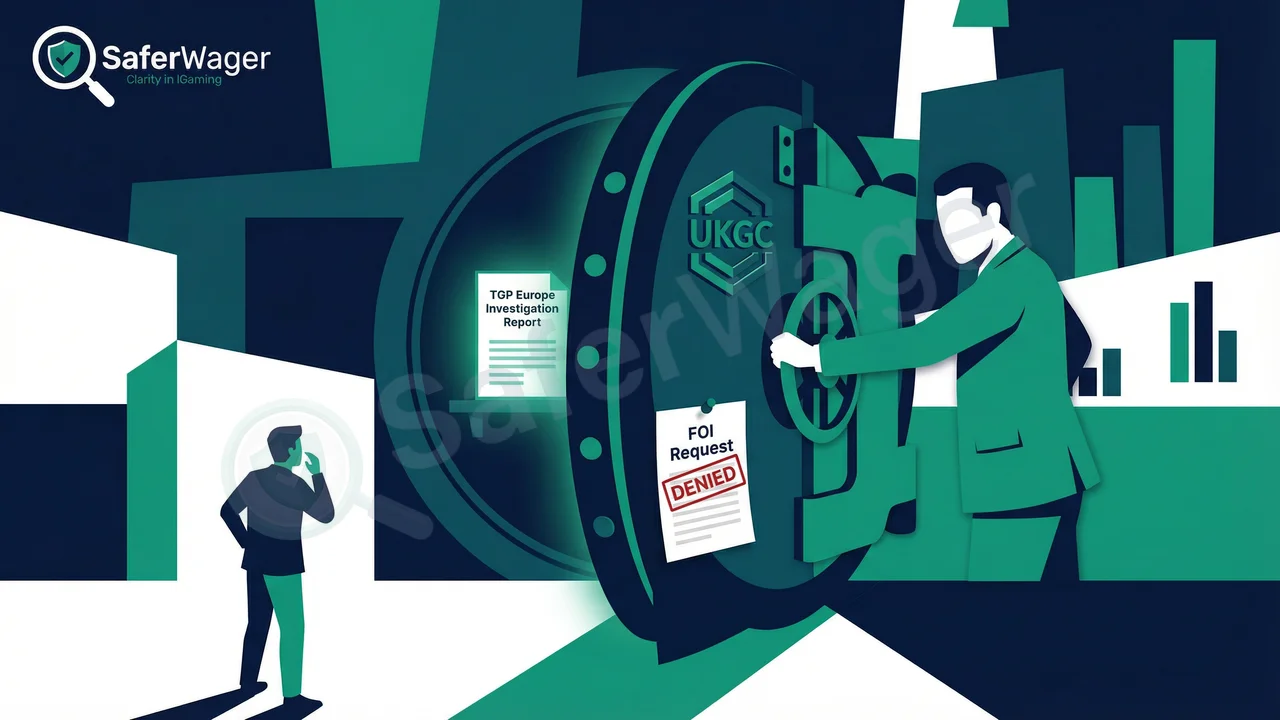
UKGC Withholds TGP Europe Investigation Report
Regulator cites 'law enforcement' exemption to block release of full details behind a £316k fine, raising transparency questions.
The UK Gambling Commission has refused to release its full internal report on TGP Europe's failings, which led to a £316,250 fine. Citing law enforcement exemptions, the regulator argues that disclosure would harm its ability to investigate other operators.
Article Content
UKGC Blocks Release of Full Report on TGP Europe Fine
The UK Gambling Commission (UKGC) has refused to release its full internal investigation report concerning the regulatory failures of operator TGP Europe Limited, according to a Freedom of Information (FOI) response published by the regulator.
The request, dated 14 November 2024, sought the primary report that led to the UKGC imposing a £316,250 penalty on TGP Europe in February 2023 for significant anti-money laundering (AML) and social responsibility failures.
While the Commission confirmed it holds the requested information, it has withheld the document in its entirety, citing exemptions under the Freedom of Information Act.
Why the Report Remains Secret
The UKGC's decision hinges on Section 31 of the FOIA, which protects information that could prejudice 'law enforcement' functions. The regulator argues that releasing the detailed report would compromise its ability to effectively investigate and regulate the gambling industry.
In its response, the Commission stated that disclosure could:
- Reveal specific investigative techniques and assessment practices.
- Enable non-compliant operators to alter their behaviour to avoid detection.
- Undermine the Commission's ability to ascertain an operator's fitness to hold a licence.
Essentially, the regulator believes that making its full investigation process public would provide a 'playbook' for rogue operators to circumvent rules, ultimately harming consumer protection.
The Balance Between Transparency and Enforcement
The decision highlights a critical tension for consumers and the industry. The UKGC conducted a public interest test, weighing the arguments for and against disclosure.
Arguments for disclosure centred on the need for public bodies to be transparent and accountable. Releasing the report could assure the public that the UKGC is carrying out its duties effectively and help consumers understand the full extent of an operator's failings.
However, the arguments for withholding the information ultimately won. The Commission concluded that the public interest is better served by protecting its confidential assessment processes, which it claims are robust and essential for ensuring operators meet the required standards to protect players.
What This Means for Consumers
This refusal means that the public, researchers, and consumers are limited to the information the UKGC chooses to publish in its official public statements. While these summaries outline the nature of the failings and the penalty imposed, they lack the granular detail and evidence contained within the full internal report.
For consumers researching an operator's history, this decision confirms that the full picture of regulatory breaches often remains behind closed doors. The UKGC's stance is that this secrecy is a necessary trade-off to maintain the integrity of its enforcement actions and, by extension, the safety of the gambling market.