
UKGC Withholds Stakers 'Unsuitability' Details
FOI response cites regulatory prejudice in refusal to release information on the operator's 2020 licence suspension and initial vetting.
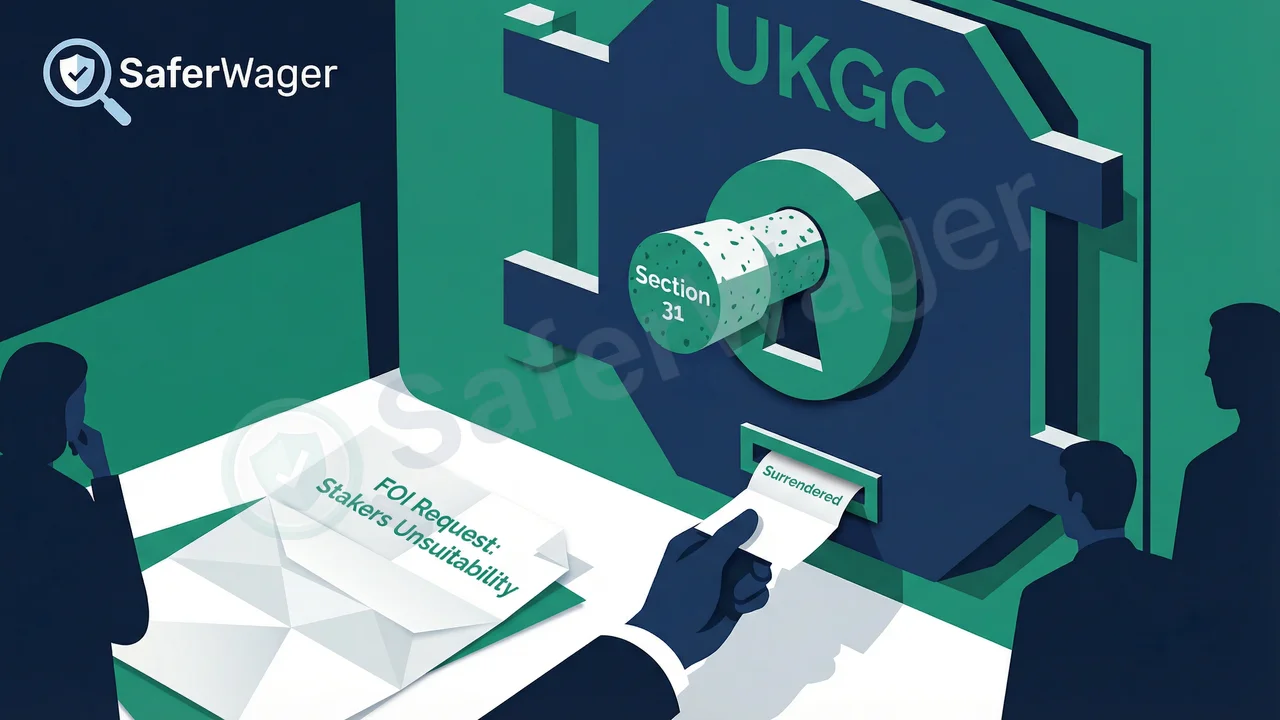
A Freedom of Information request has revealed the UK Gambling Commission will not disclose the specific reasons why it deemed operator Stakers Limited 'unsuitable' in 2020. The regulator cited exemptions to protect its investigative functions, leaving consumers without details on the operator's failings.
Article Content
UKGC Cites Regulatory Secrecy in Stakers FOI Response
The UK Gambling Commission (UKGC) has refused to disclose the specific reasons why it deemed operator Stakers Limited “unsuitable” to hold a UK licence, according to a Freedom of Information (FOI) response published by the regulator. The request, dated 29 October 2023, sought details behind the Commission’s 5 March 2020 decision to suspend the operator's licence.
In its response, the UKGC confirmed that it holds further information but is exempting it from disclosure under Section 31 of the Freedom of Information Act, which relates to law enforcement and regulatory functions. The Commission argued that releasing the details would likely “prejudice the exercise” of its duties.
Key Findings from the FOI Disclosure
The FOI request asked several key questions about the Stakers case. The UKGC’s responses reveal a firm stance on protecting its investigative processes.
Reasons for 'Unsuitability': The Commission declined to provide specific details on the failings that led to Stakers being found unsuitable. It stated that releasing such information could “hinder our ability to conduct investigations or enable those we may investigate to avoid detection.” After conducting a public interest test, the UKGC concluded that the interest in preserving its regulatory functions outweighed the public interest in disclosure.
Licence Status: The request asked whether the licence was 'suspended' or 'terminated'. The UKGC directed the requester to its public register, which confirms the licence for Stakers Limited is now “Surrendered.” This means the company voluntarily gave up its licence at some point after the initial suspension.
Initial Vetting Process: The requester specifically asked what checks were performed when Stakers was first licensed, questioning the legitimacy of a Malta address that appeared non-existent on Google Street View. The UKGC provided a general overview of its licensing process but refused to release specific information about Stakers’ application, again citing the Section 31 exemption. It did not address the query about the Malta address.
Complaint History: When asked when it received the first complaint that led to the suspension, the Commission refused to confirm or deny whether it held the information. It cited Section 31(3) of the FOIA, stating that even confirming the existence of such information could prejudice its regulatory activities.
What This Means for Consumers
This disclosure highlights the limits of transparency in UK gambling regulation. While the UKGC took decisive action against an operator it found “unsuitable,” its refusal to share the specific reasons leaves consumers in the dark about the nature of the operator’s failings.
The Commission’s position is that protecting the integrity of its investigative methods is paramount to its overall mission of protecting the public. It argues that revealing its techniques could allow other non-compliant operators to evade scrutiny. However, this lack of transparency means that crucial details—such as whether the operator had flawed anti-money laundering controls, inadequate social responsibility measures, or issues with its corporate structure—remain confidential, even years after its removal from the market.