
UKGC Withholds National Lottery Sales Data
Regulator cites excessive cost and lack of records in response to a Freedom of Information request on online vs retail play.
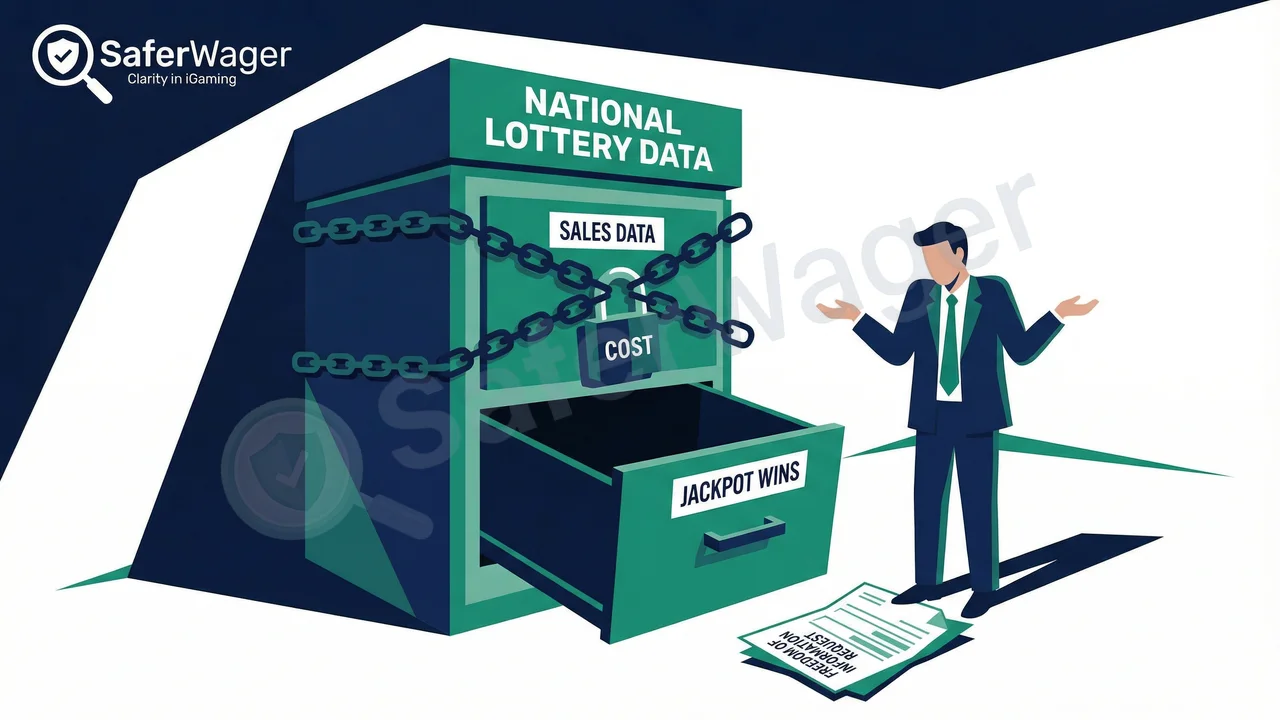
The UK Gambling Commission has revealed it cannot provide a full historical breakdown of online versus retail National Lottery ticket sales, citing excessive costs. The regulator also confirmed it does not hold data on the value of jackpots won through each channel, highlighting a significant gap in public data on the UK's largest gambling product.
Article Content
The UK Gambling Commission (UKGC) has been unable to provide fundamental data on National Lottery ticket sales and jackpot wins, revealing a significant gap in the regulator's accessible information on the UK's largest gambling product.
In response to a Freedom of Information (FOI) request dated 27 November 2024, the Commission stated it could not supply a historical breakdown of online versus in-store ticket purchases, and that it does not hold data on the value of jackpots won through each channel.
Why This Data Matters
As more consumers shift their purchasing habits from retail to online, understanding this trend within the National Lottery is crucial for player protection. Data on sales channels can help regulators and researchers analyse player behaviour, the effectiveness of responsible gambling tools, and the impact of digital marketing. The lack of readily available data from the regulator makes independent analysis of these trends difficult.
Details of the Request and Refusal
The FOI request asked for four specific pieces of information for both the National Lottery and Euromillions, dating back to their inception:
- Total number of online ticket purchases.
- Total number of non-online (retail) ticket purchases.
- Total £ value of jackpot wins from online tickets.
- Total £ value of jackpot wins from non-online tickets.
The UKGC's response divided the request into two parts.
For the data on the number of ticket purchases, the Commission withheld the information under Section 12 of the FOI Act. This exemption allows public bodies to refuse requests where the cost of compliance would exceed £450, which is estimated as 18 hours of staff time. The UKGC stated that a search for the requested information "retrieved a large number of records" and that reviewing them all to extract the relevant data would take longer than the permitted time.
For the data on the value of jackpot wins, the response was more direct. The UKGC stated that it "does not hold any information falling within the scope of your request."
Significance for Regulation and Transparency
The Commission's inability to fulfil the request highlights a potential blind spot in regulatory oversight. While the National Lottery operator holds this data, the fact that the regulator cannot easily access or does not centrally hold key historical metrics on sales channels and prize distribution raises questions about transparency.
Without this baseline data, it is challenging for the public and consumer protection groups to scrutinise the performance and societal impact of the National Lottery, particularly the accelerating shift towards digital play.
The UKGC did suggest that the requester could refine the timescale of their request, which might bring it within the cost limits. However, the refusal to provide any data on jackpot wins and the difficulty in accessing sales figures points to a lack of centralised, easily analysable data at the regulator level for one of Britain's most popular forms of gambling.