
UKGC Withholds Metropolitan Casinos Complaint Data
Regulator cites law enforcement exemption, refusing to confirm or deny holding information on unfair terms or discrimination.
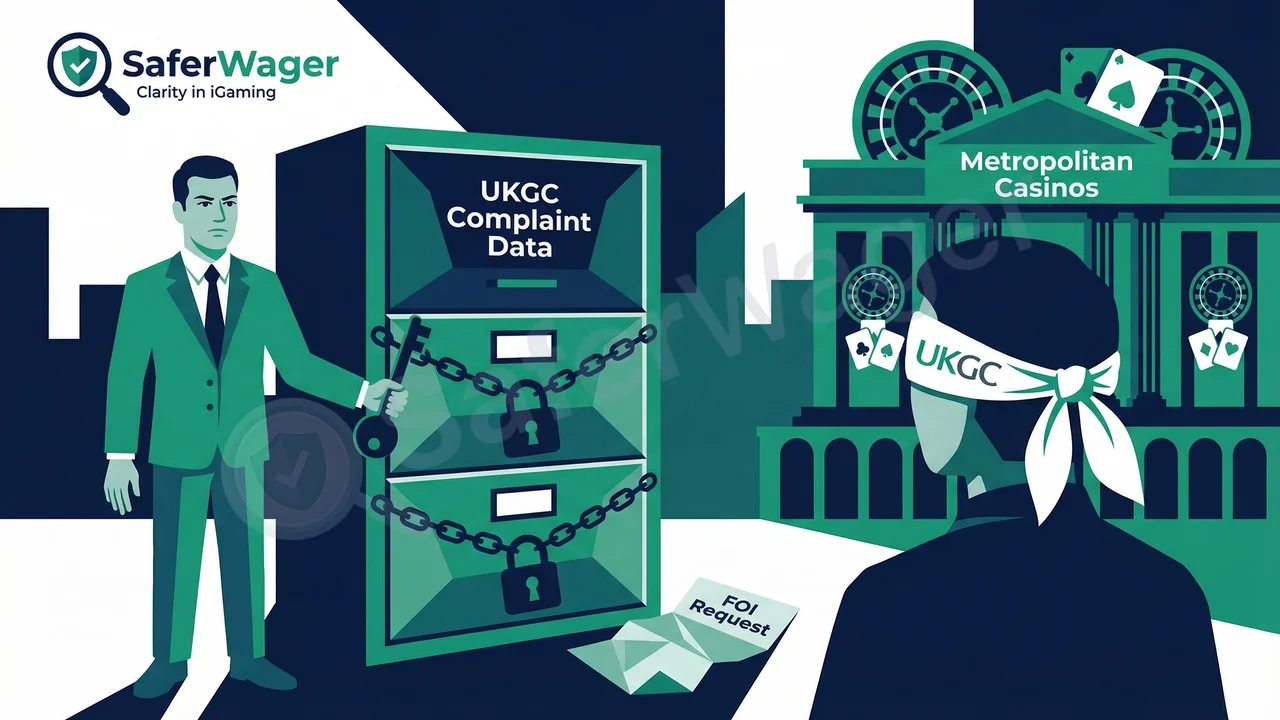
The UK Gambling Commission has refused to confirm or deny holding complaint data about Metropolitan Casinos, citing law enforcement exemptions. The decision highlights the conflict between regulatory secrecy needed for investigations and the public's right to information about operator conduct.
Article Content
The UK Gambling Commission (UKGC) has refused to disclose whether it holds any information regarding complaints about Metropolitan Casinos, citing rules designed to protect law enforcement and regulatory investigations.
In response to a Freedom of Information (FOI) request dated 22 December 2025, the regulator would neither confirm nor deny the existence of complaints related to "unfair terms and conditions, victimisation or discrimination" against the operator or its predecessor, Casino Caesars.
This response highlights a significant aspect of UK gambling regulation: the boundary between protecting ongoing regulatory work and providing consumers with transparent information about specific operators.
The UKGC's Justification
The Commission invoked Section 31(3) of the Freedom of Information Act 2000, an exemption related to law enforcement. The UKGC stated that its primary duty is to regulate the industry, not to act as a consumer ombudsman for individual disputes. Information from complaints is used to build a broader intelligence picture and inform potential regulatory action against a licensee.
In its official response, the UKGC argued that confirming or denying whether it held such information could:
- Prejudice investigations: Revealing that information is held could alert an operator to potential scrutiny, allowing them to alter their behaviour or hinder an investigation.
- Impact licensee openness: Operators might be less forthcoming with information if they believe any data shared could be released publicly through FOI requests.
- Reveal regulatory blind spots: Confirming that no information is held could inadvertently signal to operators that they are not under scrutiny.
Public Interest vs. Regulatory Secrecy
The UKGC is required to conduct a public interest test when applying this exemption. It acknowledged arguments in favour of disclosure, noting that transparency helps the public hold the Commission to account and builds confidence in its ability to protect consumers.
However, the regulator concluded that the public interest was better served by maintaining the exemption. It reasoned that jeopardising its ability to conduct effective investigations would ultimately be a greater detriment to public protection. The Commission stressed that it publishes full details of any enforcement activity, fines, or settlements once a formal regulatory decision has been made.
What This Means for Consumers
The UKGC's position means that consumers seeking to research an operator's history of complaints will find a significant information gap. Unless the Commission has taken formal, public action against a gambling company, players have no official way of knowing if a pattern of complaints regarding issues like unfair terms or discrimination exists.
While the regulator's stance is designed to ensure the integrity of its enforcement work, it leaves consumers to rely on published sanctions as the sole indicator of an operator's past failings. This response underscores the fact that the UKGC's data is primarily for regulatory intelligence, not direct-to-consumer guidance, creating a blind spot for players trying to make informed decisions about where they gamble.