
UKGC Withholds Data on Marketing Compliance
Regulator cites excessive costs in response to a Freedom of Information request on operator advertising and marketing checks.
The UK Gambling Commission has declined to release data on its compliance assessments of operator marketing practices. Citing excessive costs, the regulator withheld information on how many times it has investigated breaches of advertising and direct marketing rules since June 2022. This lack of transparency makes it difficult to assess the effectiveness of enforcement in a key area of consumer protection.
Article Content
Regulator Declines to Disclose Marketing Enforcement Data
The UK Gambling Commission (UKGC) has withheld information on the frequency and nature of its compliance assessments into operator marketing practices, according to a Freedom of Information (FOI) response published on its website.
The request, dated 11 July 2025, sought to understand how often the regulator has scrutinised gambling firms for compliance with key consumer protection rules related to advertising and direct marketing since 1 June 2022.
Context: Protecting Consumers from Unwanted Marketing
The information requested relates to specific provisions in the Licence Conditions and Codes of Practice (LCCP) that govern how operators can market their services. These rules are designed to ensure advertising is socially responsible and that operators respect customers' choices about receiving marketing materials, such as emails and text messages.
Effective enforcement of these rules is critical for protecting consumers, particularly those who may be vulnerable to gambling-related harm or have actively tried to opt out of marketing communications.
Details of the Request and Response
The FOI request asked for specific figures on compliance assessments related to:
- LCCP 5.1.6: Compliance with UK advertising codes.
- LCCP 5.1.8: Compliance with industry-specific advertising codes.
- LCCP 5.1.11: Rules for obtaining consent for direct electronic marketing.
- LCCP 5.1.12: Systems for managing customer marketing preferences.
Crucially, the request also asked how many of these assessments investigated operators' use of "risk algorithms" in their marketing activities and the technical systems used to capture customer consent.
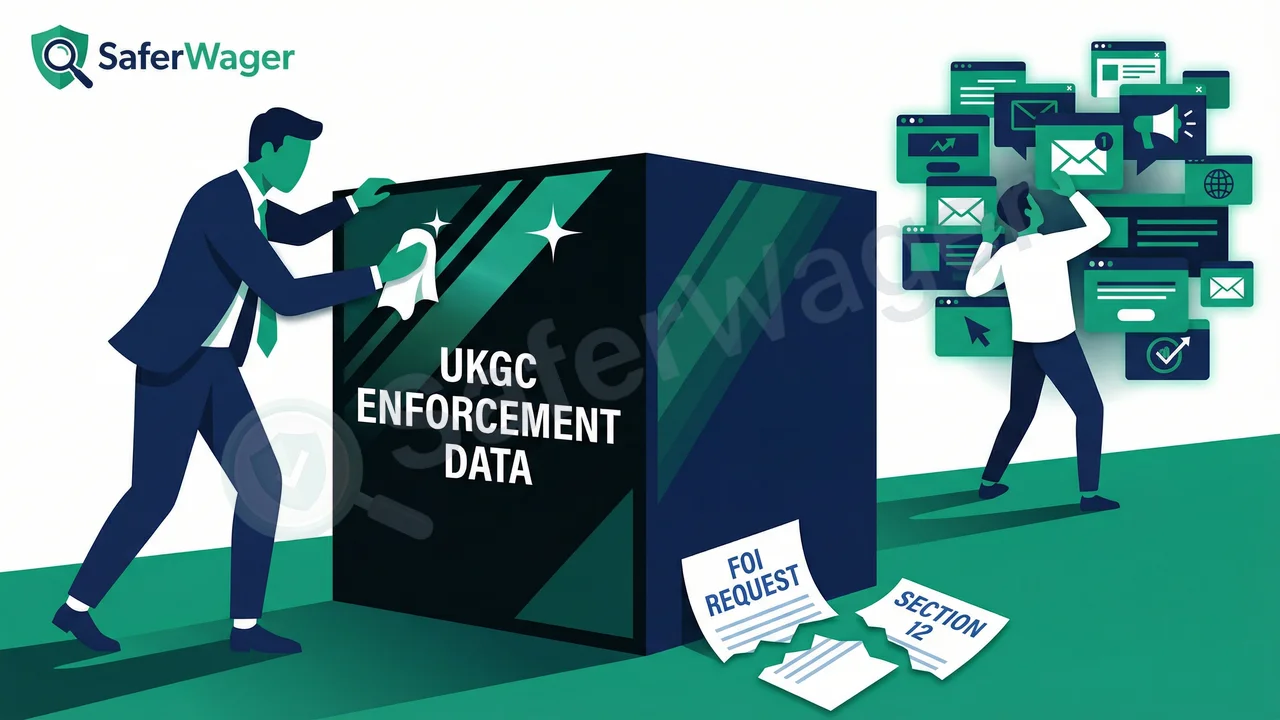
In its response, the Commission stated that providing the information would exceed the cost limit set by the FOI Act, which is £450 or 18 hours of staff time. The regulator confirmed it held some of the requested information but invoked Section 12 of the Act to withhold all of it.
The UKGC explained that an initial search returned a "large number of records" and that reviewing them all to extract the relevant data would be too time-consuming. It noted that it does not hold readily recorded information on checks into industry-specific ad codes, risk algorithms, or consent capture mechanisms.
Significance: A Lack of Transparency
The Commission's refusal to provide the data means there is no public visibility into its enforcement activities in this critical area of consumer protection. Without this information, it is difficult for consumers, researchers, and parliamentarians to assess how rigorously the UKGC is monitoring operator compliance with marketing rules.
The response suggests that data on specific enforcement actions, such as investigations into the interplay between harm-reduction algorithms and marketing, is not easily accessible. This raises questions about the regulator's internal data management and its ability to efficiently track its own compliance work.
The UKGC invited the requester to submit a refined, narrower request, which would be treated as a new enquiry.