
UKGC Cites Costs to Withhold Ladbrokes Data
Regulator refuses to release ten years of information on the major bookmaker, citing Freedom of Information cost limits.
The UK Gambling Commission has withheld a decade of regulatory information concerning Ladbrokes, following a Freedom of Information request. The regulator cited the excessive cost and time required to compile the data as the reason for the refusal.
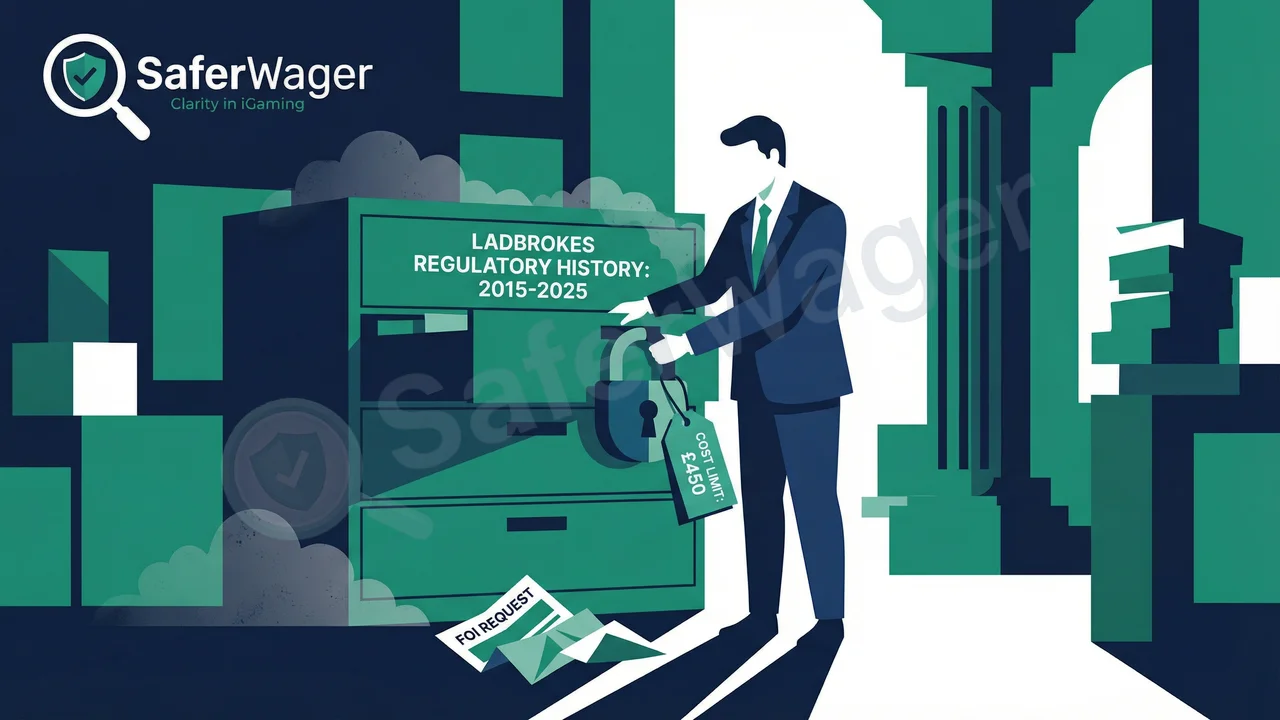
Article Content
The UK Gambling Commission (UKGC) has withheld information regarding its regulatory interactions with Ladbrokes Betting & Gaming Limited over a ten-year period, according to a recent Freedom of Information (FOI) response.
The request, dated 19 February 2025, sought to uncover details of the Commission's activities concerning the operator from 1 January 2015 to the present day. However, the regulator refused to provide the information, citing cost limitations under UK law.
What the Request Asked
Transparency in gambling regulation is a key concern for consumers seeking to understand how operators are held to account. This FOI request aimed to shed light on several aspects of the UKGC's oversight of Ladbrokes, asking for specific details on:
- Investigations into Ladbrokes relating to any gambling dispute.
- Cancellations of premises licences for any Ladbrokes shop.
- Claims made by the Commission against any insurer for Ladbrokes.
- Instances of the UKGC reporting Ladbrokes to the UK Parliament.
- Complaints received about Ladbrokes refusing to pay a gambling win of at least £57,000.
- Responses to any Judicial Review challenge about a gambling dispute during 2020 or 2021.
Why the Information Was Withheld
The UKGC formally refused the request by invoking Section 12 of the Freedom of Information Act 2000. This provision allows public authorities to decline requests where the cost of locating, retrieving, and extracting the information would exceed a set limit of £450, which is estimated to be 18 hours of staff time.
In its response, the Commission stated: "As you have requested information for a period of ten years, we would need to search all relevant systems in order to identify, locate and retrieve information we hold falling within scope of your request. We estimate that it would take in excess of 18 hours to determine appropriate material and retrieve and extract any relevant information."
The regulator also noted that it could not confirm whether other exemptions would apply to the information until a full search was completed, which it deemed too costly to undertake.
What This Means for Consumers
This outcome highlights a significant challenge in obtaining a comprehensive overview of a major operator's long-term regulatory history. While the UKGC's refusal is based on a legitimate provision within the FOIA, it results in an information gap for the public.
The specific and wide-ranging nature of the questions—from individual high-value payout disputes to parliamentary reporting—demonstrates an attempt to build a detailed picture of the operator's conduct and the regulator's response.
The Commission's decision does not imply that any of the events queried have or have not occurred. It simply means that the cost of confirming or denying them across a decade-long period is prohibitive under the FOI framework.
The UKGC has advised the requestor that they could submit a more 'refined' request, for example by narrowing the timeframe or the scope of the questions, which might fall within the cost limit. This suggests that while broad transparency is difficult to achieve via a single request, more targeted inquiries may still yield results for consumers and researchers.