
UKGC Shields Operator Marketing Talks
Regulator withholds all correspondence with the ICO on unlawful marketing, citing fears that disclosure would help operators evade scrutiny.
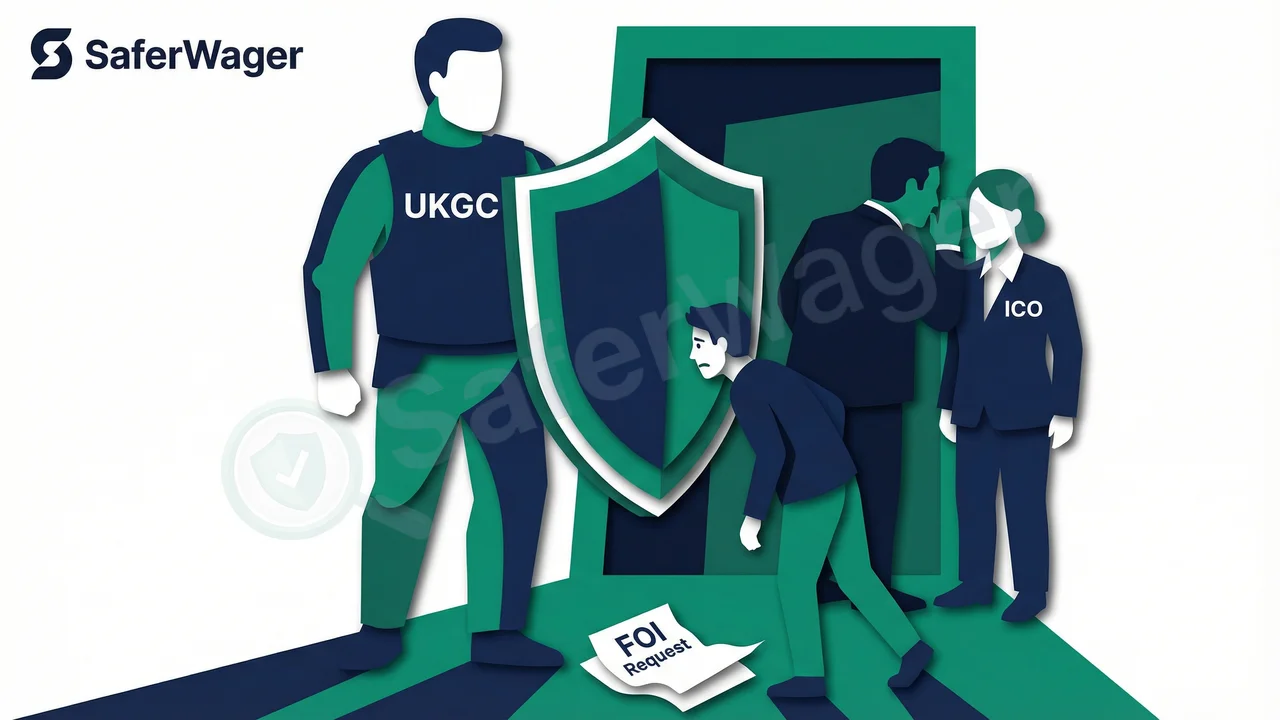
The UK Gambling Commission has refused a Freedom of Information request for correspondence with the ICO about unlawful marketing. The regulator stated that releasing the information would undermine its enforcement functions and allow operators to learn how to evade scrutiny.
Article Content
UKGC Withholds All Correspondence with ICO on Unlawful Marketing
The UK Gambling Commission (UKGC) has refused to release any correspondence with the Information Commissioner’s Office (ICO) regarding unlawful marketing by gambling operators. A Freedom of Information (FOI) response published by the regulator confirms it holds records of such discussions but is withholding them in their entirety to protect its enforcement capabilities.
A Clash Between Transparency and Enforcement
The decision highlights a significant tension between the public's right to know and the regulator's need to conduct investigations without tipping off the subjects. For consumers, this means that while two key UK regulators are collaborating on tackling potentially illegal marketing, the nature and extent of that work, including which operators are involved, remains secret.
The original request, dated 16 January 2023, asked for all correspondence exchanged between the UKGC and the ICO over the previous 12 months concerning how the two bodies work together on unlawful marketing.
Why Was the Information Withheld?
In its response, the UKGC confirmed it held a "small number of records" but would not release them, citing Section 31 of the Freedom of Information Act, which relates to law enforcement.
The Commission argued that disclosing the information would likely prejudice its ability to carry out its regulatory functions. An internal review, which upheld the initial decision, provided further detail on this reasoning:
- Revealing Methods: The UKGC stated that releasing the emails would give licensees "specific detail enabling [them] to understand what information is assessed and discussed between regulators." It fears operators could use this knowledge to "circumvent this assessment process" and tailor their behaviour to avoid scrutiny.
- Damaging Relationships: The regulator also claimed that disclosure would undermine its relationship with the ICO. It argued that other regulators share information on the understanding that it will remain confidential, and releasing it would make them "less likely to share information with us in the future."
What This Means for Consumers
The UKGC and the ICO are the two primary bodies responsible for policing gambling marketing. The UKGC enforces the Licence Conditions and Codes of Practice (LCCP), while the ICO enforces the Privacy and Electronic Communications Regulations (PECR), which govern electronic marketing like emails and text messages.
Collaboration between the two is essential for protecting consumers from issues like spam marketing or advertising that targets vulnerable people. However, the Commission's refusal to provide any details on this collaboration means the public cannot assess its effectiveness.
The UKGC's position is that secrecy is necessary to protect consumers. By keeping its methods and targets confidential, it believes it can more effectively investigate and penalise non-compliant operators. The regulator concluded that the "public interest is better served by withholding the emails ensuring that consumers are protected through our cooperative work with the ICO."
While this approach may protect ongoing or future investigations, it leaves consumers and transparency advocates in the dark about how robustly past marketing failures have been addressed at an inter-agency level.