
UKGC Withholds Footstock Licensing Data
Regulator cites 'law enforcement' exemption to block release of documents concerning failed 'football stock market' operator.
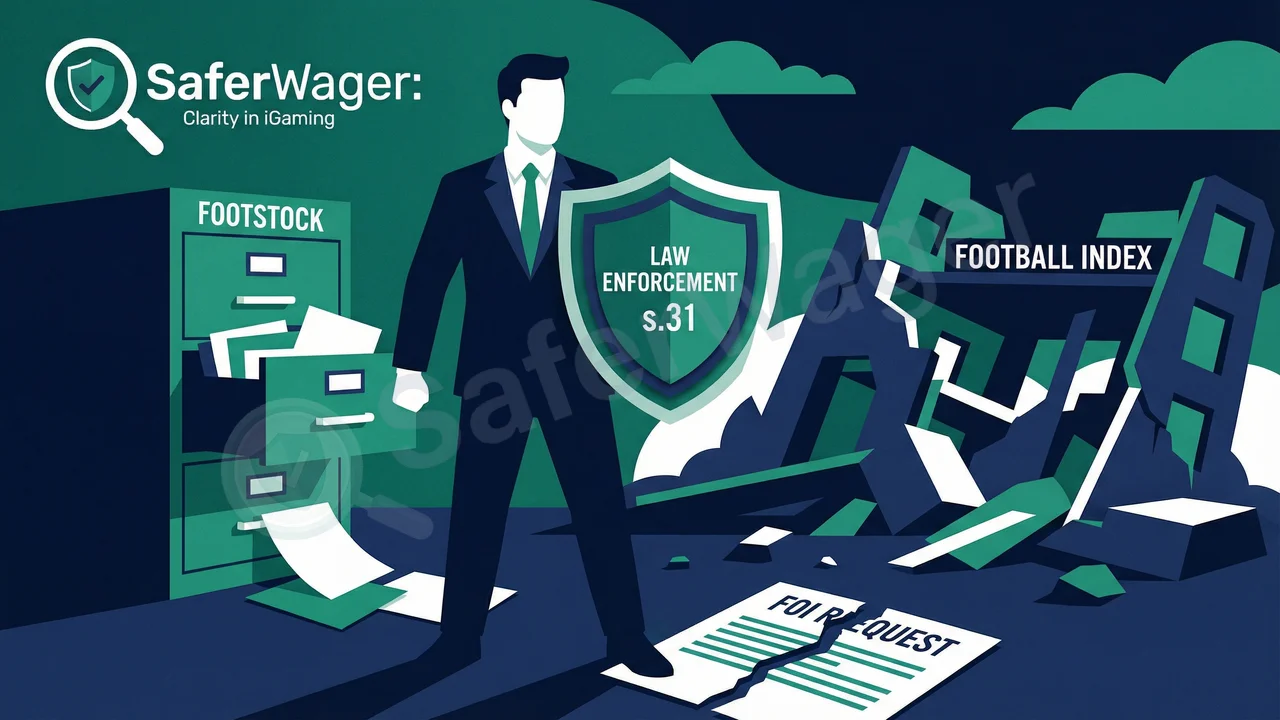
The UK Gambling Commission has refused to release licensing documents for the failed operator Footstock, despite confirming it holds the information. The regulator cited 'law enforcement' exemptions, arguing disclosure would harm its ability to assess operators, a decision made in the context of the high-profile collapse of the similar platform, Football Index.
Article Content
The UK Gambling Commission (UKGC) has refused to release licensing documents and correspondence related to Footstock, a defunct 'football stock market' operator, according to a Freedom of Information (FOI) response published by the regulator.
The request, dated 27 November 2025, sought information on the decision to license Footstock, noting it was issued while a separate investigation into the similar and now-collapsed platform, Football Index, was already underway. Footstock surrendered its licence and ceased trading in March 2021, around the same time as the Football Index collapse.
Request Denied on Law Enforcement Grounds
In its response, the Commission confirmed that it holds the requested information but is withholding it from the public. The regulator invoked section 31(1)(g) of the Freedom of Information Act, an exemption related to 'law enforcement'.
The UKGC argued that releasing the information would likely prejudice its ability to carry out its regulatory functions, which include:
- Ascertaining if an operator has failed to comply with the law.
- Determining an operator's fitness and competence to hold a licence.
- Deciding whether regulatory action is justified.
Essentially, the Commission believes that disclosing its internal discussions and assessment techniques could allow other operators to 'game the system' by altering their behaviour specifically to pass assessments, rather than being genuinely compliant. This, it argues, would ultimately harm consumer protection.
Public Interest and the Football Index Precedent
The FOI request specifically highlighted the high public interest in the case, given the significant consumer losses associated with the Football Index failure. The Commission acknowledged this interest and even noted that for previous requests concerning Football Index, the balance was found in favour of disclosure.
However, the regulator stated that the collapse of BetIndex (the company behind Football Index) was a "unique case" and "cannot set a precedent for all cases."
In weighing the public interest, the UKGC concluded that protecting its confidential assessment processes was more important than transparency in this specific instance. The response states, "We consider that the public interest is better served by withholding this information, ensuring that consumers are protected through our processes rather than releasing information about our processes which in our view will not benefit the public as a whole."
What This Means for Consumers
This decision underscores the ongoing tension between the public's right to know and the regulator's need to protect its operational methods. While the UKGC maintains its processes are robust, this refusal means that the public and former customers of Footstock will not get to see the specifics of how the operator was vetted and licensed, especially at a time when a similar 'football stock market' model was already showing signs of distress.
The ruling signals that the high level of disclosure seen after the Football Index collapse may not be repeated for other operator failures, with the Commission prioritising the confidentiality of its regulatory functions.