
UKGC Withholds Data Programme Details
Regulator cites excessive cost to refuse a Freedom of Information request seeking transparency on its data collection and analysis activities.
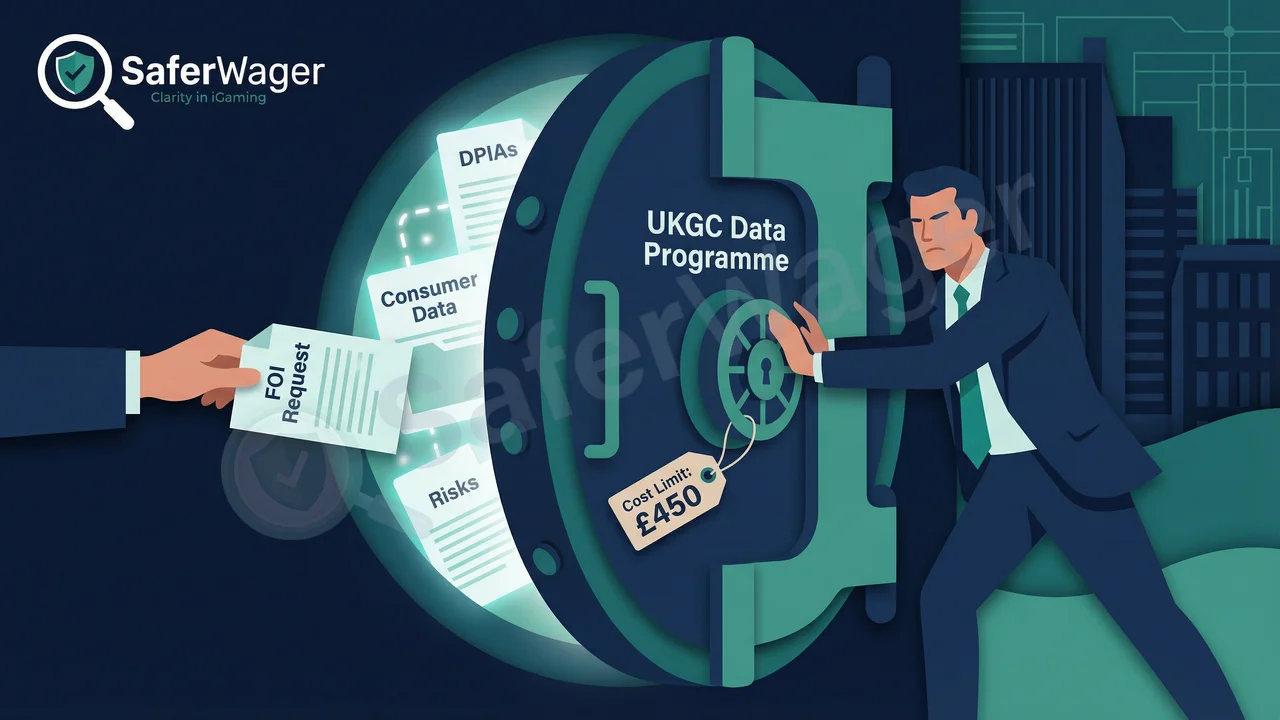
The UK Gambling Commission has refused a Freedom of Information request for details about its internal Data Programme. Citing excessive costs, the regulator has withheld all information on the programme's budget, data sharing agreements, and risk assessments, preventing public scrutiny.
Article Content
UKGC Cites Cost to Withhold Details on Its Data Programme
The UK Gambling Commission (UKGC) has refused to release detailed information about its internal Data Programme, preventing public scrutiny of its objectives, budget, and data-handling practices. The refusal came in response to a Freedom of Information (FOI) request filed on 9 May 2025.
In its response, the regulator confirmed it holds information related to the programme but stated that retrieving it would exceed the cost limit set by the Freedom of Information Act.
Why This Matters to Consumers
The UKGC's Data Programme, which falls under its Research and Policy division, is central to its regulatory function. Such programmes typically involve collecting and analysing large volumes of data, including potentially sensitive consumer information, to understand gambling behaviour and inform policy.
Without transparency, it is impossible for the public, researchers, or consumer protection groups to assess how this data is being collected, used, and protected. Key questions about the programme's effectiveness, privacy implications, and accountability remain unanswered.
A Comprehensive Request Denied
The FOI request sought comprehensive details on the Data Programme, asking for:
- Programme objectives, scope, and timelines.
- Business cases and strategy documents.
- Details of external contracts, including costs.
- The types of data being collected and shared.
- Data Protection Impact Assessments (DPIAs).
- Data-sharing agreements with third parties.
- Governance arrangements and budget information.
- Correspondence regarding any concerns, risks, or complaints about the programme.
The UKGC invoked Section 12 of the FOIA, which allows public bodies to refuse requests where the cost of compliance would exceed £450, equivalent to 18 hours of staff time. The Commission stated that the relevant information was stored in multiple locations and not in an "easily extractable format," requiring a manual review of a large volume of documents.
The Significance of the Refusal
By confirming it holds information for each part of the request—including documents on risks and complaints—but refusing to provide it, the UKGC leaves significant gaps in the public's understanding of a key regulatory tool.
The refusal to disclose DPIAs and data-sharing agreements is particularly noteworthy. These documents are crucial for understanding how consumer data privacy is being safeguarded. Similarly, withholding information on external contracts prevents scrutiny of how public money is being spent and which private companies are involved in the state's data collection efforts.
The Commission suggested the requester could submit a more refined request but noted it was "unlikely" that the information could be retrieved within the cost limit. This response effectively closes the door on obtaining meaningful transparency about the Data Programme's operations through the FOI process, raising questions about the regulator's commitment to openness regarding its data-driven initiatives.