
UKGC Withholds Complaint and Refund Data
Regulator cites excessive cost to retrieve key consumer protection information, leaving a data black hole on problem gambling refunds.
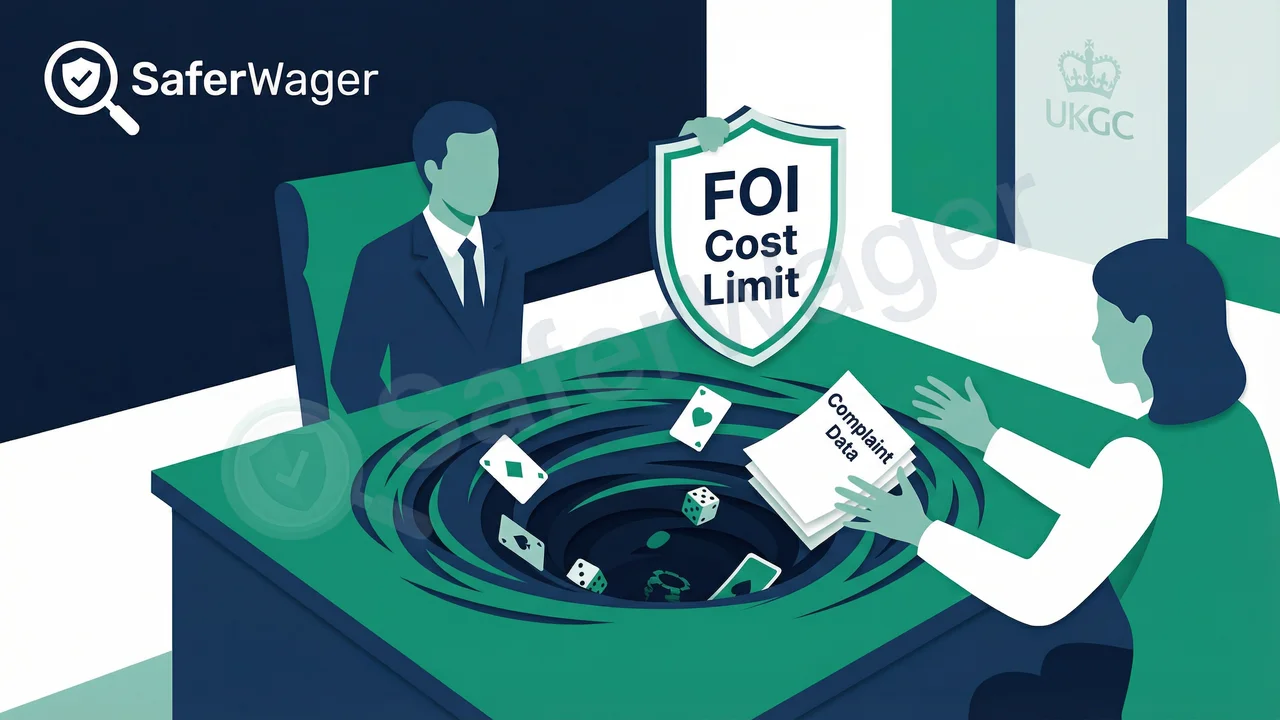
The UK Gambling Commission has refused a Freedom of Information request for data on annual complaints and problem gambling refunds, citing excessive costs. This decision highlights a significant gap in the regulator's ability to track key consumer protection issues, as refund-related data is not systematically categorised.
Article Content
Regulator Cites Cost to Withhold Key Complaint Data
The UK Gambling Commission (UKGC) has withheld data on the total number of complaints it received over the last year, including crucial information on problem gambling-related refund requests. In a response to a Freedom of Information (FOI) request dated 1 June 2024, the regulator stated that retrieving the information would exceed cost and time limits set out in law.
This decision leaves a significant gap in public knowledge regarding the scale of consumer disputes and, specifically, how often vulnerable customers seek refunds for losses incurred during periods of harmful play.
Why This Data Matters
For consumers, understanding the volume and nature of complaints made to the regulator is a key indicator of industry standards and operator conduct. Data on problem gambling refund requests is particularly important, as it sheds light on how often operators are challenged over their social responsibility failings and how they resolve these disputes outside of formal regulatory or court action. Without this information, consumers and protection groups cannot effectively gauge the prevalence of these issues or track industry trends.
The Request and the Refusal
The FOI request asked for two key pieces of information for the last 12 months:
- The total number of complaints received by the UKGC.
- The total number of requests for problem gambling refunds and the number of such refunds issued by operators voluntarily.
In its response, the Commission confirmed it could obtain the total number of complaints. However, it explained that information regarding problem gambling refunds is not held in a structured, searchable format. Instead, these details are recorded in a 'free text' field within each complaint record.
Consequently, the UKGC stated that identifying the specific refund data would require a manual review of every complaint, a task estimated to exceed the 18-hour, £450 cost limit permitted under Section 12 of the Freedom of Information Act. Citing official guidance, the Commission refused the entire request, including the total complaint figure it had admitted was accessible, to allow the requester the opportunity to refine their query.
A Data Black Hole
The UKGC’s inability to easily categorise and retrieve data on a critical consumer protection issue like problem gambling refunds is significant. It suggests that the Commission's data management systems are not configured to track specific complaint types that are of high public interest.
This lack of systematic data collection makes it difficult to assess the effectiveness of current social responsibility codes and operator policies. For consumers navigating a dispute over gambling-related harm, this information blackout means there is no public benchmark for how often operators provide refunds without being compelled by a court or the regulator. This opacity can put individuals at a disadvantage when trying to resolve complaints directly with a gambling business.