
UKGC Cites Secrecy on Black Market Data
Regulator withholds internal discussions on illegal betting, citing ongoing policy development and the need to protect investigation methods.
A Freedom of Information request has revealed the UK Gambling Commission is withholding most of its internal and governmental communications about the black market. The regulator cited the need to protect ongoing policy development and its investigation methods as reasons for the secrecy.
Article Content
Regulator Shields Black Market Communications from Public View
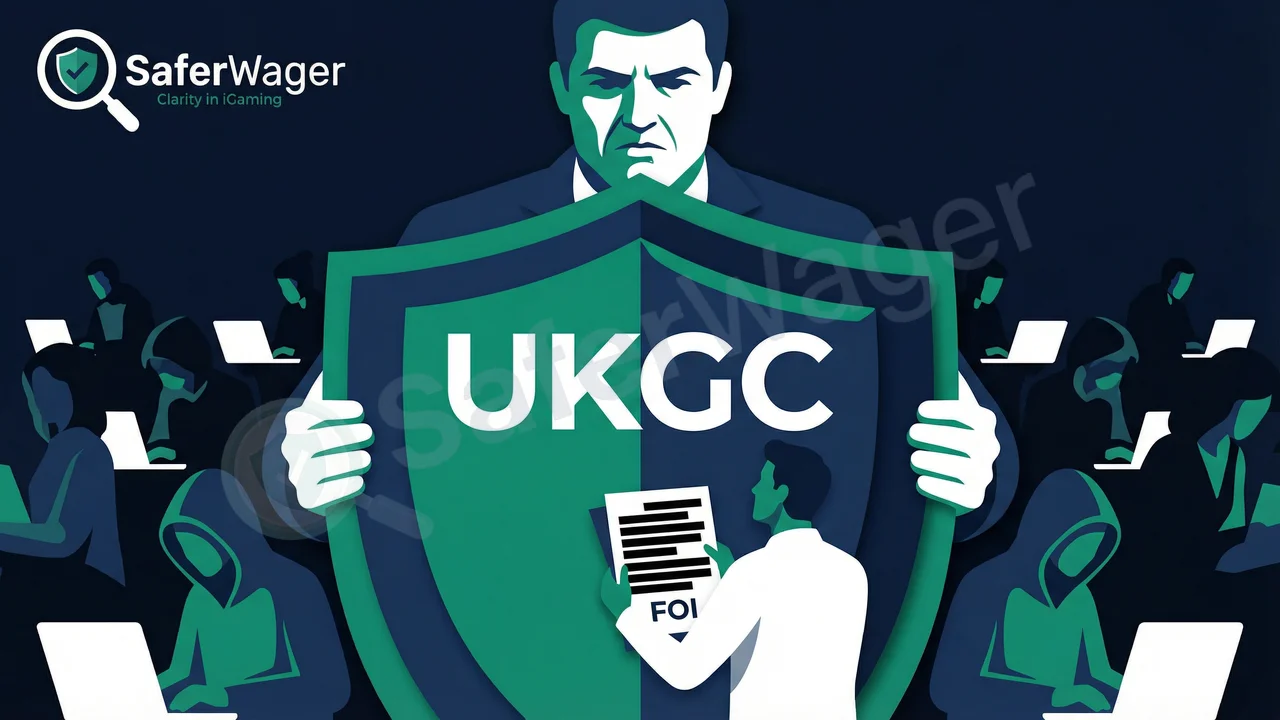
The UK Gambling Commission (UKGC) has withheld the vast majority of its internal communications regarding the gambling black market, following a Freedom of Information (FOI) request. The regulator cited exemptions related to the formulation of government policy and the protection of its regulatory functions, effectively shielding high-level discussions from public scrutiny.
The request, submitted on 11 December 2023, sought a comprehensive view of the Commission's work on unlicensed and illegal gambling. It asked for all board meeting papers, internal emails from CEO Andrew Rhodes and Executive Director Tim Miller, and all correspondence with the Department for Culture, Media and Sport (DCMS) on the subject from a three-month period in late 2023.
In its response, the UKGC confirmed it held the requested information but would only release it in a heavily redacted format, citing a “partial exemption.” While two PDF documents were provided, the Commission invoked powerful sections of the FOIA to justify withholding the substantive content.
Why Was the Information Withheld?
The UKGC's refusal to disclose the information rests on two key arguments:
1. Section 35 - Formulation of Government Policy: The Commission argued that releasing the documents would harm the policymaking process. It stated that a “safe space” is required for the UKGC and government bodies to debate live policy issues away from “external interference and distraction.” The response noted that the “policy process also remains ongoing at the time of the request,” confirming that active, sensitive discussions about the black market are taking place between the regulator and government.
2. Section 31 - Prejudice to Regulatory Functions: The UKGC also claimed that disclosure would compromise its ability to regulate the industry. It argued that releasing the information would:
- Reveal its techniques for assessing operators and conducting investigations.
- Prejudice its compliance and enforcement activities.
- Undermine the trust it has with licensed operators, who may be less willing to cooperate in an open manner.
In essence, the regulator believes that making its methods public would allow illegal operators to understand and circumvent them, ultimately harming consumer protection.
What This Means for Consumers
The size and danger of the unregulated black market is a central issue in the debate over UK gambling laws. Stricter rules for licensed operators, such as the ongoing rollout of affordability checks, have led to concerns that some players may be pushed towards illegal sites that offer no consumer protections.
This FOI response reveals that the topic is a significant priority at the highest levels of the UKGC and government. However, the heavy redactions mean that consumers and the public remain in the dark about the specifics.
Key questions remain unanswered:
- How does the UKGC internally assess the size and threat of the black market?
- What specific strategies are being discussed with the government to combat it?
- What is the content of the advice being given to the DCMS by the regulator?
While the UKGC states that secrecy is necessary to protect its processes and ongoing policy work, this lack of transparency makes it difficult for the public to hold the regulator accountable or to understand the true nature of the threat posed by illegal gambling operators.