
UKGC Withholds Allwyn-Russia Lottery Licence Correspondence
Regulator cites legal privilege to redact communications regarding the National Lottery operator's alleged Russian links during its licence bid.
The UK Gambling Commission has partially rejected a Freedom of Information request for correspondence with National Lottery operator Allwyn about its alleged links to Russia. The regulator cited legal professional privilege and data protection to justify redacting the majority of the information, leaving key details of its due diligence process shielded from public view.
Article Content
The UK Gambling Commission (UKGC) has released heavily redacted correspondence concerning discussions with Allwyn about its alleged links to Russia during the 4th National Lottery Licence tender process. In response to a Freedom of Information (FOI) request dated 7 June 2024, the regulator confirmed it holds the information but has withheld the substantive content, citing legal professional privilege and data protection exemptions.
Context of the Request
The FOI request sought all email correspondence between the Commission and Allwyn regarding the operator's connections to Russia and Russian-linked state enterprises. This issue was a point of significant public and parliamentary scrutiny during the competition to award the lucrative fourth National Lottery licence, particularly following Russia's full-scale invasion of Ukraine.
Allwyn, the eventual winner, faced questions over the business interests of one of its parent company's co-owners. For consumers, the vetting process for the organisation running the National Lottery is a key area of public interest, ensuring the operator meets the highest standards of propriety.
Details of the Redactions
While the UKGC released a 1.7MB document, it stated that significant portions were redacted or removed. The Commission relied on two primary exemptions under the Freedom of Information Act 2000:
-
Section 40(2) - Personal Information: Standard redactions were made to remove personal data such as names and email addresses. The UKGC argued there was no legitimate public interest in disclosing this information that would override the individuals' right to privacy.
-
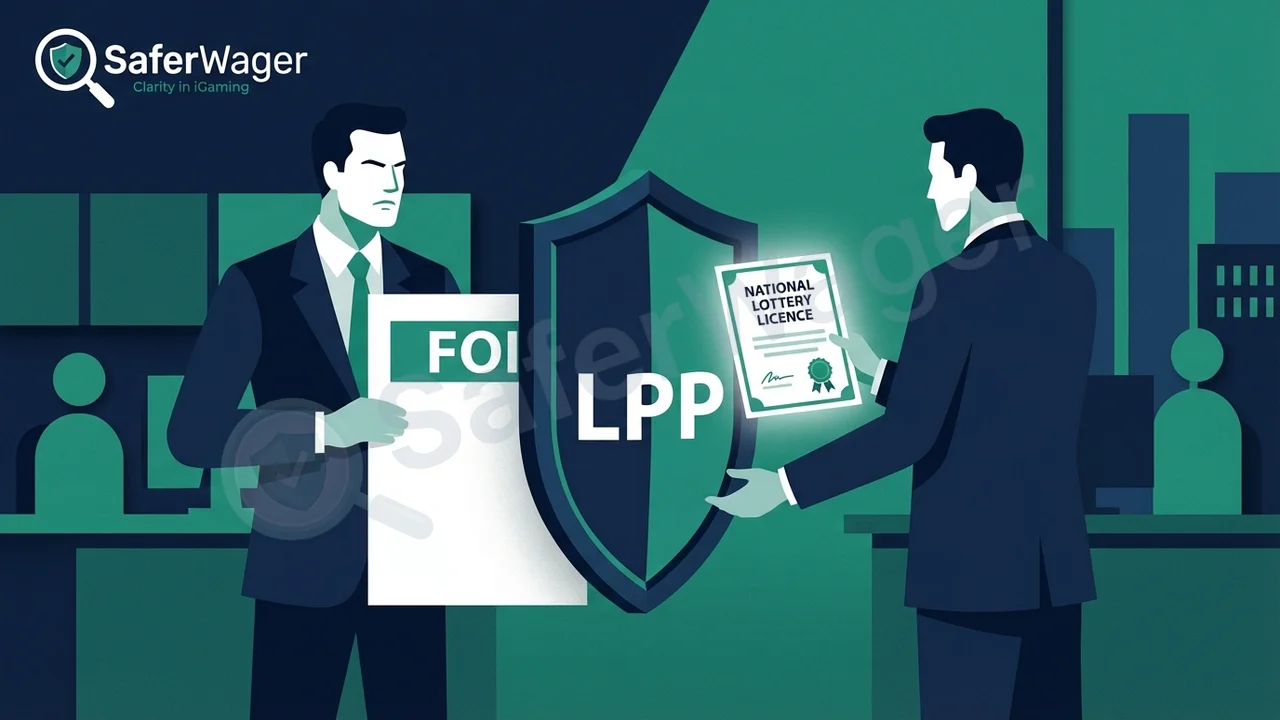
Section 42 - Legal Professional Privilege (LPP): This is the most significant exemption used. The UKGC has withheld information that constitutes confidential legal advice. This applies to advice sought by the Commission itself and to privileged information shared with it by third parties, such as Allwyn, on a confidential basis.
In its public interest test, the Commission acknowledged the need for transparency but argued that a stronger public interest exists in maintaining the confidentiality of legal advice. It stated that disclosure could "hinder the candid nature of communications in the future" and negatively impact the frankness of legal advice sought, which would be "damaging to future decision making which is not in the public interest."
Significance for Consumers
The outcome of this FOI request reveals the limits of transparency in high-stakes regulatory processes. While it confirms that discussions about Allwyn's alleged Russian links did occur between the operator and the regulator, the substance of those conversations remains secret.
For consumers and transparency advocates, the response leaves critical questions about the due diligence process unanswered. The public cannot see the specific legal advice the UKGC received or the detailed information Allwyn provided on the matter.
The Commission's position is that protecting its ability to receive frank legal counsel is essential for effective regulation, which ultimately serves to protect consumers. However, the use of LPP in this context means the public must trust the regulator's closed-door assessment without being able to scrutinise the evidence and reasoning behind it.