
UKGC Cites Law Enforcement in 8XBet Info Refusal
Regulator refuses to confirm or deny existence of compliance correspondence with TGP Europe, 8XBet, and 6686, citing potential prejudice to investigations.
The UK Gambling Commission has withheld information regarding potential compliance concerns at operators 8XBet and 6686. Citing a law enforcement exemption, the regulator refused to confirm or deny if it holds any relevant correspondence. This response suggests that disclosure could compromise potential or ongoing regulatory action.
Article Content
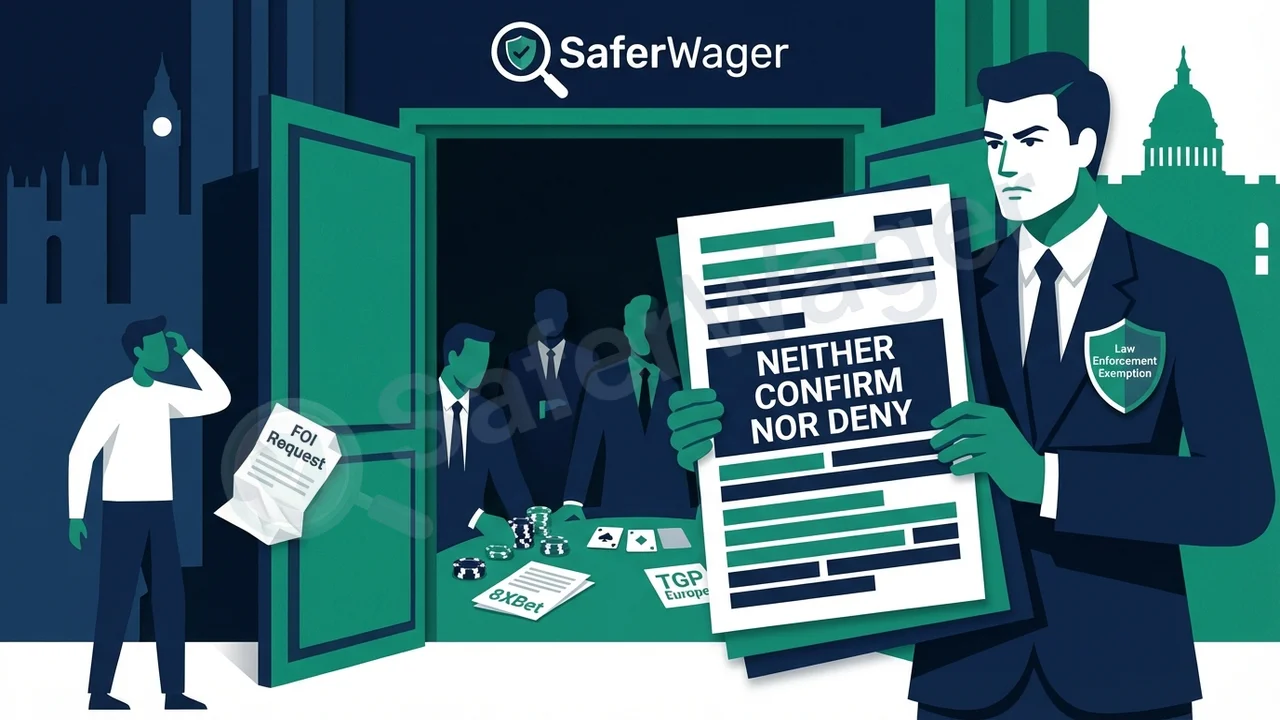
The UK Gambling Commission (UKGC) has refused to confirm or deny whether it holds correspondence flagging compliance concerns with white-label operator TGP Europe and its associated brands, 8XBet and 6686.
In response to a Freedom of Information (FOI) request dated 22 September 2023, the regulator invoked a law enforcement exemption, stating that even acknowledging the existence of such information could compromise its regulatory functions.
Why This Matters to Consumers
A "neither confirm nor deny" response is significant. It is used by public bodies to avoid revealing information that could compromise sensitive activities. By citing the law enforcement exemption, the UKGC signals that confirming or denying the existence of compliance correspondence could alert individuals to potential scrutiny, allowing them to "alter their behaviours or evade detection."
While this response does not prove any wrongdoing by the operators, it leaves consumers without clarity on potential issues. The regulator has determined that protecting the integrity of its regulatory processes outweighs the public's immediate interest in transparency regarding these specific brands.
Details of the FOI Request
The request sought access to any correspondence sent by the Commission to TGP Europe, 8XBet, or 6686 that flagged concerns about issues such as "criminal activity or poor compliance."
TGP Europe Limited holds the UK licence under which numerous third-party brands, including 8XBet and 6686, operate. The request targeted the communication chain between the regulator and these entities.
The UKGC's refusal was based on Section 31(3) of the Freedom of Information Act 2000, which relates to law enforcement. The Commission argued that disclosure would likely prejudice its ability to carry out its regulatory duties.
In its public interest test, the UKGC weighed the arguments for and against disclosure:
- For Disclosure: The Commission acknowledged a legitimate public interest in its own transparency and in providing information that helps consumers make informed choices about where to gamble.
- Against Disclosure: The primary argument was that confirming or denying the request could undermine current or future regulatory work. It could also impact the willingness of other stakeholders to share sensitive information with the UKGC and could unfairly associate operators with unsubstantiated allegations.
Ultimately, the UKGC concluded that the public interest was better served by withholding the information.
Industry Significance
This decision highlights the UKGC's cautious approach when dealing with potentially sensitive operator information. It underscores the regulator's priority to protect the integrity of investigations over immediate public disclosure. For consumers, the use of a law enforcement exemption in a "neither confirm nor deny" response serves as a notable event, even if the specific details remain undisclosed. The Commission stated that if a formal regulatory decision is made, it will ordinarily publish the information in full at that time.