
UKGC Withholds 2022 Lottery Sales Data
Regulator cites 'commercial sensitivity' in refusal to disclose full-year ticket sales figures for Lotto and EuroMillions.
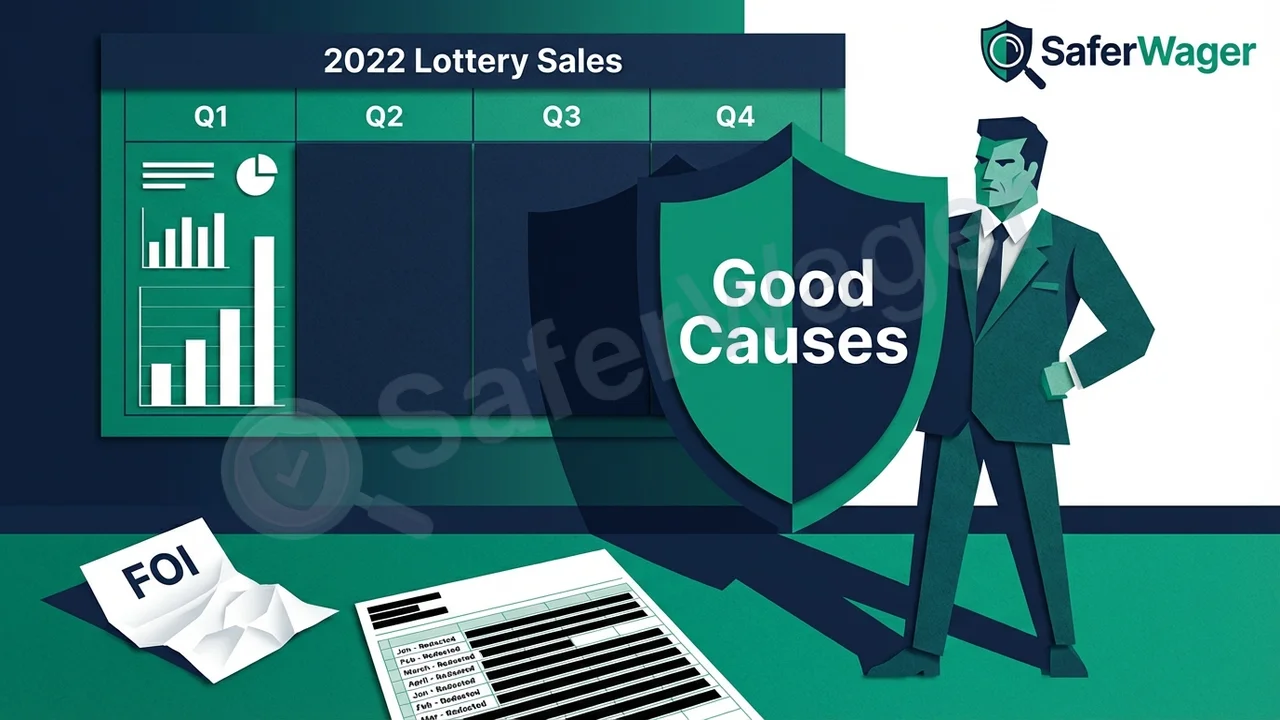
The UK Gambling Commission has refused to release the full 2022 ticket sales data for the National Lottery's Lotto and EuroMillions games. Citing commercial sensitivity, the regulator withheld figures from April to December 2022, arguing disclosure could harm the operator and reduce funds for Good Causes.
Article Content
The UK Gambling Commission (UKGC) has withheld the majority of 2022's ticket sales data for the National Lottery's flagship Lotto and EuroMillions games, citing commercial sensitivity. The decision came in response to a Freedom of Information (FOI) request filed on 15 December 2022.
While the regulator provided some data, the disclosure reveals a significant gap in transparency regarding the performance of the UK's largest gambling products.
The Request and Partial Disclosure
The FOI request asked for the total number of Lotto and EuroMillions tickets sold during 2022, with sales broken down by their respective draw days (Wednesday/Saturday for Lotto and Tuesday/Friday for EuroMillions).
In its response, the UKGC provided a spreadsheet containing calculated figures for the period up to March 2022. However, it refused to disclose any data from April 2022 to December 2022, covering three-quarters of the requested year.
The Commission noted that it does not hold data on the volume of tickets sold directly. Instead, it calculates these figures based on the value of ticket sales, which it does hold.
Justification for Withholding Data
The UKGC invoked section 43 of the Freedom of Information Act 2000 to justify withholding the more recent data. This section provides an exemption for information that is considered commercially sensitive.
The regulator argued that releasing the figures from April 2022 onwards could be "damaging to the operator’s commercial interests." At the time, the National Lottery was operated by Camelot Group.
The Commission stated that releasing sales figures "in isolation, without appropriate context and explanation of overall sales performance leaves them open to misinterpretation." It expressed concern that such data could be used by competing gambling operators to target National Lottery players, which could "adversely affect National Lottery sales, and in turn, the level of returns to Good Causes."
The Public Interest Test
As section 43 is a qualified exemption, the UKGC is required to conduct a public interest test. The regulator acknowledged a legitimate public interest in its own transparency and in understanding the performance of the National Lottery.
However, it concluded that the public interest in protecting the operator's commercial position—and by extension, funding for Good Causes—outweighed the arguments for full disclosure. The UKGC's position is that the potential for misinterpretation and the subsequent negative impact on sales and charity funding presented a greater risk.
Significance for Consumers
This decision highlights the ongoing tension between regulatory transparency and the commercial realities of the UK's privatised National Lottery. For consumers, it means that a complete, independent picture of the lottery's performance throughout the year is not publicly available through this channel.
While the UKGC asserts that protecting the operator's commercial interests ultimately protects the flow of money to Good Causes, the lack of full transparency limits public scrutiny of the performance of both the operator and the regulator overseeing it.