
UKGC Silent on Health Lottery Probe
Regulator refuses to confirm or deny investigation, citing law enforcement exemption in a recent FOI response.
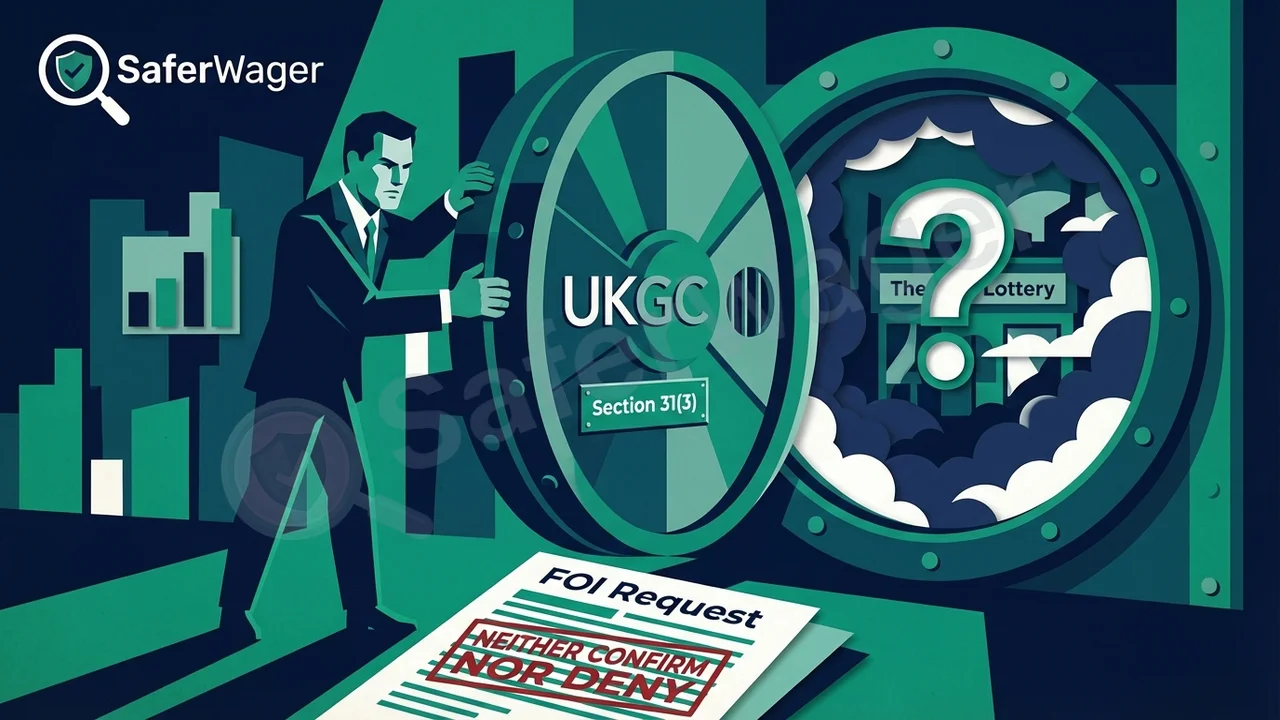
The UK Gambling Commission has issued a 'neither confirm nor deny' response to a query about a potential investigation into the Health Lottery. Citing law enforcement exemptions, the regulator stated that revealing any information could compromise its ability to conduct investigations, leaving consumers without clarity.
Article Content
The UK Gambling Commission (UKGC) has refused to confirm or deny whether it has formally investigated The Health Lottery, according to a Freedom of Information (FOI) response published on its website.
In a request dated 20 August 2024, a member of the public asked the regulator if a formal investigation into The Health Lottery had occurred, what its findings were, and if any regulatory action was taken. The UKGC responded by withholding the information, employing a specific and significant legal exemption.
What the FOI Response Reveals
Instead of providing a direct answer, the Commission issued a "neither confirm nor deny" (NCND) response. This is a specific tool regulators can use when simply confirming or denying the existence of information could have adverse effects.
The UKGC cited Section 31(3) of the Freedom of Information Act 2000, an exemption related to law enforcement. The regulator argued that confirming or denying whether it held information about an investigation could:
- Hinder its ability to conduct investigations effectively.
- Alert individuals or organisations, potentially allowing them to alter behaviour or evade detection.
- Discourage stakeholders from sharing sensitive information with the Commission in the future.
In its response, the UKGC acknowledged the public interest in transparency and accountability. However, it concluded that the need to protect the integrity of its regulatory and investigatory processes was greater. The Commission stated, "disclosure of the information would be damaging to the Commission as a regulatory body which serves to protect the wider public interest."
Why This Matters to Consumers
A "neither confirm nor deny" response is not a confirmation of wrongdoing. However, it is also not a clean bill of health. This type of response is typically reserved for sensitive matters where revealing even the existence of an investigation could compromise that investigation or a future one.
For consumers, this creates a period of uncertainty. The UKGC's stance prevents the public from knowing whether The Health Lottery has been, or is currently, under scrutiny. While the regulator's goal is to protect its ability to enforce the rules, the lack of transparency leaves players without a complete picture of an operator's regulatory history.
What Happens Next?
The Gambling Commission's response highlights the delicate balance between public transparency and effective regulation. The regulator did note that if a formal regulatory decision is made, it will "ordinarily publish all such information in full."
This suggests that while no information is available now, a public announcement could be made in the future if any investigation were to conclude with formal action. Consumers interested in the regulatory standing of The Health Lottery should monitor the UKGC's official announcements for any future updates.