
UKGC Redacts FutGalaxy Case Files to Protect Methods
Regulator withholds witness statements from landmark video game gambling case, citing need to protect future investigations.
The UK Gambling Commission has partially refused a Freedom of Information request for full case files on the 2017 FutGalaxy prosecution. The regulator withheld witness and defence statements to protect its investigative methods from being exploited in future cases. This decision highlights the balance between public transparency and regulatory effectiveness in tackling illegal gambling.
Article Content
UKGC Shields Key Prosecution Documents
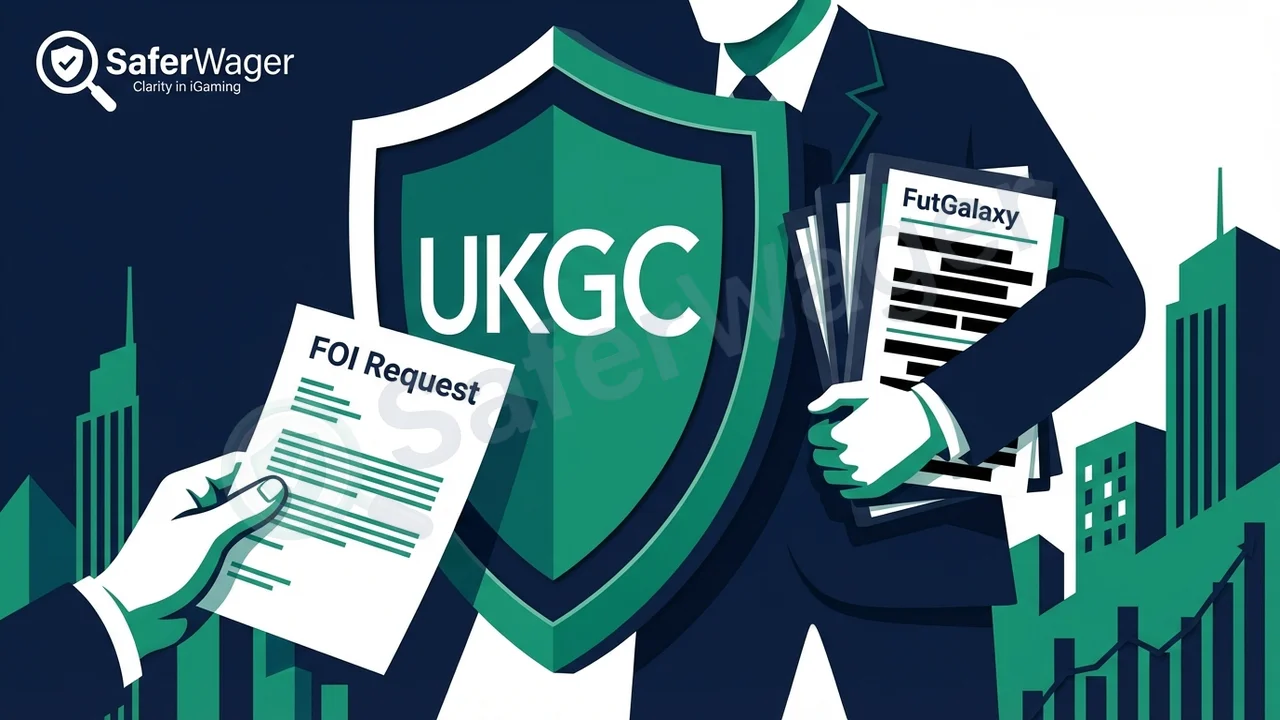
The UK Gambling Commission (UKGC) has withheld key documents relating to the landmark 2017 prosecution of two men behind the illegal video game gambling website, FutGalaxy. In a response to a Freedom of Information (FOI) request dated 24 March 2025, the regulator cited the need to protect its investigative methods and the integrity of future enforcement actions.
While the UKGC released some redacted documents, including court summons and case summaries, it refused to disclose witness statements and defence statements. This decision highlights the balance the regulator strikes between public transparency and its operational security.
Context: The FutGalaxy Case
The prosecution of Dylan Rigby and Craig Douglas was a significant moment in UK gambling regulation. It was one of the first successful prosecutions for providing unlicensed gambling facilities linked to a video game, in this case, EA Sports' FIFA. The FutGalaxy website allowed users, including children, to gamble with in-game currency on the outcome of real-world football matches.
The case underscored the UKGC's commitment to tackling emerging forms of illegal gambling, particularly those that blur the lines between gaming and betting and appeal to younger audiences.
Details of the Disclosure
The FOI request sought access to the full prosecution case files, arguing that court documents fall under the principle of Open Justice. The UKGC granted a partial release, providing five redacted PDF files:
- Case Summary (21 July 2016)
- Summons for Dylan Rigby (21 July 2016)
- Summons for Craig Douglas (21 July 2016)
- Supplementary schedule of charges for Craig Douglas (18 January 2017)
- Redacted Opening Arguments
However, the Commission applied exemptions under the Freedom of Information Act 2000 to withhold more sensitive documents. It specifically invoked Section 30(1), which protects information held for the purpose of criminal investigations.
In its public interest test, the UKGC argued that disclosing the full details, including witness statements, would "provide an insight into how this investigation was conducted which risks compromising the approaches taken in future cases." The regulator also expressed concern that such a disclosure could deter future witnesses from cooperating with investigations.
Significance for Consumers
This decision reveals the UKGC's position on transparency versus its enforcement capabilities. For consumers, it means that while the outcomes of regulatory actions are made public, the detailed playbook of how the Commission builds and prosecutes cases will remain confidential.
The regulator's reasoning is that protecting its methods is essential for its long-term effectiveness in pursuing other illegal operators. By keeping its investigative techniques private, the UKGC believes it can better uphold its core objectives: preventing crime in gambling, ensuring fairness, and protecting children and vulnerable people.
While the principle of open justice is a cornerstone of the legal system, the UKGC has determined that in this instance, the public interest is better served by protecting its ability to conduct future investigations effectively.