
UKGC Redacts BACTA Talks Data
Regulator withholds details of correspondence with amusement trade body, citing risks to regulatory functions and commercial interests.
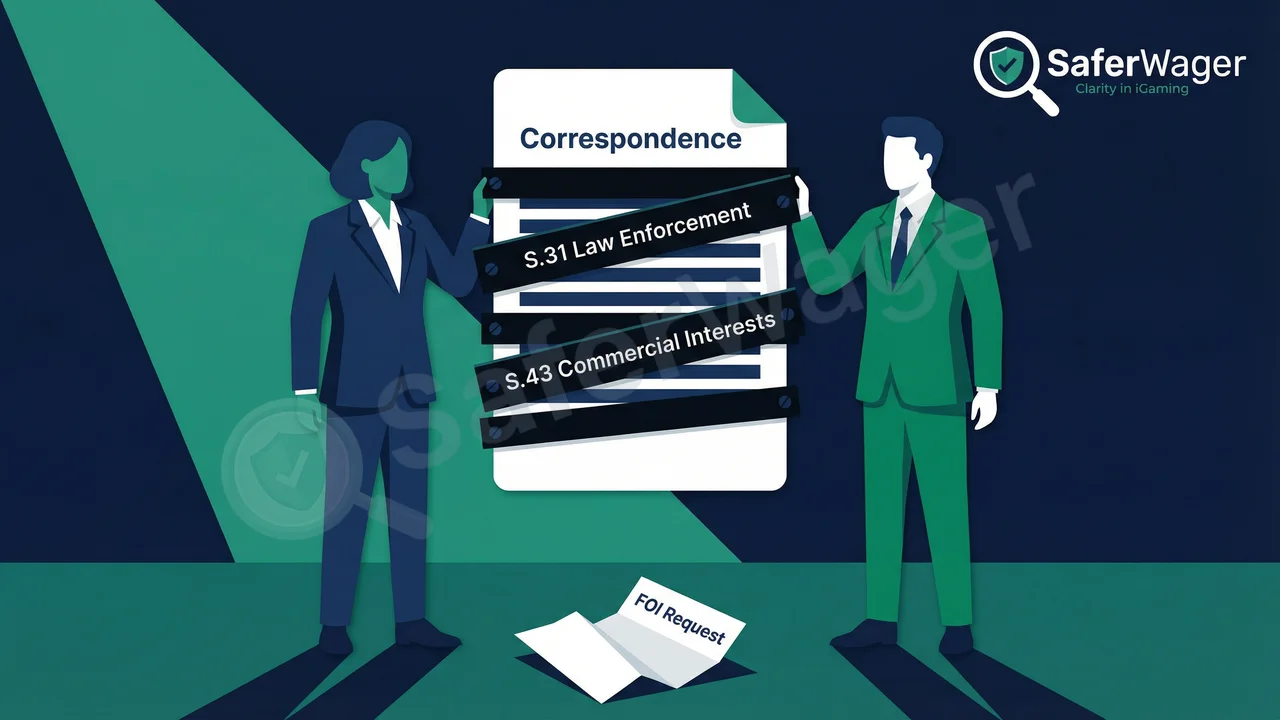
A Freedom of Information request has revealed the extent of redactions applied to correspondence between the UKGC and trade body BACTA. The regulator withheld significant information, citing exemptions related to law enforcement and commercial sensitivity. This highlights the ongoing tension between public transparency and the confidential nature of regulatory work.
Article Content
UKGC Cites Regulatory Harm in Redacting BACTA Correspondence
A Freedom of Information (FOI) request for correspondence between the Gambling Commission (UKGC) and the British Amusement Catering Trade Association (BACTA) has resulted in a heavily redacted disclosure, with the regulator citing risks to its own functions and the trade body's commercial interests.
The request, dated 5 August 2025, asked for all correspondence between the two organisations over the last five years. The UKGC provided only one year of direct email exchanges, stating a five-year search would be too time-consuming. The resulting 89 MB file was released with significant information withheld.
Why the Information Was Withheld
The UKGC's response reveals a tension between its goal of transparency and its need to conduct regulatory work in confidence. The Commission applied several exemptions under the Freedom of Information Act 2000 to justify the redactions:
-
Section 31 (Law Enforcement): The UKGC argued that releasing certain information would prejudice its ability to regulate the industry. This exemption covers functions like ascertaining if improper conduct has occurred or assessing the fitness and competence of operators. The Commission stated that disclosure could impair its investigation processes and undermine its ability to uphold the licensing objectives.
-
Section 43(2) (Commercial Interests): Information was also withheld to protect the commercial interests of BACTA. The UKGC's view is that disclosure would likely be prejudicial to the trade body's ability to participate competitively in its commercial activities.
-
Section 40(2) (Personal Data): As is standard practice, personal details such as names, job titles, and email addresses of individuals were removed to comply with data protection laws.
The Public Interest Balance
In its response, the UKGC acknowledged a legitimate public interest in promoting accountability and transparency. It noted that disclosure could demonstrate the work it undertakes and encourage stakeholder confidence.
However, the regulator ultimately concluded that the public interest was better served by withholding the sensitive information. It argued that open and frank exchanges with stakeholders like BACTA are essential for effective regulation. The UKGC fears that routine disclosure of such conversations would lead to a reluctance from organisations to share information voluntarily in the future, which would have a "substantial adverse effect" on its ability to protect consumers and the public.
What This Means for Consumers
This outcome highlights the limits of public scrutiny into the relationship between the UK's gambling regulator and the industry bodies it engages with. While the UKGC maintains that confidentiality is crucial for effective regulation—which ultimately serves to protect consumers—it also means that the full nature of discussions on policy, compliance, and operator conduct remains shielded from public view. The decision underscores the delicate balance the Commission must strike between its duty of transparency and its core regulatory functions.