
UKGC: No System to Refer SR Cases to ADR Providers
A Freedom of Information response clarifies that the Gambling Commission does not refer social responsibility complaints to ADRs for consumer redress, even after regulatory action.
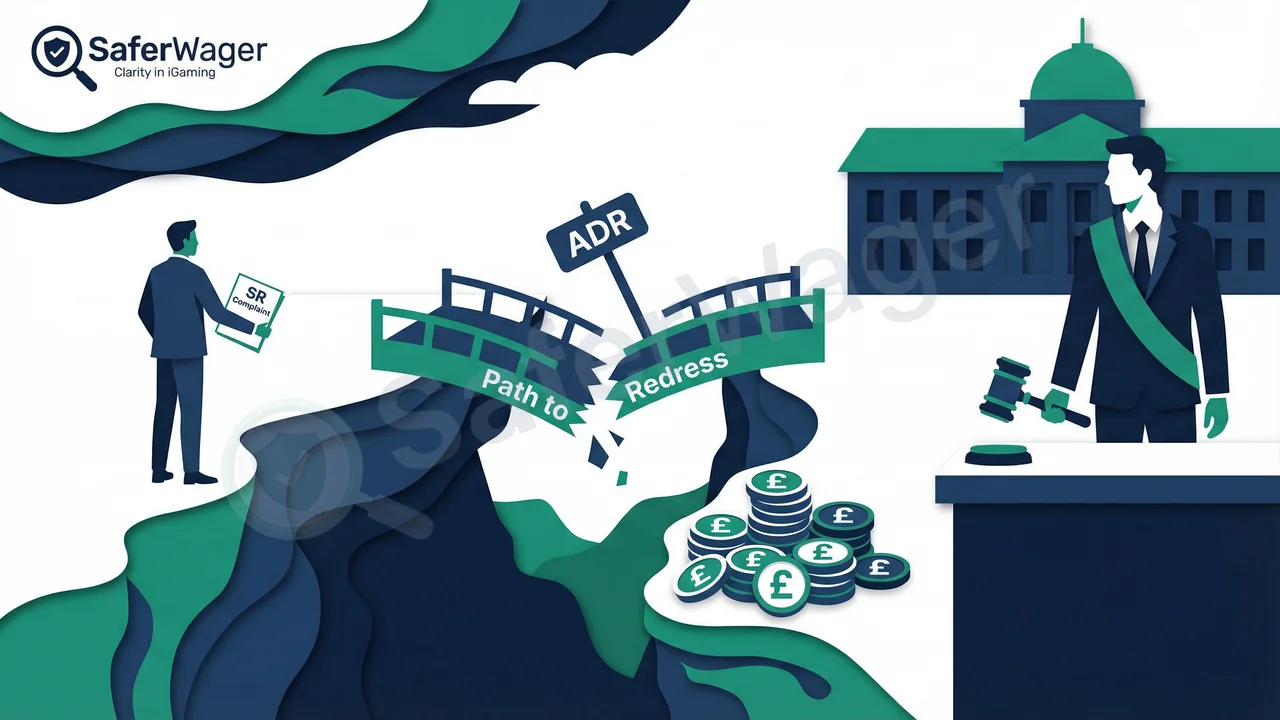
A UK Gambling Commission FOI response confirms it does not refer social responsibility complaints to ADR providers like IBAS for consumer redress, highlighting a potential gap between regulatory fines and individual compensation for harmed players.
Article Content
UKGC Confirms No Referral Process for Social Responsibility Complaints
A Freedom of Information (FOI) response from the UK Gambling Commission (UKGC) has revealed a crucial detail about the consumer complaints process: the regulator does not refer social responsibility (SR) cases to Alternative Dispute Resolution (ADR) providers for individual compensation, even after an operator has been penalised for related failings.
The disclosure, dated 16 December 2022, confirms that the process many consumers might assume exists—where a regulatory fine against an operator leads to a referral for customer redress—is not part of the UKGC's procedures.
Context: A Potential Redress Gap
For consumers who believe they have suffered harm due to an operator's social responsibility failures, this clarification is significant. It highlights a clear separation between the UKGC's regulatory role and a consumer's path to individual compensation.
When the Commission investigates and fines an operator for SR failings, such as allowing a self-excluded person to gamble, that action is intended to punish the company and enforce compliance with its licence conditions. However, the FOI response makes it clear that this regulatory action does not automatically trigger a process for affected customers to reclaim their losses through an ADR service like the Independent Betting Adjudication Service (IBAS).
Details of the Disclosure
The request asked for details of SR cases the UKGC had referred to IBAS following a regulatory settlement. The Commission's response was that it holds no such information because it does not perform this function.
The UKGC explained the distinct roles within the system:
- The Gambling Commission: Its role under the Gambling Act 2005 is to investigate potential breaches of licence conditions, such as SR failings. It acts as the industry regulator.
- ADR Providers: Their primary role is to adjudicate on 'disputes' concerning contractual obligations between a consumer and a business. These are typically transactional issues like unpaid winnings or disputes over the settlement of a bet.
The response states: "Primarily the role of an ADR provider is to adjudicate on transactional issues." It further clarifies that an operator's social responsibility duties are generally found in the Licence Conditions and Codes of Practice (LCCP), not in the contractual terms and conditions a customer agrees to. As a result, SR complaints typically fall outside an ADR's jurisdiction.
The Commission listed several issues that ADR providers cannot adjudicate on:
- Responsible gambling complaints (e.g., spending beyond means).
- Failures related to self-exclusion.
- Reports of underage gambling.
- Allegations of cheating or unfair operation.
If a consumer brings an SR complaint to an ADR provider, they will be signposted to the Commission to consider from a regulatory perspective.
Significance for Consumers
This disclosure confirms that for consumers harmed by an operator's SR failings, a complaint to the UKGC may contribute to regulatory action but is not a direct path to personal financial redress. The path to compensation through an ADR is limited to situations where the operator's actions also constitute a breach of its contractual terms and conditions.
This distinction is vital for consumers to understand. While reporting failings to the UKGC is crucial for improving industry standards and protecting others, it is not a mechanism for securing individual compensation. Consumers seeking to recover funds lost due to SR failings face a significant challenge, as the primary dispute resolution system is not designed to handle such cases.