
UKGC: No Recorded Plan for Unified Self-Exclusion
FOI response reveals a gap between regulatory intent and a formal strategy for a single self-exclusion system.
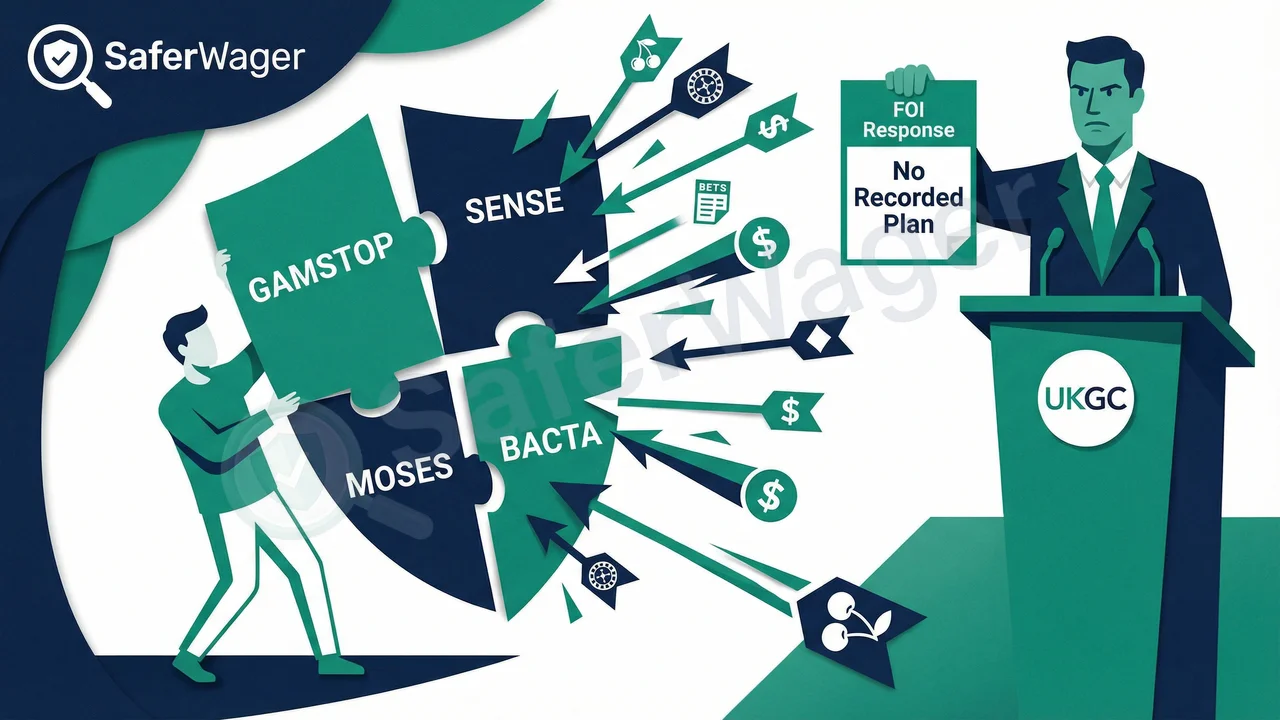
The UK Gambling Commission has stated it holds no recorded plans to unify the UK's fragmented self-exclusion schemes. While the regulator expressed an 'intention' to simplify the process, the response to a Freedom of Information request suggests a single system is not yet part of a formal, documented strategy.
Article Content
UKGC Holds No Formal Plans for a Single Self-Exclusion System
The UK Gambling Commission (UKGC) has confirmed it does not hold any recorded information constituting a formal plan to unify the UK's various self-exclusion schemes. The disclosure came in response to a Freedom of Information (FOI) request dated 24 October 2025, which asked if there were any plans to "defragment self-exclusion in the UK."
While the regulator stated it holds no specific documents outlining such a plan, it did provide additional context on its position. This distinction is crucial for consumers hoping for a more streamlined approach to player protection.
Why a Unified System Matters
Currently, self-exclusion in the UK is fragmented. A consumer wishing to block themselves from gambling must register with multiple, separate services:
- GAMSTOP: Covers all UK-licensed online gambling operators.
- SENSE: Covers all land-based betting shops in Great Britain.
- MOSES: Covers land-based casinos.
- BACTA: Covers adult gaming centres.
This fragmentation means a person who has self-excluded online via GAMSTOP can still enter and gamble in a high-street betting shop. Campaigners and individuals harmed by gambling have long called for a single, unified system where one registration would block access to all forms of licensed gambling across the UK. This is what is meant by "defragmenting" self-exclusion.
Details of the FOI Response
The UKGC’s initial response stated that it did not hold information falling within the scope of the request. This is a technical response under the Freedom of Information Act, which obliges public bodies to provide existing recorded information (like documents, emails, or meeting minutes), not to answer general questions about future intentions.
However, under its 'duty to assist', the Commission added a significant clarification:
"it is the Commission's intention to support the development of self-exclusion systems that make it easier for customers to self-exclude from the gambling sectors/operators they wish to, which would involve changes to both simplify how people can self-exclude and the controls in place for identification to support those who decide to self-exclude."
An internal review requested by the applicant, who expressed frustration at the initial response, upheld the Commission's decision. The review reiterated that a question about "plans" is not a valid request for recorded information under the FOIA legislation.
What This Means for Consumers
The exchange reveals a gap between the regulator's stated intentions and the existence of a formal, documented strategy to create a single self-exclusion system. While the UKGC acknowledges the need for simpler and more effective self-exclusion, this FOI response indicates that a concrete project plan to unify the different schemes is not currently on the books—or at least, not in a recorded format that can be publicly disclosed.
For consumers, this means the responsibility for comprehensive self-exclusion remains with the individual. To fully block access to gambling, a person must still navigate and register with several different organisations. The Commission's stated 'intention' offers hope for future improvements, but the lack of a formal, recorded plan suggests a truly unified system may still be some way off.