UKGC: No Formal Pact with Coroner's Office
FOI reveals no Memorandum of Understanding exists between the gambling regulator and the body investigating deaths, despite a 'working relationship'.
The UK Gambling Commission has confirmed it has no formal data-sharing agreement with the Chief Coroner's Office, which investigates gambling-related deaths. The disclosure raises questions about how lessons from tragic cases are used to inform regulation.
Article Content
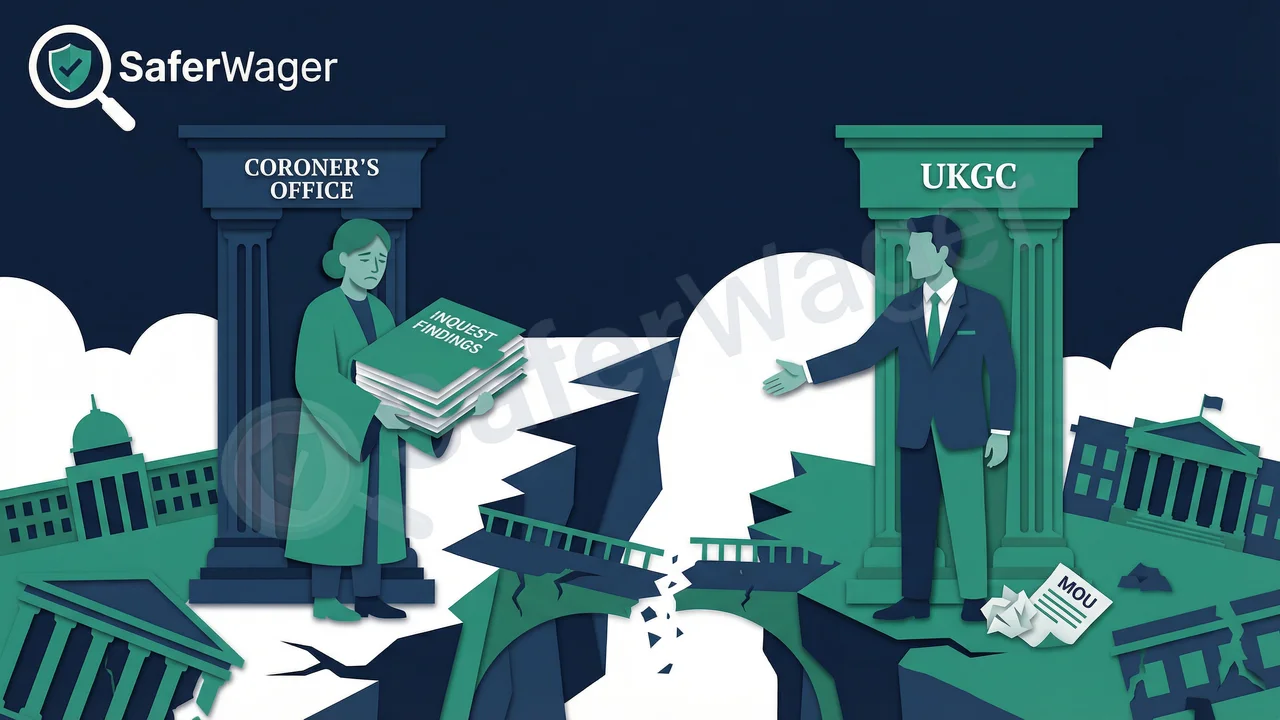
A Freedom of Information (FOI) request has revealed that the UK Gambling Commission (UKGC) does not have a formal Memorandum of Understanding (MOU) with the Office of the Chief Coroner for England and Wales.
This disclosure, published by the regulator, confirms the absence of a structured agreement for information sharing between the two key organisations. The finding is significant for consumer protection, as the Coroner's Office is responsible for investigating deaths, including tragic cases where gambling-related harm has been cited as a contributing factor.
Details of the Disclosure
In response to a request dated 3 May 2024, which asked whether an MOU was in place, the Commission provided a clear answer.
"The Gambling Commission can confirm that we do not have a memorandum of understanding in place with the Office of the Chief Coroner."
An MOU is a formal, though not typically legally binding, agreement that sets out the framework for cooperation between two or more parties. In this context, it would likely define the protocols for sharing data, findings from inquests, and other relevant information concerning gambling-related deaths.
However, the regulator did provide additional context under its Section 16 duty (to provide advice and assistance) within the Freedom of Information Act. The UKGC added that it does "maintain a working relationship with the Chief Coroner’s Office."
Significance for Consumer Protection
The distinction between a formal MOU and an informal "working relationship" is crucial. While communication may occur between the two bodies, the lack of a formalised pact raises questions about the consistency and efficiency of this process.
For consumers and their families, this gap could be seen as a missed opportunity to ensure that lessons from the most severe instances of gambling harm are systematically captured and used to improve industry regulation. A formal agreement could help in:
- Identifying Trends: Systematically collecting data from coroners could help the UKGC identify patterns of harm linked to specific products, operators, or practices.
- Informing Regulation: Findings from inquests can provide powerful, real-world evidence to support changes to licence conditions and codes of practice.
- Enhancing Transparency: A public MOU would clarify the responsibilities of each organisation in preventing future gambling-related deaths.
The existence of an informal working relationship indicates that some level of cooperation is in place. However, the absence of a structured agreement highlights a potential weakness in the national framework for addressing and learning from gambling-related fatalities.