
UKGC: No Data on Self-Exclusion Integration
FOI reveals regulator holds no information on plans to unify the UK's land-based self-exclusion schemes for betting, bingo, and casinos.
A Freedom of Information request has revealed the UK Gambling Commission holds no information on whether the UK's separate land-based self-exclusion schemes plan to integrate. This highlights a potential gap in creating a seamless safety net for vulnerable consumers across different gambling sectors.
Article Content
Regulator Holds No Information on Unifying Self-Exclusion Schemes
A Freedom of Information (FOI) response from the Gambling Commission (UKGC) has revealed that the regulator holds no information regarding plans to unify the UK's separate land-based self-exclusion schemes.
The disclosure, dated 27 September 2025, highlights a significant information gap concerning the future of consumer protection tools for in-person gambling.
Why This Matters for Consumers
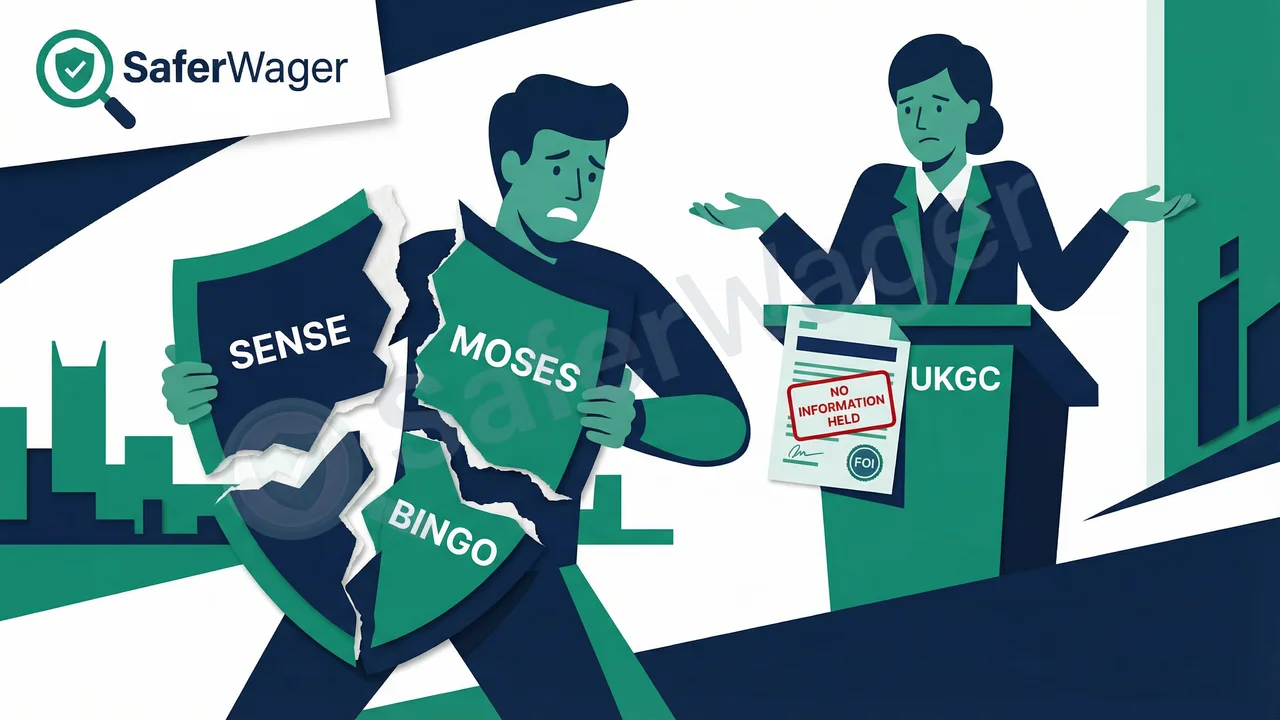
Self-exclusion is a crucial tool for individuals seeking to control their gambling. In the UK, land-based gambling sectors operate separate schemes: MOSES for betting shops, SENSE for casinos, and a scheme run by The Bingo Association for bingo halls. This fragmentation means a person can self-exclude from one type of venue but still access another, creating a potential loophole for those at risk of harm.
"Defragmentation," or the linking of these schemes, would create a more robust safety net, allowing a single self-exclusion request to apply across multiple gambling environments. The UKGC's response indicates that any such plans are not currently being monitored by the regulator itself.
Details of the Request
The FOI request sought to understand the "current or future plans" of the three main land-based multi-operator self-exclusion bodies:
- MOSES Ltd (Multi-Operator Self-Exclusion Scheme Limited)
- SENSE (Self-Enrolment National Self-Exclusion Limited)
- The Bingo Association Limited
The request asked specifically if these organisations were planning to join a unified system, create their own, or had no plans for integration. It also queried any plans to defragment online self-exclusion beyond the existing GAMSTOP scheme.
The UKGC's official response was concise: "The Gambling Commission can confirm that we do not hold any information falling within the scope of your request as all of those organisations named are independent of the Gambling Commission."
Significance of the Response
The Commission's inability to provide information is not a refusal but a statement of fact: the data is not on its records. This clarifies the regulator's position. While the UKGC mandates that operators must participate in a multi-operator scheme for their sector (under LCCP conditions 3.5.5 and 3.5.6), it does not hold information on the strategic or technological direction of these independent schemes.
For consumers, this means that the responsibility for creating a seamless, cross-sector self-exclusion network currently rests with the independent scheme providers, not the regulator. The lack of central oversight on integration plans means it is unclear if or when gamblers will be able to self-exclude from all land-based venues with a single registration, a feature that is standard for online gambling via GAMSTOP.