Casino Self-Exclusions Quadruple in a Year
UKGC data reveals a dramatic rise in players using harm reduction tools across land-based venues, particularly in casinos and arcades.
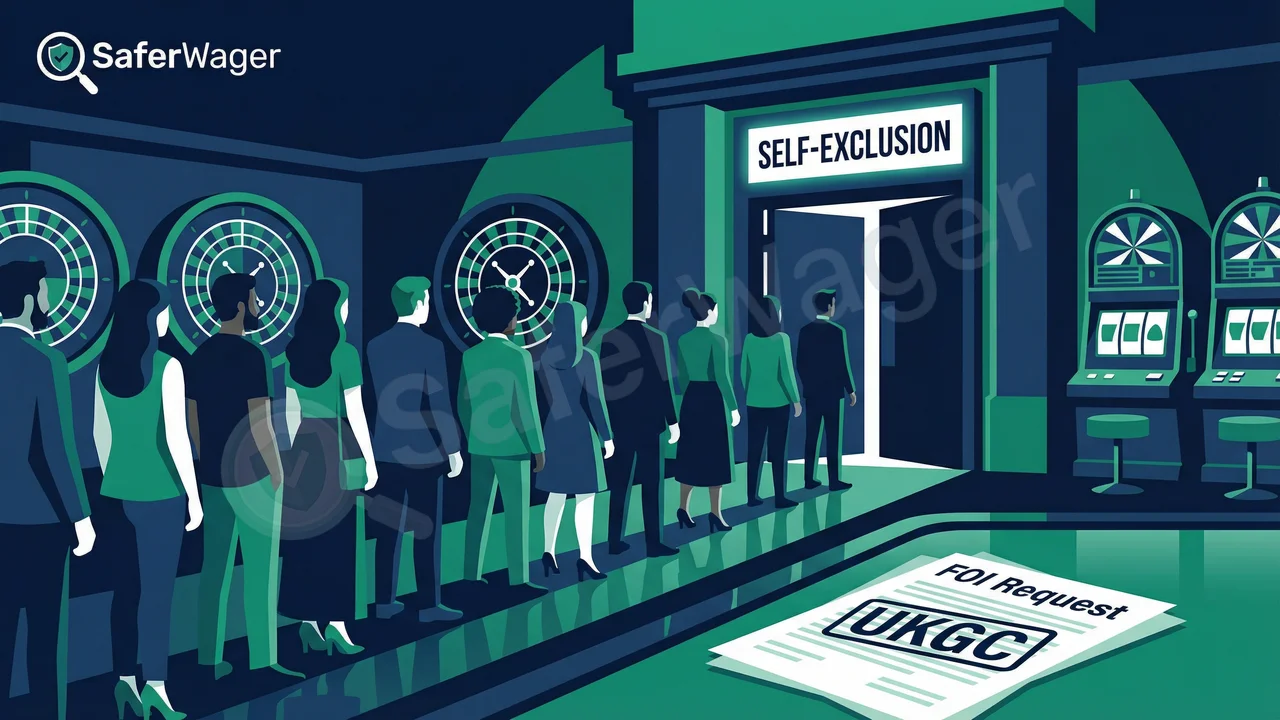
New data from the Gambling Commission shows the number of active self-exclusions from UK casinos quadrupled in the last year. The figures, released via a Freedom of Information request, also reveal a significant increase in players blocking themselves from arcades and bingo halls, indicating a growing use of safer gambling tools.
Article Content
The number of active self-exclusions from UK casinos via multi-operator schemes has more than quadrupled in the last fiscal year, according to new data from the Gambling Commission (UKGC). The figures, disclosed in response to a Freedom of Information (FOI) request dated 21 August 2025, show a sharp increase in the use of self-exclusion across most forms of land-based gambling.
Self-exclusion is a key tool for consumer protection, allowing individuals to voluntarily ban themselves from gambling venues for a set period to manage their play. This data provides a crucial insight into how many consumers are utilising these measures.
Key Findings from the Data
The most striking figure comes from the multi-operator self-exclusion schemes, which allow a person to block themselves from all operators in a sector with a single request. The number of active self-excluded customers in casinos surged from 4,146 in the 2023-2024 fiscal year to 17,316 in the 2024-2025 fiscal year.
Other sectors also saw significant increases in new self-exclusions. The data is split between exclusions made with individual operators and those made through multi-operator schemes.
New Self-Exclusions (Individual Operator Schemes)
These figures represent the number of new exclusion requests made directly with a single operator. One person making requests at ten different venues would be counted ten times.
- Adult Gaming Centres (AGCs): Nearly doubled from 7,813 in FY 2023-24 to 13,893 in FY 2024-25.
- Betting Shops: Remained high but saw a slight decrease from 24,549 to 22,540.
- Bingo Halls: Continued a steady climb, rising from 4,944 to 6,143.
New Self-Exclusions (Multi-Operator Schemes)
These figures show new exclusions made via a single scheme covering multiple operators.
- Adult Gaming Centres (AGCs): Increased from 7,899 to 10,550.
- Casinos: Rose from 4,153 to 5,046.
- Bingo Halls: Grew from 4,692 to 5,632.
Interestingly, the total number of active self-excluded customers in the betting sector saw a notable drop, falling from 9,799 to 6,688 over the last year, despite the high number of new exclusions being added.
What This Means for Consumers
The data clearly shows that more people are using self-exclusion as a harm reduction tool. The dramatic increase, especially in the casino and arcade sectors, indicates a growing awareness of these schemes and a rising demand for consumer protection measures within the land-based gambling industry.
The UKGC notes that the data on individual operator schemes counts the number of exclusions, not unique individuals. Therefore, the figures reflect the volume of requests rather than the precise number of people seeking help. However, the data from multi-operator schemes provides a closer estimate of the number of individuals taking action.
This information is vital for understanding consumer behaviour and the scale of gambling harm in the UK. The rising trend underscores the importance of accessible and effective self-exclusion schemes for protecting vulnerable players.