
UKGC Halves Its Financial Transparency
Regulator moves from quarterly to bi-annual spending reports, a change revealed only after a Freedom of Information request.
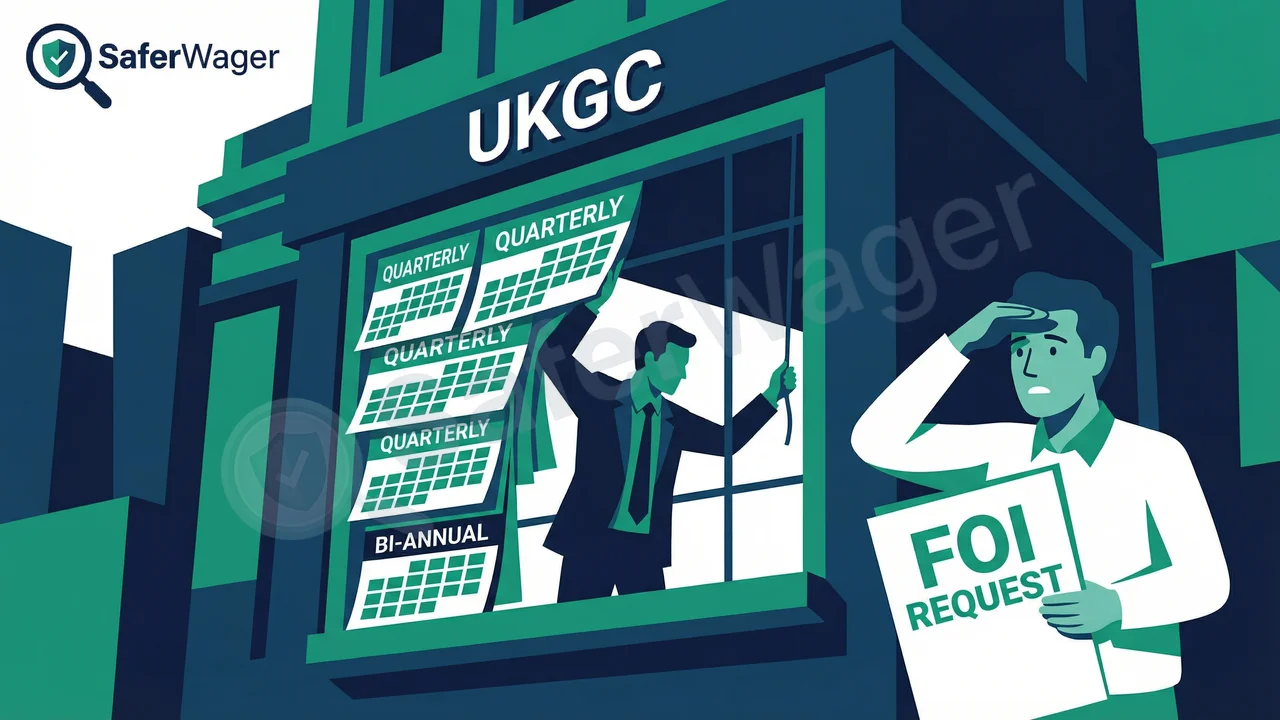
A Freedom of Information request has revealed the UK Gambling Commission has reduced the frequency of its public spending reports from quarterly to bi-annually. This change, which was not proactively announced, halves the rate at which the public can scrutinise the regulator's financial activities.
Article Content
A Freedom of Information (FOI) request has revealed that the UK Gambling Commission (UKGC) has reduced the frequency of its public spending reports. The regulator now publishes its financial transparency data bi-annually instead of quarterly, a significant change that was not proactively announced.
The disclosure came in response to a query from a member of the public on 5 June 2023, who noted that the Commission's spending data for the period of January to March 2023 was missing from its website.
Context: Why UKGC Spending Matters
As the regulatory body for gambling in Great Britain, the UKGC is funded by the licence fees it collects from gambling operators. Its spending data provides a transparent account of how these funds are used. This includes payments to suppliers, consultants, and legal firms, offering a crucial window into the Commission's operational priorities and financial management.
For consumers and industry observers, regular access to this data allows for public scrutiny, ensuring the regulator is accountable for how it spends the money intended to make gambling safer and fairer.
Details of the Disclosure
The FOI request pointed out the absence of the Q1 2023 spending file on the UKGC's website and asked when it would be made available. In its official response, the Commission did not provide the data directly. Instead, it withheld the information under Section 21 of the FOIA, an exemption used when information is "reasonably accessible elsewhere."
The Commission's response stated: "Cabinet Office disclosure requirements are published by the Commission bi-annually on our website."
This statement is the key revelation. It confirms a shift from the previously established quarterly reporting schedule to a new bi-annual one. At the time of the request, the information was not, in fact, accessible, as the new reporting schedule had not yet resulted in a publication for 2023.
Significance: A Step Back for Transparency
The move to bi-annual reporting effectively halves the frequency of financial oversight available to the public. Instead of reviewing the regulator's spending every three months, the public must now wait up to six months for each data release. This delay reduces the timeliness of any analysis and weakens the accountability that frequent reporting provides.
Furthermore, the fact that this policy change was only brought to light through a public FOI request, rather than a proactive announcement, raises questions about the Commission's commitment to open communication regarding its own transparency standards. While the data will still be published, the reduction in frequency marks a notable step back in the level of ongoing scrutiny the regulator is subject to.