
UKGC Water FOI Reveals Scope of Public Scrutiny
Disclosure on utility payments and social assistance queries highlights the specifics of UK information law and regulatory transparency.
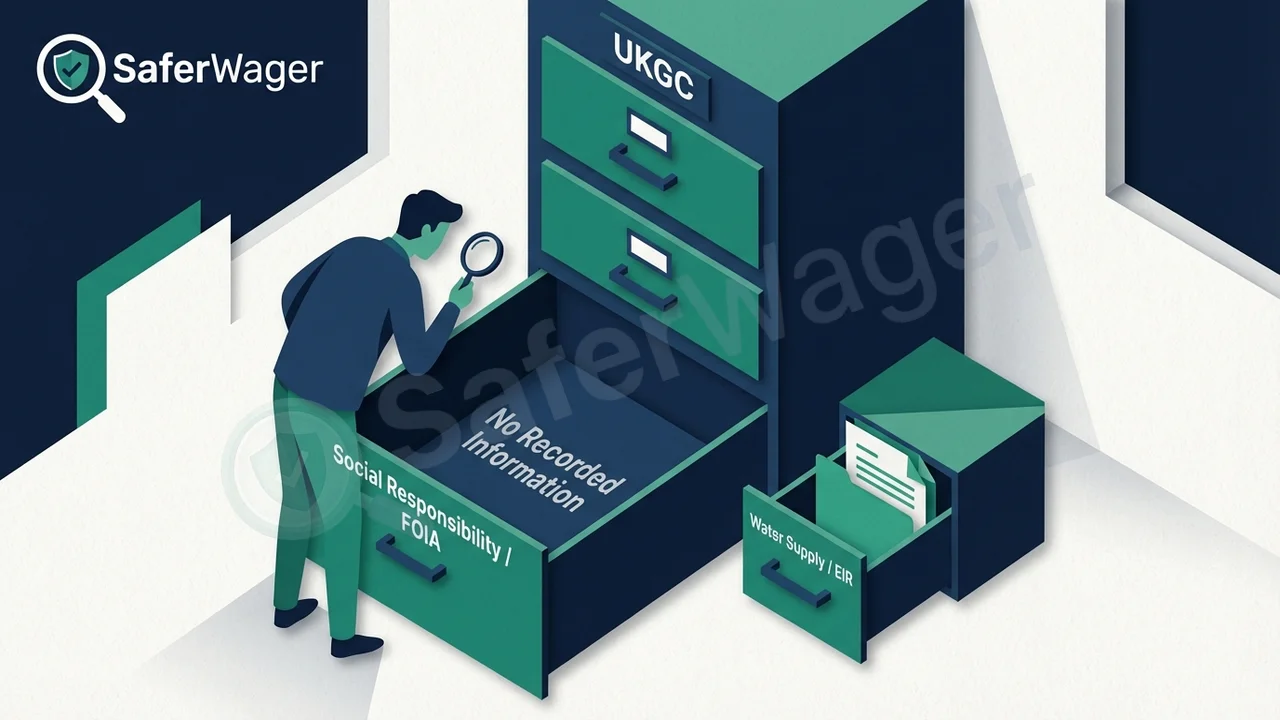
A UK Gambling Commission FOI response details its water supplier between 2012-2018 but reveals no records on homeless aid, illustrating the scope and legal limits of public data requests made to the regulator.
Article Content
Regulator Confirms Utility Details, Holds No Records on Social Aid
A Freedom of Information (FOI) request has shed light on the administrative operations of the UK Gambling Commission (UKGC) and the nature of public scrutiny it faces. The request, dated 16 April 2025, questioned the regulator on its water supply and its role in assisting vulnerable individuals, revealing key details about how information laws apply to public bodies.
In response to the query, the UKGC confirmed that between 2012 and July 2018, it had access to and paid for a water supply from a UK provider. The Commission clarified that the supplier was not Thames Water.
However, a third part of the request, which asked if the organisation had failed to assist a homeless person in gaining access to a regular water supply, received a different type of response. The UKGC stated it holds no recorded information on the matter, a formal response that has specific meaning under UK law.
Understanding the Data and the Response
This disclosure is a practical example of how public bodies are held accountable and the precise framework they operate within. For consumers, it demonstrates the mechanisms available to question regulators, while also highlighting the limitations of such requests.
The UKGC processed the request under two different sets of regulations:
- Environmental Information Regulations 2004 (EIRs): The questions about the water supplier and payments were handled under the EIRs. The Commission provided a full disclosure, confirming it paid for water from a UK-based company.
- Freedom of Information Act 2000 (FOIA): The question regarding assistance to a homeless person was processed under the FOIA.
What 'No Recorded Information' Means
The Commission’s response to the third question is significant. By stating it holds “no recorded information,” the UKGC is not confirming or denying whether such an event occurred. Instead, it clarifies that no official documents, emails, meeting minutes, or other records exist within its systems that fall within the scope of the question.
The FOI Act grants the public the right to access recorded information held by public authorities. It is not a mechanism for obtaining opinions, compelling an authority to create new information, or confirming actions that were never documented. This response illustrates a crucial aspect of transparency law: if it wasn't written down, it cannot be retrieved via an FOI request.
Significance for Industry Transparency
While the subject of the request may seem unusual, the exchange serves as a valuable case study in regulatory transparency. It shows that the UKGC, like all public bodies, is subject to public questioning on a wide array of topics, from its operational spending to its perceived social responsibilities.
For consumers and industry watchers, this disclosure reinforces two key points:
- Accountability in Action: The public has a legal right to request information and scrutinise the administrative functions of the gambling regulator.
- The Limits of Law: The effectiveness of information requests is dependent on the existence of recorded data. This case highlights the importance of understanding what the FOI Act can and cannot do.
Ultimately, the response provides a clear, factual answer within the legal framework, demonstrating procedural correctness while also showing the boundaries of information that can be publicly disclosed.