
UKGC Data: 10x Surge in Site Takedowns
Regulator reveals a dramatic increase in enforcement against unlicensed gambling sites in 2024, but withholds specific operator names.
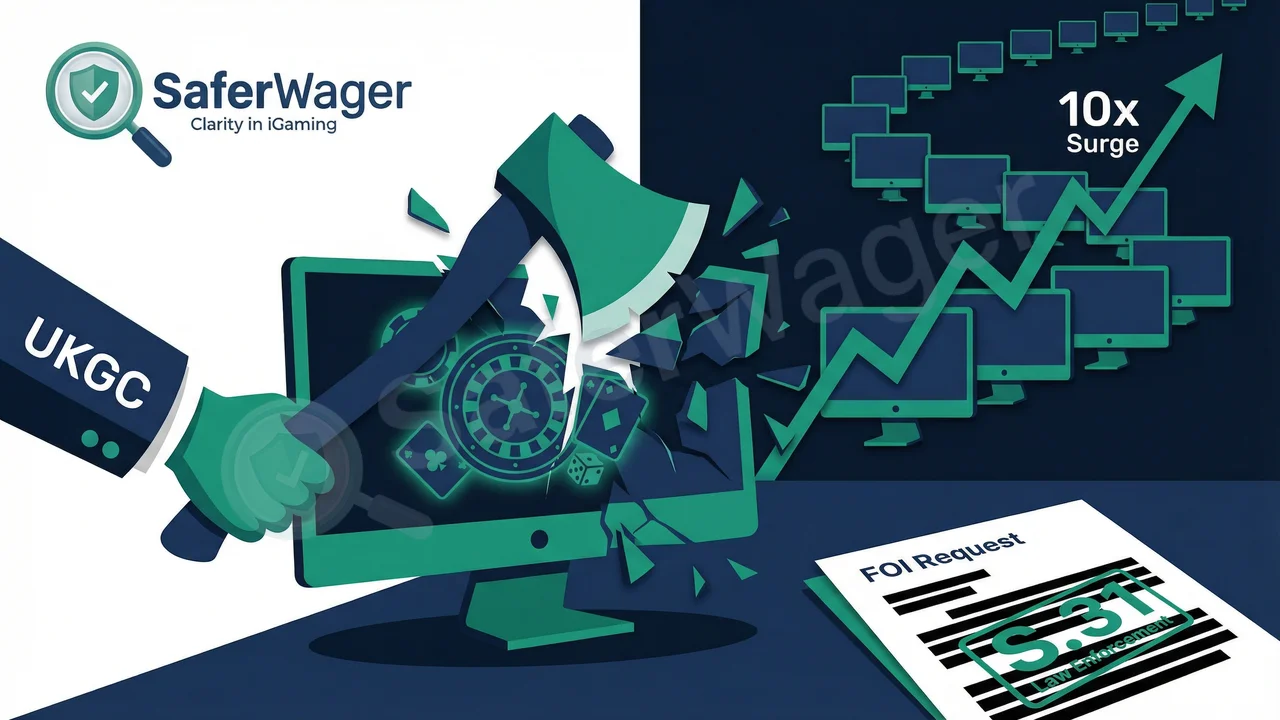
A Freedom of Information request reveals the UK Gambling Commission has increased its enforcement against illegal sites more than tenfold in 2024. The regulator has removed 50,000 URLs and taken down 255 websites, but withheld operator names to protect investigations.
Article Content
The UK Gambling Commission (UKGC) has significantly escalated its crackdown on illegal gambling, with actions to remove unlicensed websites from the internet increasing more than tenfold in 2024 compared to the previous year.
This data was revealed in a Freedom of Information (FOI) response published on 14 November 2024. While the regulator provided aggregate figures on its enforcement activities, it withheld the specific names of the operators and websites targeted.
Why This Matters for Consumers
Unlicensed gambling operators pose a significant risk to UK consumers. They operate outside of the UKGC's strict regulatory framework, meaning they are not required to offer player protection tools like deposit limits, self-exclusion (such as GAMSTOP), or provide access to fair and independent dispute resolution. The UKGC's actions are designed to disrupt these illegal operations and steer consumers towards safer, licenced alternatives.
A Sharp Rise in Enforcement
The data shows a concentrated burst of activity since the beginning of April 2024. In the period up to 1 November 2024, the Commission has:
- Issued over 750 Cease and Desist and disruption notices.
- Sent 259 of these notices directly to unlicensed operators.
- Sent 189 notices to advertisers promoting illegal sites.
- Referred over 78,000 website URLs to Google, resulting in 50,000 being removed from search results.
- Successfully instigated the takedown of 255 websites.
The UKGC stated that the number of URL takedowns represents a "more than a tenfold increase in comparison to the whole of 2023 to 2024," signalling a major strategic shift in its fight against the black market.
Operator Names Withheld
Despite the request for a full list, the UKGC declined to name the specific operators or websites that received notices. The Commission invoked Section 31 of the FOIA (Law Enforcement), arguing that disclosure would prejudice its regulatory functions.
In its response, the UKGC explained that releasing such details could:
- Alert offenders to ongoing investigations and reveal regulatory tactics.
- Undermine trust with law enforcement partners and intelligence sources.
- Impair the Commission's overall ability to regulate the market effectively.
The regulator concluded that while transparency is important, the public interest is better served by protecting the integrity of its investigative processes to ensure consumer protection.
For consumers, this data highlights the scale of the threat from unlicensed sites and the robust action being taken by the regulator. It also underscores the importance of always verifying that a gambling operator holds a valid UKGC licence before signing up or depositing funds.