
UKGC Names Groups Accused of Misusing Gambling Stats
FOI reveals regulator sent warnings to an industry body, a charity, and MPs over the use of official data.
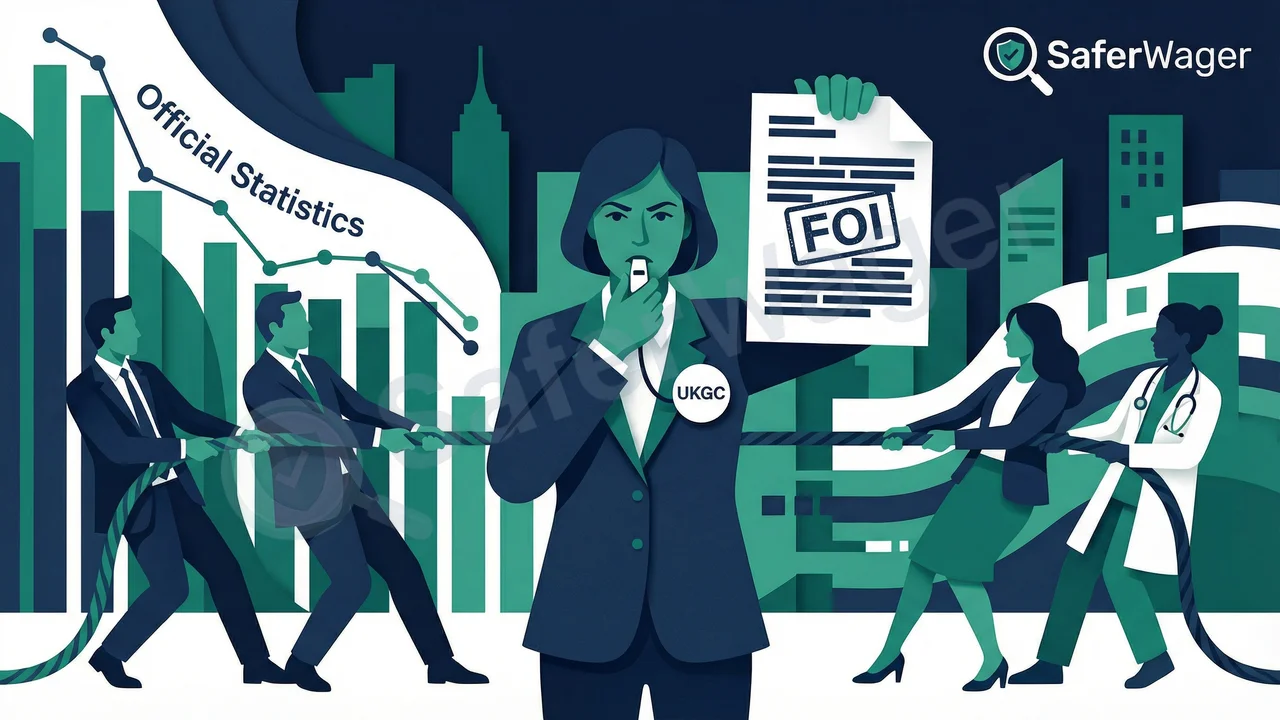
A Freedom of Information request has revealed the UK Gambling Commission accused both the industry's Betting and Gaming Council and reform campaigners Gambling with Lives of misusing official statistics. The regulator also sent warnings to several MPs, highlighting its efforts to police the accuracy of data used in the public debate on gambling.
Article Content
Regulator Releases Redacted Letters After FOI Appeal
A Freedom of Information (FOI) disclosure has revealed the organisations and individuals the UK Gambling Commission (UKGC) accused of misusing Official Statistics in the run-up to major gambling reforms.
Correspondence released by the regulator shows it sent warnings to a diverse group of stakeholders, including the main industry trade body, a prominent gambling harm charity, an NHS clinician, and several Members of Parliament. The release followed an initial error by the UKGC which required the requester to appeal via an internal review.
Who Was Contacted?
The FOI request, dated 16 September 2023, sought correspondence sent by the UKGC in August and September 2023 regarding the misuse of statistics. The individuals and organisations named in the regulator's original letter to the Culture, Media and Sport Select Committee were:
- The Betting & Gaming Council (BGC)
- Gambling With Lives
- Dr Matthew Gaskell, NHS
- Mr Paul Blomfield, MP
- Dame Caroline Dinenage, MP
- Mr Clive Efford, MP
- Dr Rupa Huq, MP
- Mr John Nicholson, MP
This list is notable as it includes voices from both sides of the gambling reform debate, from the industry-representing BGC to the campaigning charity Gambling With Lives.
Why This Matters for Consumers
The accuracy of statistics is central to the public and political debate surrounding gambling regulation. Figures on problem gambling rates, industry profits, and the effectiveness of safety measures are frequently cited by all parties to support their arguments. When these statistics are used incorrectly, it can mislead the public and policymakers, potentially leading to regulations that are either ineffective or overly restrictive.
The UKGC's intervention highlights its role as a referee in this often-heated debate. By calling out the misuse of data from both industry and reform advocates, the regulator is signalling that all stakeholders are expected to adhere to a high standard of accuracy. For consumers, this action provides a layer of scrutiny over the claims they may see in the media, encouraging a more critical look at the data presented.
Details of the FOI Disclosure
The UKGC's path to releasing the information was not straightforward. Its initial response on 16 October 2023 incorrectly claimed the information was already publicly available, pointing only to the letter that named the organisations.
The requester immediately filed for an internal review, clarifying they had asked for the correspondence with these groups, not just their names. The UKGC's internal review response admitted an "administrative error" and apologised for the oversight.
While the Commission then released the relevant documents, it applied redactions. Citing section 40(2) of the Freedom of Information Act, the UKGC removed personal information of identifiable individuals, stating there was no legitimate public interest in its disclosure. This means that while the content of the warnings is now public, some details about the specific individuals who sent or received the correspondence have been withheld.
Industry Implications
This disclosure underscores the UKGC's increasingly assertive stance on the integrity of public discourse around gambling. By publicly naming and writing to a cross-section of influential voices, the Commission is sending a clear message that it is monitoring how its Official Statistics are used.
For all organisations involved in the gambling sector—from operators and trade bodies to charities and politicians—this serves as a formal warning. It reinforces the need for precision and context when citing data, as the regulator is prepared to intervene to correct the public record. This may lead to more cautious and carefully evidenced claims from all sides in future debates on gambling policy.