
UKGC: No Council Talks on Boro Casino Licence in 5 Years
FOI reveals a five-year gap in communications between the regulator and Middlesbrough Council regarding the town's 'Large Casino' licence.
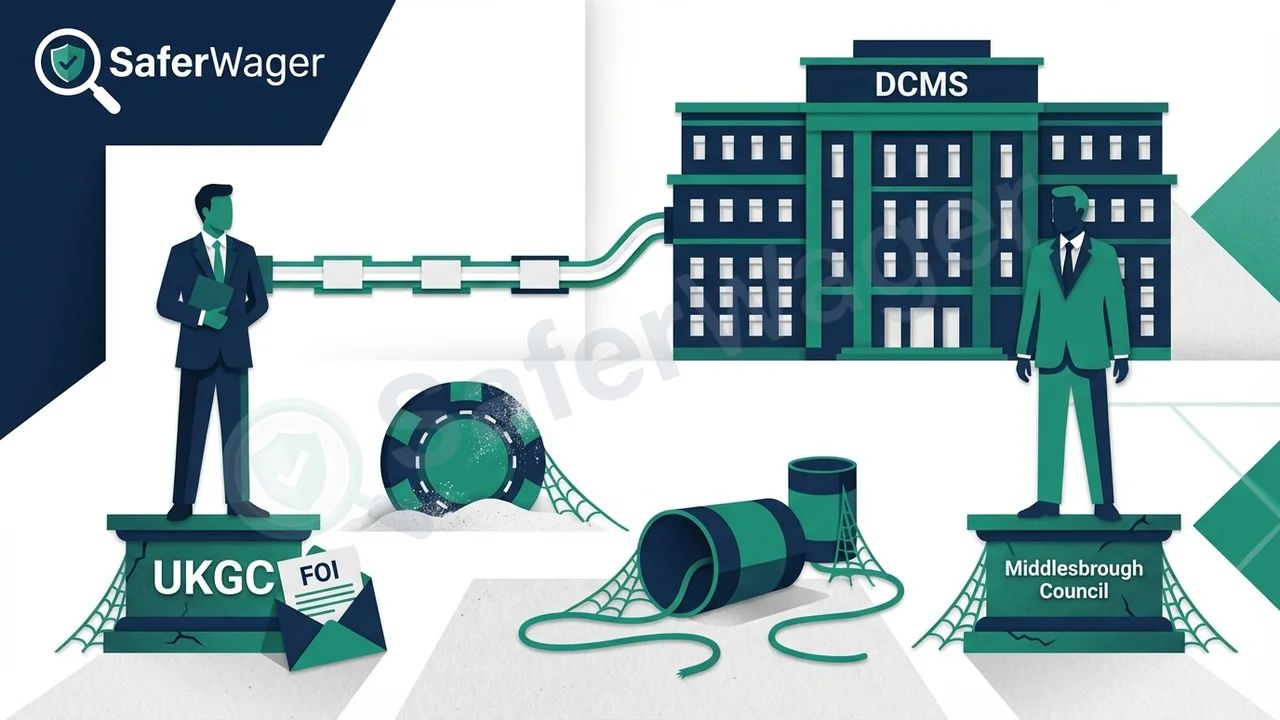
A Freedom of Information request has revealed the UK Gambling Commission held no recorded communications with Middlesbrough Council about its 'Large Casino' licence between May 2019 and May 2024. The regulator did, however, discuss the licence with the government's DCMS.
Article Content
Regulator Confirms No Communication with Council on Large Casino Licence
A Freedom of Information (FOI) disclosure from the UK Gambling Commission (UKGC) has revealed that the regulator held no recorded communications with Middlesbrough Council regarding its 'Large Casino' licence for a full five-year period.
The data, released following a request made on 1 May 2024, covers the period from 1 May 2019 to the present. The finding sheds light on the status of one of the few special casino licences granted under the Gambling Act 2005.
Why This Matters
'Large Casino' licences were created to permit venues with a larger footprint and more gaming machines than standard casinos. Only eight such licences were made available for local authorities to award in Great Britain, making them a significant development for any town or city. For consumers and residents, the progress of this licence is a key indicator of local economic and social policy. The lack of communication between the national regulator and the local licensing authority over a five-year span raises questions about the project's oversight and momentum.
Breakdown of the FOI Response
The FOI request was submitted in three parts, each receiving a distinct response from the Gambling Commission.
1. Communications with Middlesbrough Council (2019-2024) When asked for all communications with the council about its Large Casino licence since May 2019, the UKGC's response was definitive: "The Commission holds no information in scope of your request."
This indicates a complete absence of recorded dialogue on the specific topic between the two public bodies for five years.
2. Communications with Government (DCMS) In contrast, the UKGC confirmed it did hold communications with the Department for Culture, Media and Sport (DCMS) concerning the Middlesbrough licence during the same period. A redacted document was provided, with names and email addresses removed under Section 40(2) of the FOIA to protect personal information. This shows the licence has been a topic of discussion at a national government and regulatory level.
3. Specific Licence Variation Application The request also sought communications concerning a specific application from operator Luxury Leisure to vary a different casino premises licence in Middlesbrough. The UKGC refused to provide this information, citing a Section 31 exemption. The regulator argued that disclosing details of its assessment process would prejudice its ability to carry out its statutory functions. In its public interest test, the UKGC concluded that protecting the integrity of its compliance and assessment methods outweighed the public interest in transparency for this specific case.
Significance for Consumers
The disclosure highlights two key aspects of UK gambling regulation. Firstly, it reveals a significant communication gap at the local level for a major licensing project. While discussions occurred at the national level, the lack of direct engagement between the UKGC and Middlesbrough Council over five years is a notable finding.
Secondly, it confirms the limits of regulatory transparency. The Commission's refusal to release information on its assessment of a specific operator's application underscores its position that its internal processes must be protected to remain effective. This means consumers will not have access to the specific details of how the regulator vets an operator's suitability, but are expected to trust the robustness of the process itself.