
UKGC: No Direct Levy Talks With Treasury
FOI response clarifies communication channels between the regulator, DCMS, and HM Treasury on the new gambling tax.
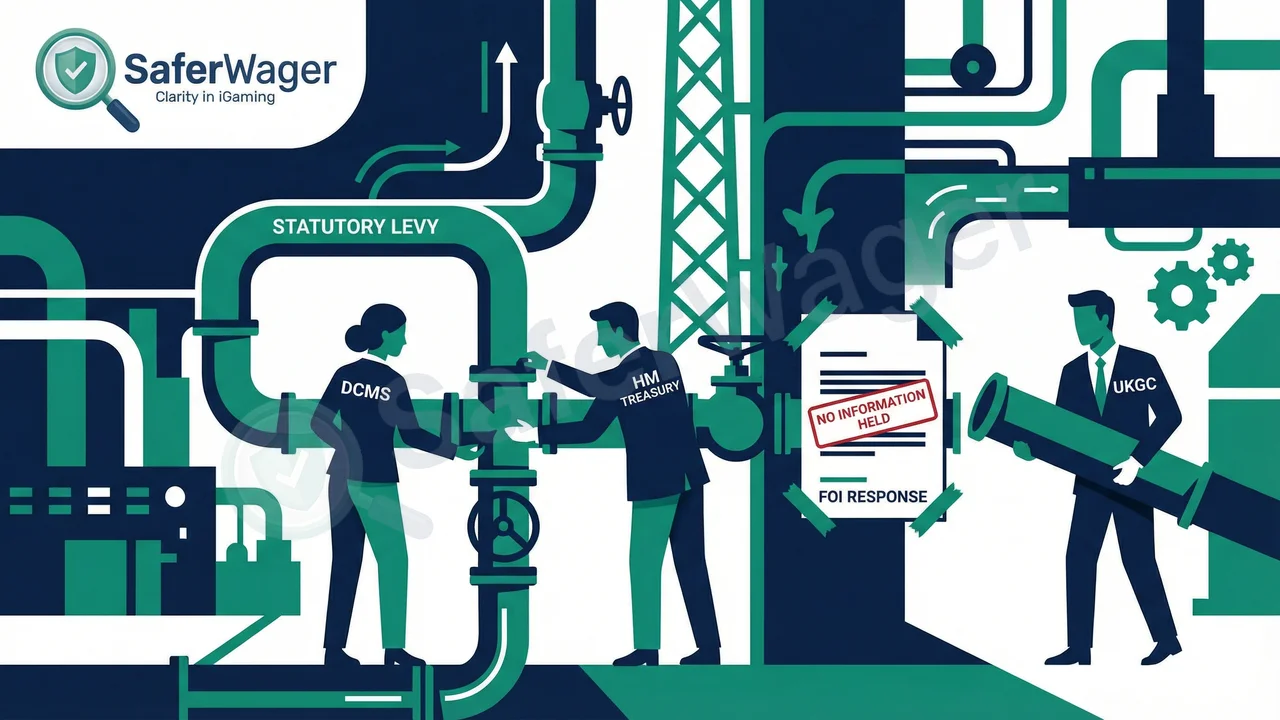
A Freedom of Information request has revealed the UK Gambling Commission held no direct correspondence with HM Treasury regarding the statutory levy between 2022 and 2024. The response clarifies the policy-making process, identifying the DCMS as the lead department liaising with the Treasury.
Article Content
A Freedom of Information (FOI) request has revealed that the UK Gambling Commission (UKGC) held no direct correspondence with HM Treasury concerning the forthcoming statutory levy between 2022 and 2024.
The response, while confirming no information is held, provides crucial insight into the governmental process behind one of the most significant reforms from the Gambling Act Review White Paper.
The Request and Response
Dated 24 January 2025, the FOI request asked for copies of all correspondence between the Gambling Commission and HM Treasury for the years 2022, 2023, and 2024 that included the term ‘statutory levy’.
In its official response, the UKGC stated: “The Gambling Commission can confirm that no information is held falling within the scope of your request.”
Why This Matters for Consumers
The statutory levy is a critical new measure intended to create a stable, mandatory funding stream from gambling operators for research, education, and treatment (RET) of gambling-related harm. It replaces the current voluntary system, which has faced criticism for inconsistency.
For consumers, the levy's proper design and implementation are vital for ensuring that support services are well-funded and independent. The FOI request aimed to shed light on the regulator's direct input with the Treasury on the financial architecture of this new system.
Clarifying the Chain of Command
The UKGC’s response explains that the lack of direct communication with the Treasury is by design. The regulator clarified its role and the established lines of communication within government.
“Our engagement on the Commission's potential role has been with our sponsoring department, which is the Department for Culture, Media and Sport (DCMS), not directly with HM Treasury,” the response stated.
It further explained the division of responsibilities:
“It is DCMS' role as the policy lead for the statutory levy to determine the structure, distribution and governance for the levy and to engage directly with HM Treasury on this policy.”
Significance of the Finding
This disclosure does not indicate a lack of progress but rather clarifies the specific roles each government body plays. It confirms that DCMS is the central architect of the levy policy, responsible for negotiating its financial details with the Treasury.
The UKGC’s role, as confirmed by the government, will be to collect and distribute the levy funds once the policy is finalised, acting under the strategic direction set by DCMS. This FOI response shows that the policy-shaping discussions occur between DCMS and the Treasury, with the UKGC providing advice to its sponsoring department, DCMS.
For consumers and industry observers, this confirms that DCMS is the primary department responsible for the levy's design, while the UKGC will be the instrument of its implementation.