UKGC: We Don't Track Lottery Charity Funds
FOI reveals regulator's role ends once funds for Good Causes are collected, with no oversight on distribution or effectiveness.
A Freedom of Information request has confirmed the UK Gambling Commission does not monitor how National Lottery funds are distributed to charities or evaluate their effectiveness. The regulator's role ends once money is paid into the National Lottery Distribution Fund, with oversight passing to other government bodies.
Article Content
A Freedom of Information (FOI) request has revealed that the UK Gambling Commission (UKGC) does not hold information on how National Lottery funds are distributed to charities, who receives them, or how their effectiveness is evaluated.
The disclosure clarifies the precise scope of the regulator's responsibilities regarding the National Lottery, a distinction crucial for consumers wanting to understand where their money goes.
The Request and the Response
Submitted on 6 September 2024, the request asked the UKGC for five years of data covering:
- Total National Lottery revenues.
- A breakdown of how revenues are distributed (prizes, charities, costs).
- Details of specific charities supported and the amounts they received.
- The criteria for selecting these charities.
- Any evaluations of the charities' effectiveness.
In its response, the UKGC provided a partial exemption. For information on total revenues and their general distribution, the Commission cited Section 21 of the FOIA, which exempts information that is reasonably accessible elsewhere. It directed the requester to the public annual reports of the former operator, Camelot, for the financial years 2019/20 to 2023/24.
For context, Camelot's final full year of operation (2022/23) generated record sales of £8.09 billion. Typically, over 90% of this revenue is returned to society, with approximately 57% paid in prizes, 22% to Good Causes, 12% to the Government in Lottery Duty, and 4% to retailers in commission.
Clarifying Regulatory Boundaries
The most significant part of the response concerned the detailed information about charity funding. The UKGC confirmed that it does not hold any information falling within the scope of parts three, four, and five of the request.
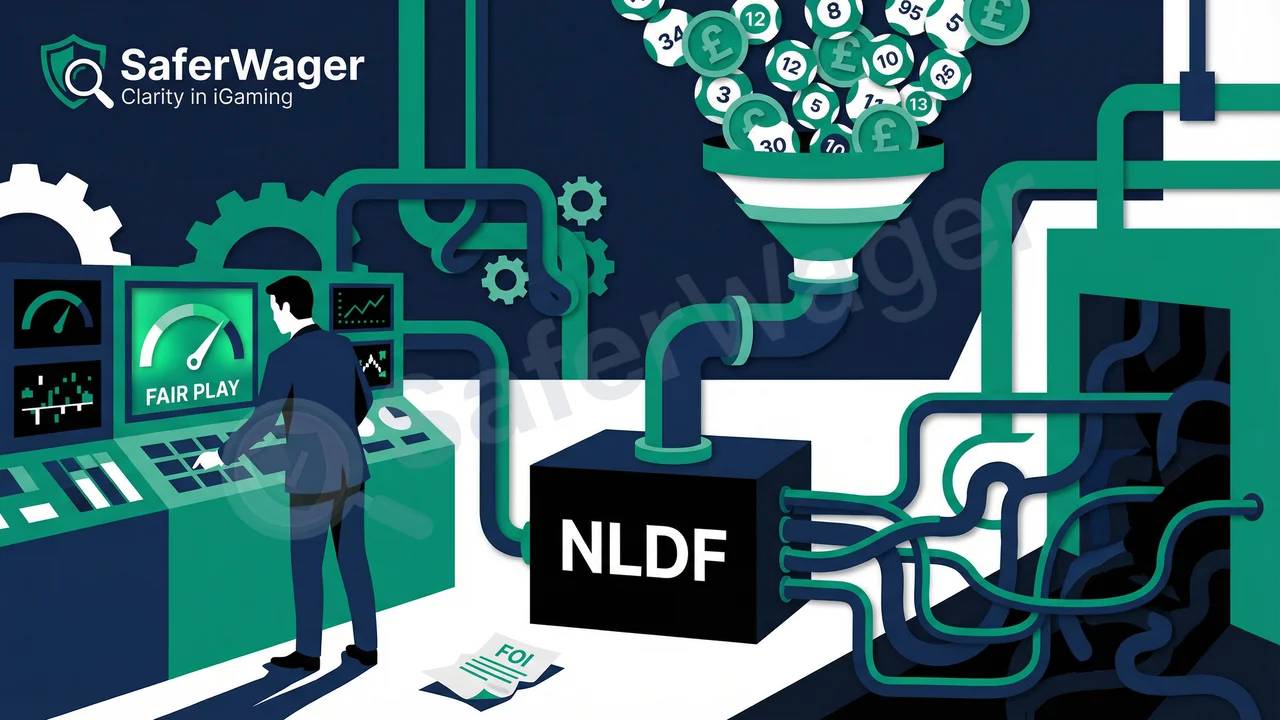
The Commission explained that its regulatory role ends once the operator pays the income raised for Good Causes into the National Lottery Distribution Fund (NLDF). From that point, the process is managed by other government bodies.
The Department for Digital, Culture, Media and Sport (DCMS) sets the formula for how this money is allocated. The funds are then passed to twelve independent distribution bodies, including organisations like Arts Council England, Sport England, and The National Lottery Community Fund, who are responsible for awarding grants to specific projects and charities.
What This Means for Consumers
This disclosure highlights the separation of duties in the UK's National Lottery framework. While the Gambling Commission is responsible for ensuring the lottery is run fairly and safely, it has no role in deciding which Good Causes receive funding.
For consumers and researchers interested in the specifics of lottery-funded charity projects, this response clarifies that such enquiries should be directed not to the gambling regulator, but to the DCMS and the twelve National Lottery distribution bodies. The change of operator from Camelot to Allwyn on 1 February 2024 does not alter this fundamental structure of oversight and distribution.