
UKGC Confirms Entain Risk Meeting, Hides Other Comms
FOI reveals operator attended a 'Financial Risk Pilot' meeting while regulator cites law enforcement rules to withhold further details.
A Freedom of Information request has revealed that Entain executives met with the Gambling Commission in July 2024 to discuss a 'Financial Risk Pilot'. While confirming the meeting, the regulator refused to confirm or deny the existence of any other correspondence, citing law enforcement exemptions. The response points to ongoing work on financial risk frameworks and potential sensitive regulatory activity.
Article Content
Regulator Confirms Key Meeting But Cites Law Enforcement Exemption
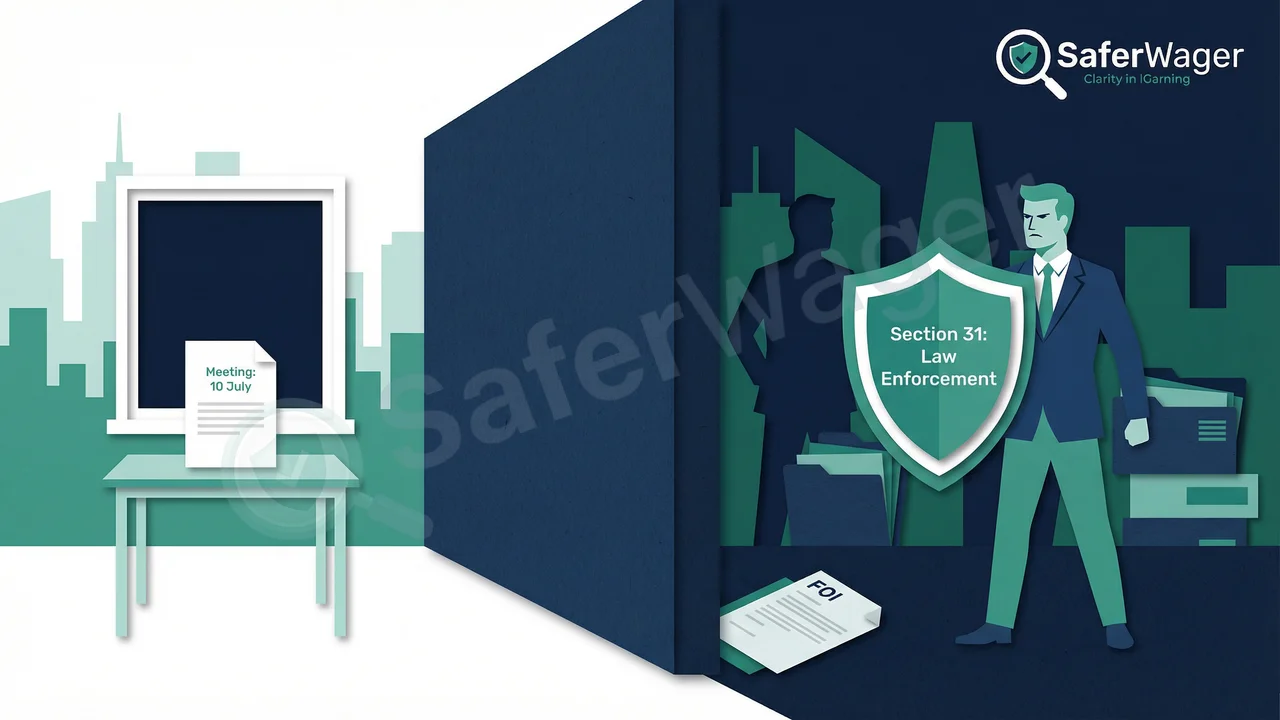
A Freedom of Information (FOI) response from the Gambling Commission (UKGC) has confirmed that representatives from major operator Entain attended a key meeting concerning financial risk frameworks in July 2024. However, the regulator has refused to confirm or deny the existence of any other correspondence with the firm during the same period, citing an exemption related to law enforcement.
The disclosure, published on the UKGC website following a request dated 25 July 2024, provides a partial but significant window into the regulator's engagement with one of the UK's largest gambling companies.
What the FOI Response Reveals
The request asked for details of all meetings, minutes, and email correspondence between the UKGC and Entain from 4 July 2024 to 24 July 2024. The Commission's response confirmed one specific engagement:
- A single meeting: Entain representatives attended a "Gambling Commission Financial Risk Pilot meeting" on 10 July 2024.
This confirms that Entain is actively involved in the pilot schemes for the controversial financial risk checks, often referred to as affordability checks, which are a central part of the government's gambling reforms.
Interestingly, when asked for the minutes of this meeting, the UKGC stated it "holds no information falling in scope of this part of your request," suggesting no formal minutes were recorded or retained.
Key Information Withheld
While the UKGC provided some email correspondence related to the pilot meeting, it applied several exemptions to withhold information:
- Future Publication (Section 22): A document titled "Financial Risk Guardrails" was withheld because the Commission intends to publish it at a future date. This indicates that formal guidance on the new risk checks is being developed but is not yet ready for public release.
- Personal Information (Section 40): The names and email addresses of individuals were redacted, which is standard practice to protect personal data.
- Law Enforcement (Section 31): Most significantly, for any other correspondence with Entain beyond the pilot meeting, the UKGC invoked a powerful "neither confirm nor deny" (NCND) exemption. This rule is used when confirming or denying the existence of information could prejudice the Commission's regulatory and enforcement functions.
In its justification, the UKGC stated that disclosing whether it holds other operational information could "undermine this trust and make operators less likely to co-operate with requests in future" and could "prejudice the outcome of any ongoing or future investigation."
Why This Matters for Consumers
The response highlights two key areas of interest for consumers. Firstly, it confirms that major operators like Entain are directly involved in shaping the financial risk checks that will affect many gamblers in the UK. The mention of a "Financial Risk Guardrails" document shows that concrete rules are being formulated behind the scenes.
Secondly, the use of the Section 31 law enforcement exemption is a strong signal. While it does not confirm an investigation is underway, it is the primary tool the UKGC uses when it cannot discuss sensitive regulatory activity concerning a specific operator. The Commission's own reasoning notes that it ordinarily publishes the outcome of formal regulatory decisions, implying that any such activity covered by this exemption would be at a preliminary or ongoing stage. This leaves consumers and the industry to wait for any potential future public announcements.