
UKGC: 2018 Safer Gambling Guidance Was Not Mandatory
FOI response reveals early customer interaction guidance was a 'reference tool only', with mandatory rules evolving over several years.
A Freedom of Information response from the UK Gambling Commission has revealed that its first formal guidance on safer gambling interactions, issued in 2018, was not mandatory for operators. The disclosure outlines a multi-year process of strengthening rules after the regulator found many firms were 'not carrying out the basics' of player protection.
Article Content
A Freedom of Information (FOI) response from the UK Gambling Commission (UKGC) has confirmed that its initial formal guidance on remote customer interaction, published in 2018, was not a binding requirement for gambling operators.
The disclosure, dated 30 January 2024, was in response to a request for the specific rules and guidance that were active in 2017. While the UKGC did not provide the original 2017 documents, citing they are accessible elsewhere, its detailed response outlines the significant evolution of player protection rules over the last seven years.
A 'Reference Tool Only'
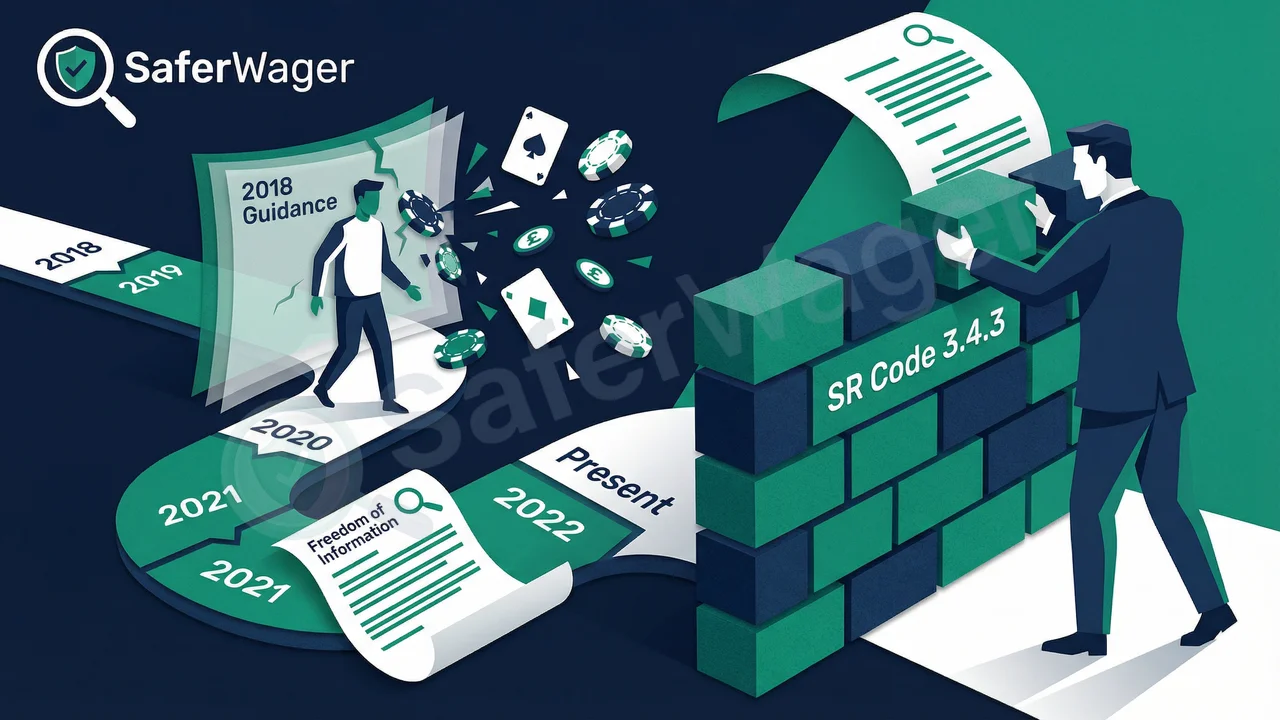
The key revelation from the FOI response is the status of the first customer interaction guidance for remote operators, which was published in February 2018. The Commission explicitly states: "There was no requirement for operators to act upon the guidance, it was introduced as a reference tool only."
This is significant for consumers as it indicates that during 2017 and 2018, gambling companies were not obligated to follow the regulator's published best practices for identifying and interacting with customers at risk of harm. The guidance was intended to provide clarity on what should trigger an interaction and the need to evaluate its effectiveness, but adherence was voluntary.
A Timeline of Tightening Rules
The UKGC's response details how this voluntary approach proved insufficient, leading to a progressive strengthening of the Licence Conditions and Codes of Practice (LCCP).
- February 2019: The Commission consulted on changes, noting that its casework showed "many parts of the industry were still not carrying out the basics" and that weaknesses in identifying at-risk players persisted. It proposed a new requirement for licensees to formally "take into account" the Commission's guidance.
- May 2020: Additional formal guidance was issued to address changes in gambling behaviour during the COVID-19 pandemic lockdowns.
- November 2020: A further consultation was launched to introduce "significantly stronger requirements" for how operators identify harm and what action they must take.
- September 2022: These stronger requirements officially came into effect as Social Responsibility Code 3.4.3. This marked a major shift from guidance to explicit rules, including the use of automated systems and specific action triggers.
- October 2023: New, updated guidance came into effect, which operators are now required to take account of to comply with the 2022 rules.
What This Means for Consumers
The timeline provided by the UKGC demonstrates a clear regulatory journey from a light-touch, guidance-based approach to the strict, enforceable rules in place today. The response highlights the regulator's view that the industry was not moving fast enough to protect customers, prompting a series of interventions to raise standards.
For consumers, this context is crucial. It shows that the player protection measures and requirements for operator intervention in 2024 are substantially more robust than they were in 2017 or 2018. The disclosure underscores that what might have been considered acceptable operator practice several years ago would likely fall short of the mandatory standards required today.