
UKGC Data: Problem Gamblers 6x More Likely to Own Crypto
Freedom of Information request reveals strong correlation between high-risk investing and gambling-related harm.
Data disclosed by the UK Gambling Commission reveals that problem gamblers are over six times more likely to own cryptocurrency than non-problem gamblers (38% vs 6%). The findings highlight the behavioural overlap between gambling and high-risk investing.
Article Content
A Freedom of Information (FOI) request has revealed internal UK Gambling Commission (UKGC) data showing a significant link between problem gambling and investment in high-risk products like cryptocurrency.
The data, disclosed following a request on 27 February 2023, shows that individuals classified as problem gamblers are more than six times more likely to own cryptocurrencies than non-problem gamblers.
This disclosure highlights the growing concern among regulators about the blurred lines between gambling and volatile, unregulated online investments, and the potential for consumer harm.
Key Findings from the UKGC Data
The research, based on surveys conducted in late 2021 and early 2022, was the only information held by the Commission on the topic. It paints a clear picture of overlapping behaviours and risk profiles.
- Cryptocurrency Ownership: 38% of problem gamblers own cryptocurrencies, compared to just 6% of non-problem gamblers.
- Trading App Usage: Problem gamblers are significantly more likely to use mobile trading apps (e.g., eToro, Robinhood), with 19% using them compared to 3% of non-problem gamblers.
- Risk Aversion: The trend reverses for lower-risk investments. Non-problem gamblers are more than twice as likely to invest in bonds and ISAs (38%) as problem gamblers (17%).
Behavioural Parallels to Gambling
The UKGC's internal document notes that consumers themselves perceive high-risk investing as a form of gambling. The Financial Conduct Authority (FCA) found that the most popular reason for buying cryptocurrency was 'as a gamble that could make or lose money'. Furthermore, 68% of younger traders compared investing in such products to gambling.
The data also revealed behavioural patterns similar to those seen in gambling:
- High Frequency: Over a third (35%) of those investing in trading apps check them daily, and 32% of cryptocurrency owners do the same.
- Thrill-Seeking: Over half (51%) of those who have invested in cryptocurrencies reported doing so because they find it 'fun and thrilling'.
- Perceived Addictiveness: 43% of all survey respondents agreed that investment products can be addictive.
Significance for Consumer Protection
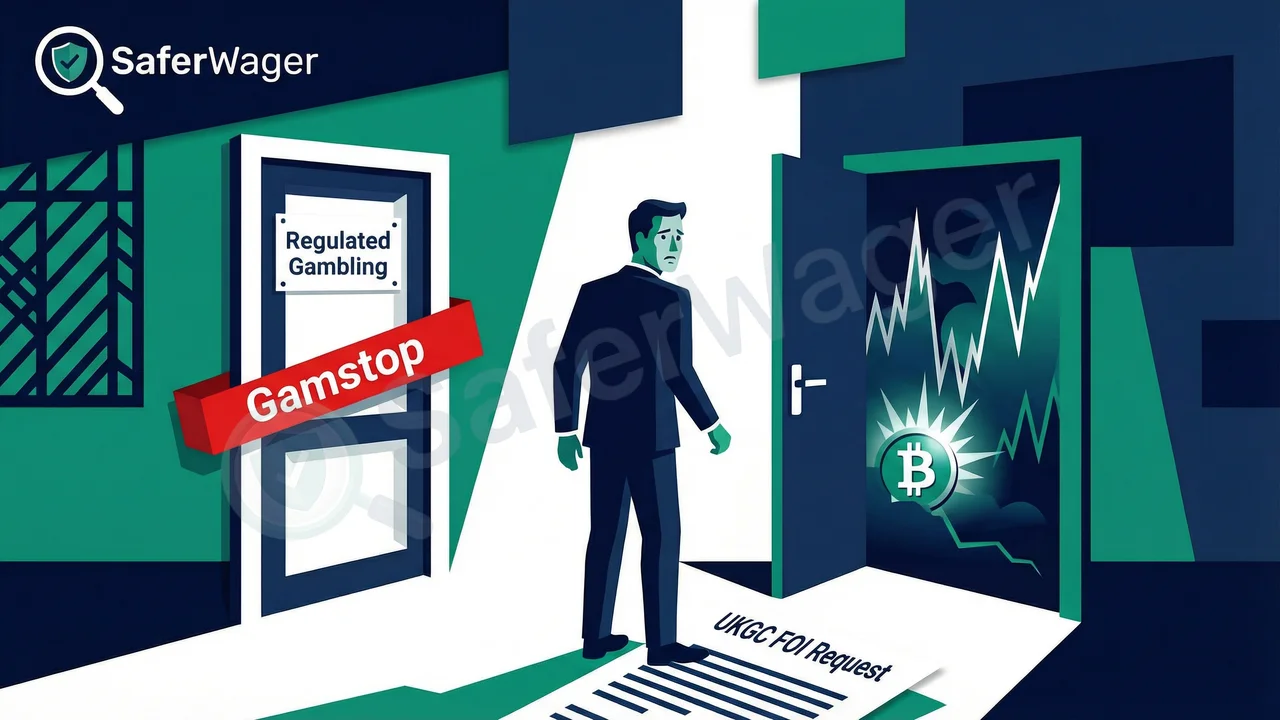
The findings are significant as they suggest that some consumers may be turning to the unregulated trading market to experience the same 'thrill' they get from gambling. This is a particular concern for individuals who have self-excluded from regulated gambling sites, as they may be substituting one high-risk activity for another in a less protected environment.
Charity organisation GamCare has reported a corresponding rise in calls for help related to day trading. This has led to calls for a self-exclusion scheme for high-risk trading, similar to the Gamstop service for gambling.
The Gambling Commission stated it will "reflect on the findings highlighted... and use them to inform future work in relation to cryptocurrencies." This indicates that the crossover between gambling and high-risk investing is firmly on the regulator's radar as it considers future consumer protection measures.