
UKGC Corrects Media, Charities on Gambling Stats
FOI reveals watchdog wrote to 13 organisations, including The Guardian and Gambling with Lives, over misuse of official data in three months.
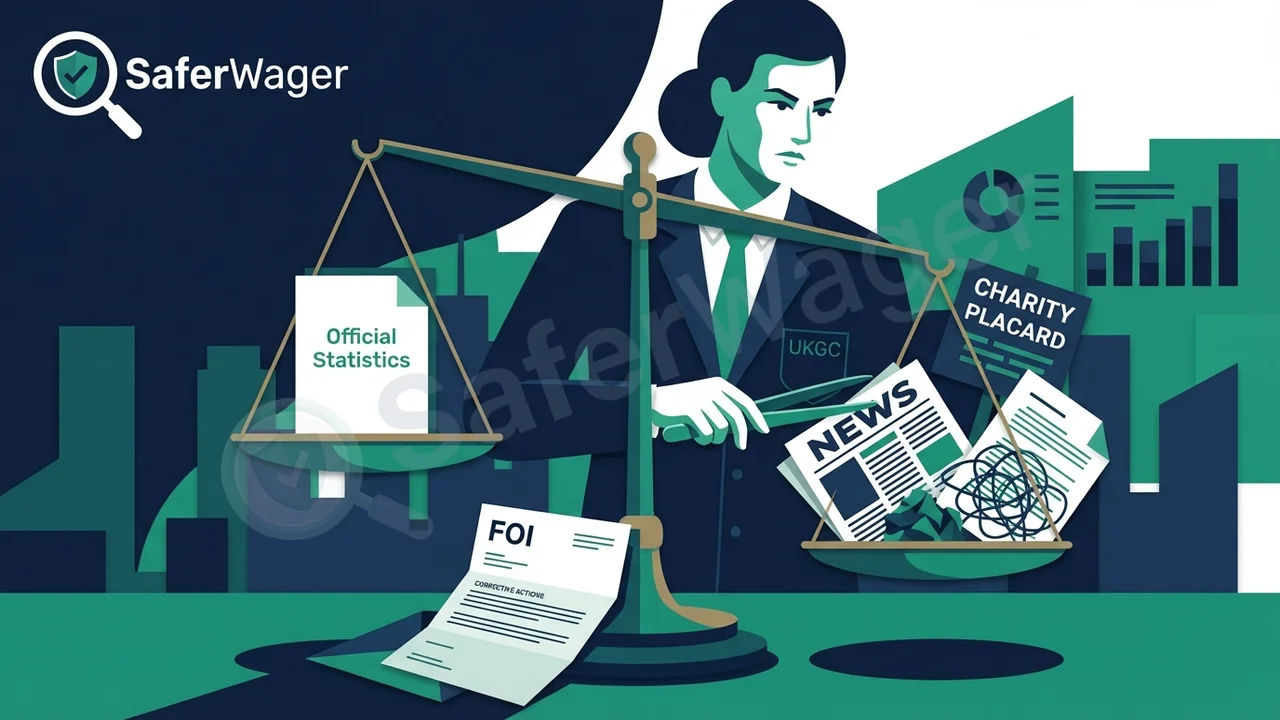
A Freedom of Information request reveals the UK Gambling Commission wrote to 13 organisations, including major newspapers, charities, and academic bodies, in a three-month period regarding the misuse of official statistics. The action highlights the regulator's focus on ensuring public debate on gambling is based on accurate data.
Article Content
A Freedom of Information (FOI) disclosure has revealed that the UK Gambling Commission (UKGC) contacted 13 separate organisations regarding the misuse of its official statistics between 20 June and 19 September 2024.
The list includes major national newspapers, prominent gambling reform campaign groups, and academic bodies, highlighting the regulator's active role in policing how its data is presented to the public.
Why This Matters
For consumers, understanding the true landscape of gambling in the UK is crucial for making informed decisions. Statistics on participation rates, problem gambling prevalence, and financial losses are frequently cited in news reports, parliamentary debates, and marketing materials. When this data is used incorrectly, it can create a misleading picture of the risks and realities of gambling.
The UKGC's intervention aims to ensure that discussions around gambling are based on accurate, fairly represented evidence. By correcting the record with data users, the regulator is attempting to maintain the integrity of its official statistics, which are a primary source for researchers, policymakers, and the public.
Breakdown of the Organisations
The FOI response, dated 19 September 2024, lists a diverse group of organisations that received correspondence from the Commission about statistical misuse. They can be broadly categorised as:
- News Media: The Observer, The Guardian, The Daily Mail online, SBC News, Sunday Post, The Critic, and the I newspaper.
- Charities and Campaign Groups: Gambling with Lives and YGAM (The Young Gamers and Gamblers Education Trust).
- Research and Academia: University of Bristol and CEGA.org.uk.
- Industry and Consultancy: Gambling Compliance and Thought Leaders.
The disclosure notes that this list covers the period from 20 June 2024. Information for the first half of the year (January to 19 June 2024) was made public in a separate disclosure and is accessible via the UKGC's website.
Significance for the Industry
The UKGC's actions underscore a commitment to evidence-based regulation and public discourse. By contacting organisations from all sides of the gambling debate—from media outlets and industry news sites to anti-gambling campaigners—the regulator is signalling that accuracy is non-negotiable, regardless of the user's viewpoint.
This proactive monitoring serves as a reminder to consumers to be critical of statistics they encounter. The data shows that misinterpretation or misuse of gambling statistics can occur across a wide spectrum of sources. For those seeking to understand gambling trends, these interventions highlight the importance of referring to primary sources, such as the UKGC's own publications, wherever possible.