
UKGC Excluded Groups From Key Survey Questions
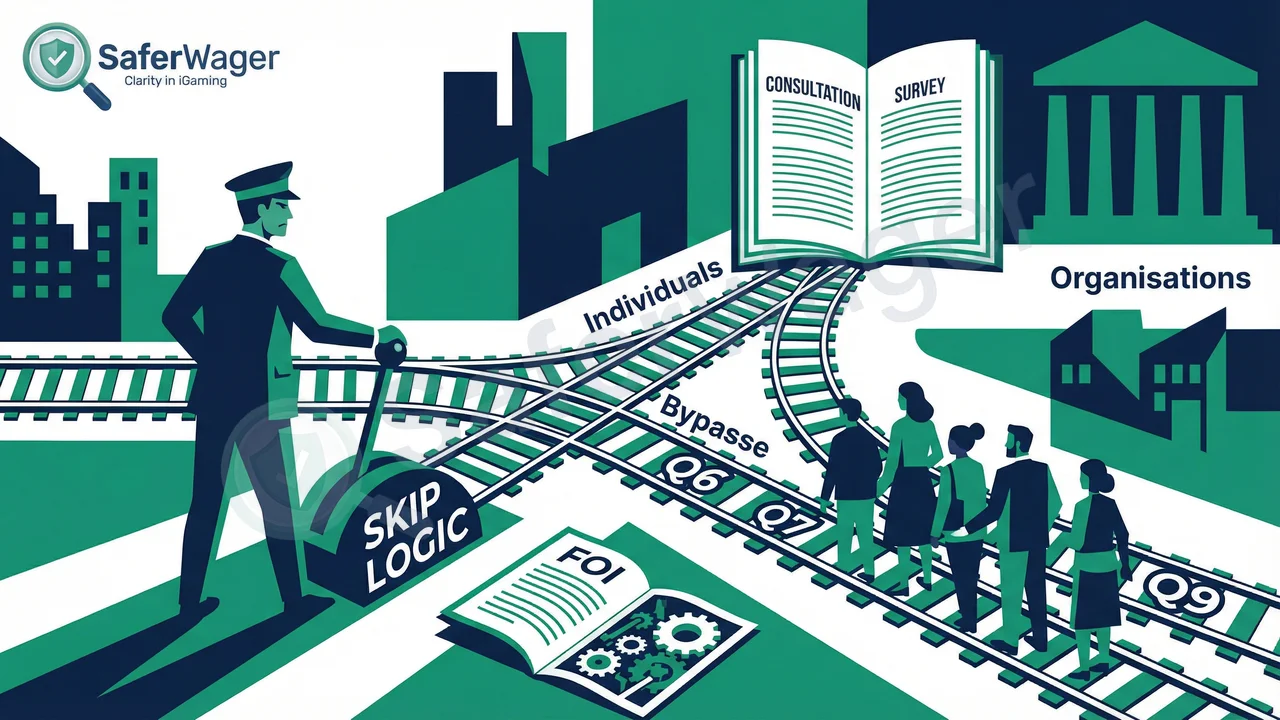
FOI reveals 'skip logic' in 2023 consultation prevented organisations from answering questions on personal gambling experience.
A Freedom of Information request has revealed the UK Gambling Commission used a method that prevented organisations from answering questions about personal gambling experiences in its major Summer 2023 consultation. The regulator stated this was because organisations cannot have a 'personal' view, but it raises questions about how evidence from key stakeholder groups is collected.
Article Content
A Freedom of Information (FOI) response has revealed that the UK Gambling Commission (UKGC) prevented organisations from answering specific questions about personal gambling experiences during its major Summer 2023 consultation.
The disclosure, published on the regulator's website, confirms that a feature known as “skip logic” was used to route respondents representing organisations past four key questions. This means that while individuals could provide structured data on their personal experiences, groups representing charities, gambling businesses, and trade associations could not.
How the Consultation Worked
The Summer 2023 consultation gathered feedback on significant proposed changes to the Licence Conditions and Codes of Practice (LCCP) and other technical standards that govern all UK-licensed gambling operators. These rules directly impact consumer protection measures.
Question 5 of the survey asked all respondents to identify themselves from one of eight categories, including:
- A member of the public
- A person representing a charity/non-profit
- A person representing a gambling business
- A person representing a trade association
However, the FOI response confirms that questions 6, 7, 8, and 9, which related to personal experiences of gambling, were only shown to respondents who identified as individuals (a member of the public, an academic, or a current/former gambling industry employee responding in a personal capacity).
In its response, the UKGC explained its reasoning: "Those respondents who were responding on behalf of an organisation could not respond to these personal questions as they were responding on behalf of an organisation and/or multiple people where personal experiences of gambling might vary."
The Commission added that organisations were able to include information about their members' collective experiences in other free-text sections of the consultation, and that this information was considered. It also noted that any individual representing an organisation was free to make a separate submission in their personal capacity.
Why This Matters for Consumers
This methodological detail is significant as it sheds light on how the UKGC gathers evidence to shape gambling regulation. The rules discussed in the consultation, which include controversial affordability checks, are designed to protect consumers from harm.
By using skip logic, the regulator did not collect structured, quantitative data on personal gambling experiences from individuals who were officially representing key stakeholder groups. While the UKGC states it considered qualitative information submitted elsewhere, this approach prevented a direct, question-by-question comparison of experiences across all respondent types.
For consumers, this raises questions about the completeness of the evidence base used to formulate new regulations. Understanding who is asked which questions, and why, is crucial for ensuring the regulatory process is transparent and robust.