
UKGC: 'Social Media Raffle' Licences Do Not Exist
FOI response reveals popular online raffles operate outside of Gambling Commission regulation as unlicensed prize competitions.
A UK Gambling Commission FOI response confirms that 'social media raffle licences' do not exist. The disclosure reveals most online raffles operate as unregulated prize competitions, falling outside the UKGC's consumer protection and auditing framework.
Article Content
UKGC Confirms No Specific Licence for Social Media Raffles
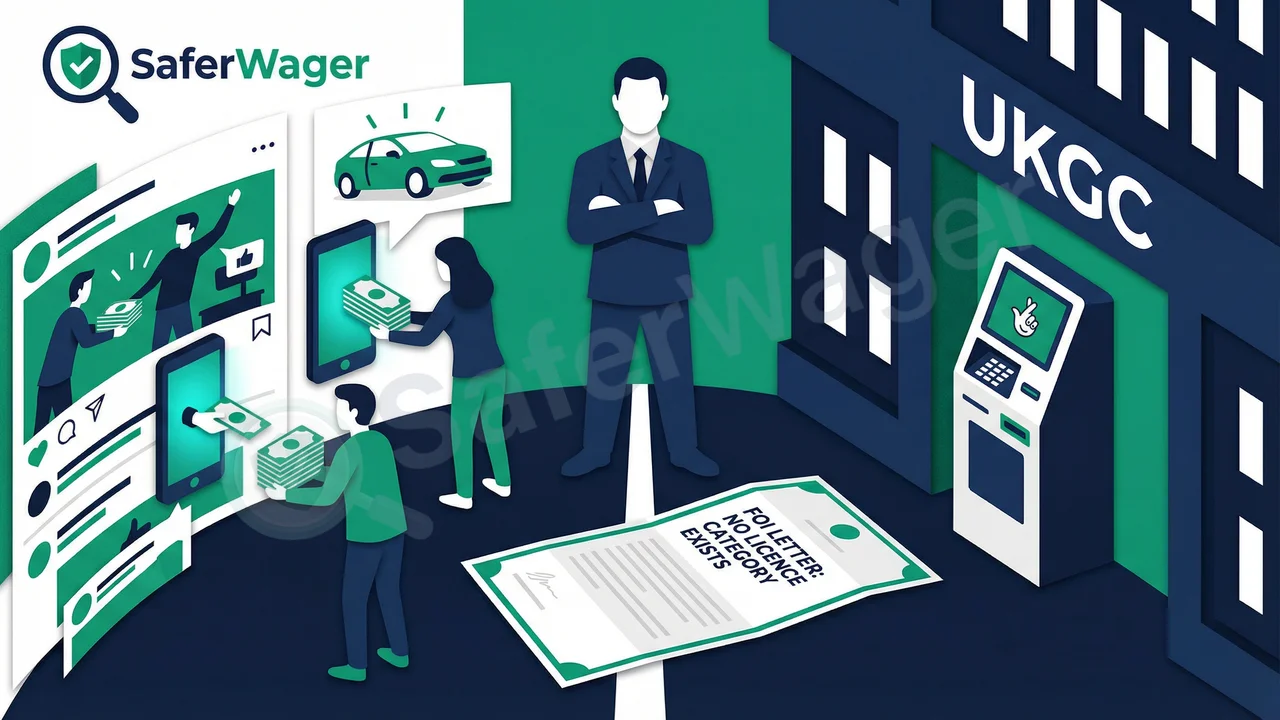
A Freedom of Information (FOI) response from the UK Gambling Commission (UKGC) has confirmed that the regulator does not issue or hold information on “social media raffle licences” because no such licence category exists. The disclosure, dated 10 October 2024, clarifies the ambiguous legal status of the thousands of raffles, giveaways, and competitions prevalent on social media platforms.
The key finding reveals that most of these online activities are not licensed gambling but are structured as prize competitions or free draws, which fall outside the UKGC's regulatory remit.
Context: What This Means for Consumers
For consumers participating in online raffles, this clarification is critical. It means that the majority of for-profit raffles seen on social media are not subject to the same stringent oversight, consumer protection rules, or auditing processes as licensed gambling operators like online casinos or the National Lottery.
While these prize competitions are not necessarily illegal, they operate in a grey area without direct regulatory supervision. This places the onus on the consumer to understand the nature of the scheme they are entering and to be aware that formal dispute resolution or protection frameworks offered by the UKGC do not apply.
Details of the Disclosure
The UKGC response breaks down the legal distinctions that govern these activities:
Prize Competitions and Free Draws:
- These do not require a licence from the Gambling Commission.
- To remain outside of gambling regulation, they must meet specific criteria set out in the Gambling Act 2005, such as offering a genuine free entry route. This is why many social media raffles include a “no purchase necessary” option, often via post.
- The UKGC does not collect data on these competitions but states its role is to “monitor the boundary” and act only if an arrangement crosses the line into an illegal lottery.
Lotteries:
- A lottery is legally defined as an activity where participants must pay to enter and prizes are awarded purely by chance.
- Unlike prize competitions, lotteries require a licence or registration and can only be run by non-commercial societies for fundraising purposes (e.g., charities, sports clubs).
- Crucially, the UKGC states there are no exemptions that allow lotteries to be run remotely (online or via social media) without a licence.
- Any organisation running a true lottery online must hold a remote society lottery operating licence from the Commission. These licensed bodies must display their account number and a link to their licence status on their website.
Significance and Industry Implications
The FOI response highlights a significant gap in consumer understanding and regulatory coverage. While licensed charity lotteries are fully regulated and audited, the burgeoning market of for-profit social media “raffles” operates without this oversight.
Participants in these unregulated prize competitions have limited recourse if a prize is not awarded or if they suspect foul play, as the UKGC’s compliance and enforcement powers do not extend to them unless they are deemed to be illegal lotteries. The disclosure serves as a stark reminder for consumers to exercise caution and differentiate between a regulated, non-profit lottery and an unregulated, for-profit prize competition before participating.