
UKGC Confirms It Holds No Commercial Insurance
FOI request reveals regulator's status as a Crown body means it is backed by the government, not a private insurer.
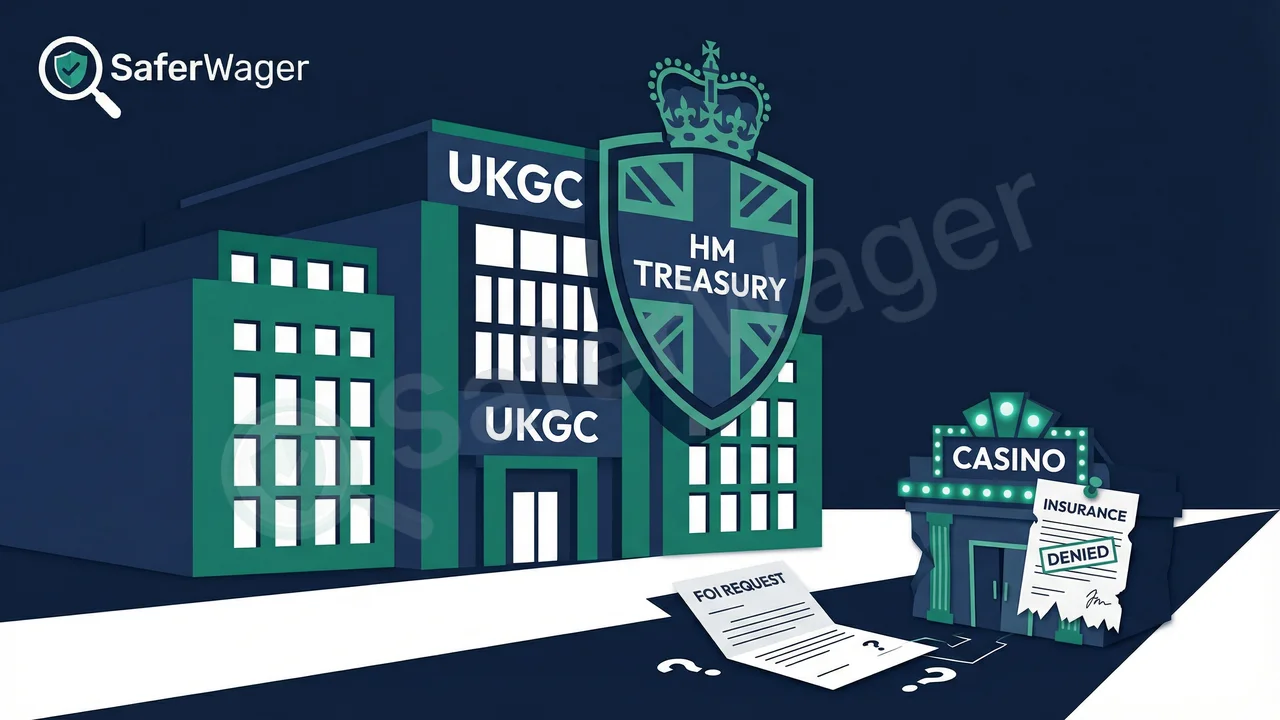
A Freedom of Information request has confirmed the UK Gambling Commission does not hold commercial insurance. As a Crown body, the regulator is not required to insure itself, with any liabilities ultimately covered by the government. This highlights the UKGC's unique status as a state entity, unlike the private operators it licenses.
Article Content
Regulator's Financial Backing Clarified
A Freedom of Information (FOI) request has confirmed that the UK Gambling Commission (UKGC) does not hold commercial insurance for its operations. The response clarifies that due to its status as a Crown body, the regulator is effectively self-insured by the government.
Context: Why This Matters
For consumers, understanding the structure of the UK's gambling regulator is crucial. While all licensed gambling operators are private companies that must secure their own commercial insurance to cover liabilities, the UKGC operates under a different framework. This FOI response sheds light on the financial accountability and backing of the organisation responsible for overseeing the entire British gambling industry.
It confirms that the Commission is not a private entity subject to the commercial insurance market but an arm of the state, with its risks ultimately underwritten by the UK government.
Details of the FOI Request
The request, dated 3 February 2025, was straightforward, asking the Commission to provide its insurer details.
The UKGC's response stated that the information was "not held." This was not a refusal to provide information, but a confirmation that no such information exists because the Commission does not use a commercial insurer.
The response explained:
"The Gambling Commission can confirm that the Commission is a Crown body and is therefore not required to self-insure."
The UKGC directed the requester to HM Treasury's official guidance, Managing Public Money (Annex 4.4). This document outlines the principles for how government departments and public bodies handle risk. In essence, the government generally does not purchase commercial insurance, instead bearing its own risks. This is known as Crown indemnity, where the Treasury acts as the insurer of last resort for significant, non-routine losses.
Significance and Industry Implications
The confirmation of the UKGC's insurance status reinforces its fundamental nature as a state regulator. Unlike a private business, its operational continuity and ability to meet liabilities are not dependent on an insurance policy but on its government backing.
This means that any major legal claims or liabilities against the Commission would ultimately be covered by public funds, as is standard practice for most government bodies. For consumers and the industry, this provides a clear picture of the regulator's financial foundation, highlighting a key structural difference between the UKGC and the private companies it is tasked with licensing and regulating.