
UKGC Confirms Everton Warning, Withholds Details
Regulator cites law enforcement powers to shield correspondence with football clubs over unlicensed gambling promotion following a Freedom of Information request.
A Freedom of Information request reveals the UK Gambling Commission warned Everton FC over promoting an unlicensed gambling website. However, the regulator has withheld all details, citing law enforcement exemptions, leaving the public in the dark about the specifics of its engagement with football clubs.
Article Content
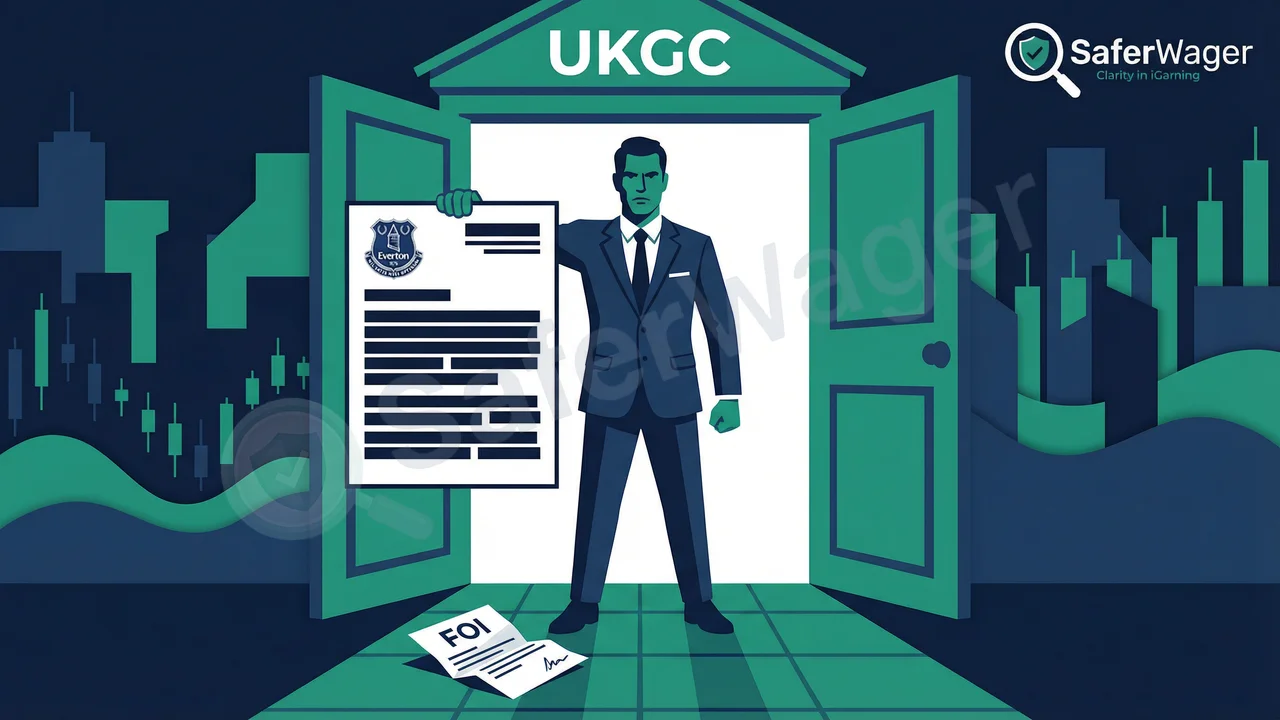
A Freedom of Information (FOI) disclosure has revealed that the UK Gambling Commission (UKGC) contacted Everton Football Club regarding the promotion of an unlicensed gambling website, but has refused to release the details of the communication.
The response, published following a request dated 10 April 2025, confirms the regulator holds correspondence with the Premier League club but has withheld it to avoid prejudicing its law enforcement functions. The UKGC also refused to confirm or deny whether it held any information relating to Leicester City Football Club.
Context: Unlicensed Sponsors in Football
The FOI request sought all correspondence, meeting notes, and call logs between the UKGC and both Everton and Leicester City from 1 October 2024 to 10 April 2025. This period is significant as it follows a public notice from the Commission in February 2025, which stated that the licence for Stake.uk.com would be withdrawn in March 2025.
At the time, the UKGC announced it would be writing to Everton and two other unnamed clubs with unlicensed sponsors to warn them of the risks associated with promoting unlawful gambling websites. Promoting an unlicensed operator is a serious issue, as these companies operate outside the UK's framework for consumer protection, responsible gambling, and anti-money laundering.
Details of the FOI Response
The UKGC's response confirms that it holds information related to its communication with Everton FC. However, it has invoked Section 31(1)(g) of the Freedom of Information Act, which provides an exemption for information that would likely prejudice a public authority's ability to exercise its regulatory and law enforcement functions.
The regulator argued that disclosure could:
- Prejudice its ability to ascertain whether a person has failed to comply with the law.
- Harm its ability to determine if regulatory action is justified.
- Undermine its investigation process if details of its methods became public.
For all other parts of the request—including meetings with Everton and any communication whatsoever with Leicester City—the Commission issued a "neither confirm nor deny" response. This is permitted under Section 31(3) of the FOIA, and indicates that even acknowledging the existence of information could compromise the UKGC's regulatory work and the openness of stakeholders in sharing sensitive information.
Significance for Consumers
This disclosure confirms that the UKGC is actively engaging with football clubs over their sponsorship deals, particularly when a sponsor's licence status changes. For consumers, this is a sign that the regulator is monitoring these high-profile partnerships.
However, the heavy redaction and refusal to provide substantive details highlight the limits of public transparency when it comes to regulatory investigations. While the UKGC cited the need to protect the integrity of its processes, the outcome is that the public remains unaware of the specific content of the warnings issued to Everton or whether any similar engagement occurred with Leicester City.
The decision underscores the ongoing tension between the public's right to know and the confidentiality required for effective regulation. Consumers are left to trust that the Commission is taking appropriate action behind closed doors, without being able to see the evidence of that action for themselves.