
Who Holds Your Bet? UKGC on White Label Roles
Regulator clarifies that unlicensed white label partners are marketing fronts, with all customer transactions handled by the licensed operator.
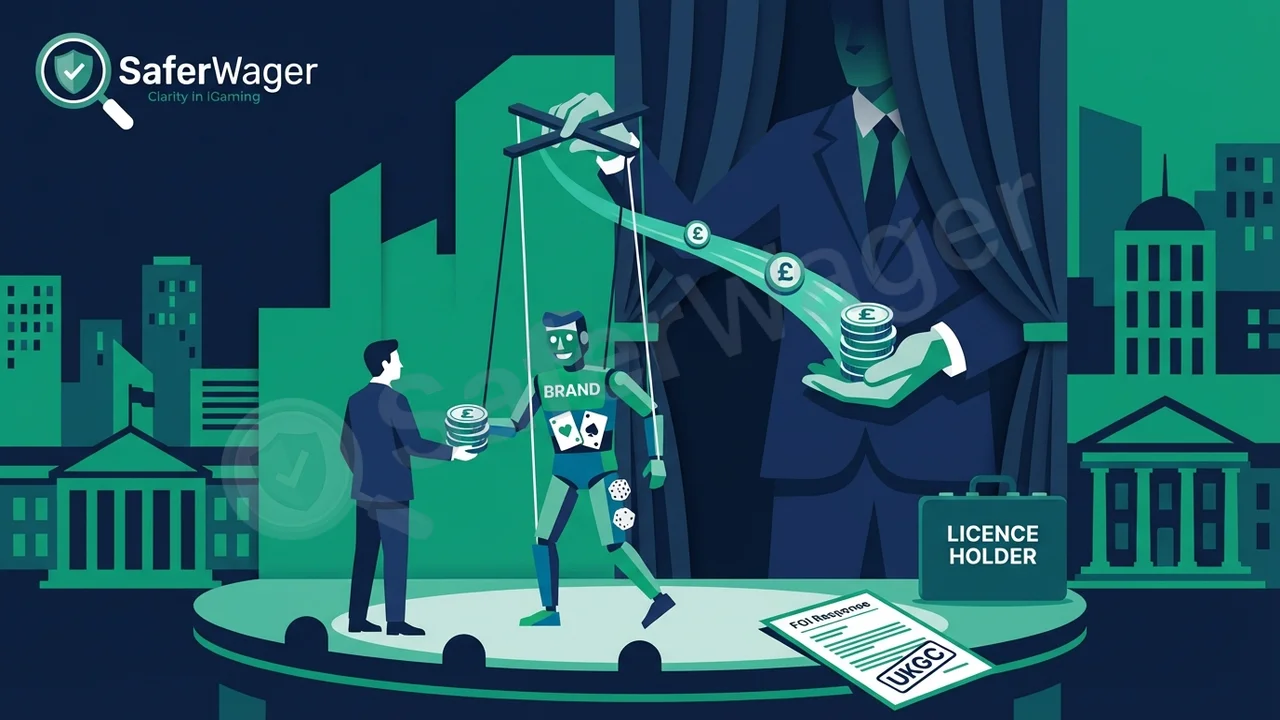
A Freedom of Information response from the UK Gambling Commission clarifies the legal role of white label gambling sites. The regulator confirmed these brands do not transact with customers; all legal and financial responsibility lies with the underlying licence holder.
Article Content
UKGC: White Label Brands Do Not Transact With Customers
A Freedom of Information (FOI) response published by the UK Gambling Commission (UKGC) has clarified the precise legal role of white label gambling partners. The regulator confirmed that these entities are not permitted to transact with customers, a function reserved exclusively for the holder of a UKGC operating licence.
The disclosure, dated 6 November 2023, responds to a query about the statement that white label partners are "not transacting with customers". The response provides a crucial insight into the structure of the UK's online gambling market.
Why This Matters to Consumers
Many consumers sign up and bet with a familiar brand, believing that brand is the company they are doing business with. However, in a white label arrangement, the brand is often just a marketing front. The legal entity responsible for a player's funds, data, and fair treatment is the underlying licence holder, a company whose name might only appear in the small print of a website's footer.
This distinction is vital. When a dispute arises or a complaint needs to be made, it is the licensed operator—not the white label brand—that is accountable to the UKGC and legally responsible for resolving the issue.
The Legal Distinction Explained
The UKGC's response states that offering gambling facilities to consumers in Great Britain is a licensed activity. The entity that holds the licence is the one legally providing the service.
The regulator explained the role of the white label partner:
"White label marketing partners, that do not hold a licence, would be committing an offence under section 33 of the Gambling Act 2005 by engaging with customers directly to offer facilities for gambling."
Instead, the relationship between the brand you see and the company running the service is a "business-to-business contract". The white label partner's role is to market the website and attract customers, while the licensed operator (the UKGC references TGP Europe Limited as an example in its response) handles all customer-facing transactions, including deposits, withdrawals, and bet settlement.
Think of it as a supermarket's own-brand product. While it carries the supermarket's name, it is often produced by a different, specialised company. In the same way, a white label betting site carries a specific brand, but the entire gambling operation is run by a separate, licensed operator.
Industry Implications and Consumer Protection
This clarification reinforces the importance of consumer awareness. Before signing up for a new betting site, players should identify the licensed operator running the service. This information is a mandatory part of a licensed site's terms and conditions and is usually found in the website footer.
Knowing the licence holder is critical for several reasons:
- Accountability: It clarifies who to direct complaints to via official channels.
- Safer Gambling: A self-exclusion requested from a single licensed operator may apply across all the white label brands they operate. This is a powerful tool for players seeking to control their gambling.
- Transparency: It allows consumers to research the regulatory history of the actual operator, not just the marketing brand, to make more informed decisions.