
UKGC Can't Track Crime Victim Payouts
Regulator says it's too costly to track how much money from fines is returned to victims of gambling-related crime.
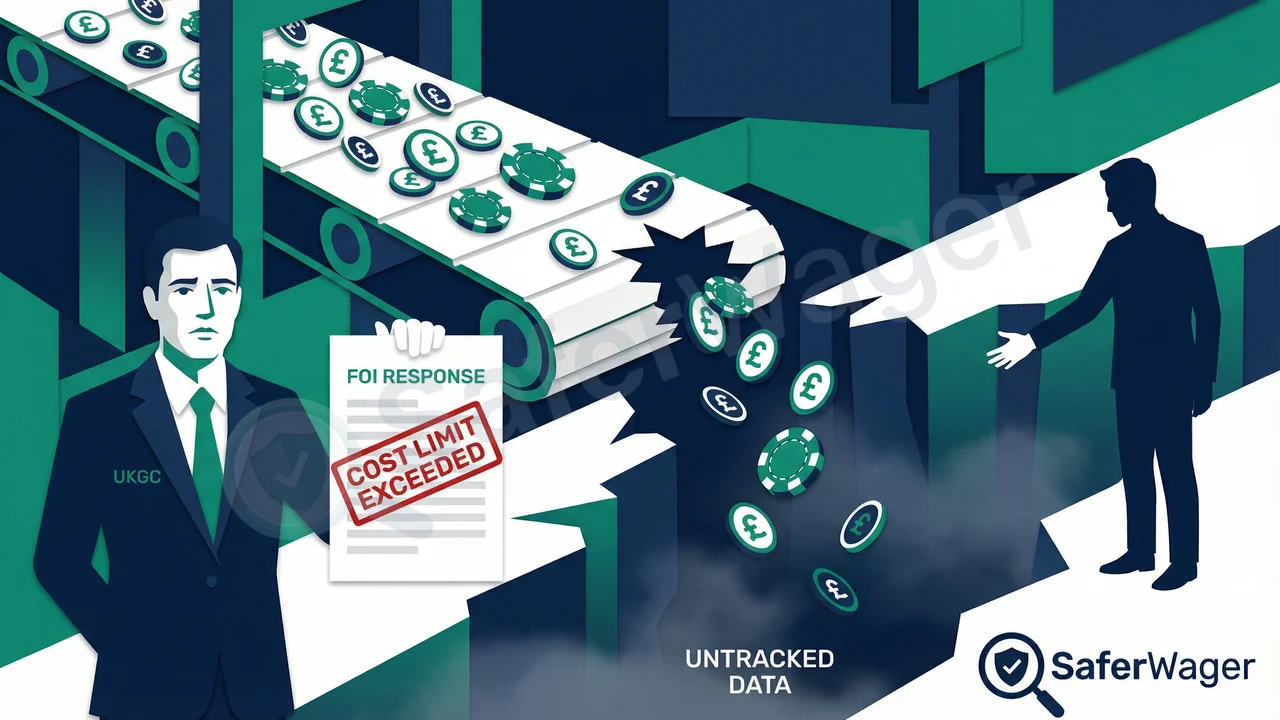
The UK Gambling Commission has revealed it cannot track the total amount of money paid to victims of crime from operator fines. In response to a Freedom of Information request, the regulator stated it would be too costly to manually search its records. This raises questions about the transparency of funds intended to compensate those harmed by gambling-related crime.
Article Content
The UK Gambling Commission (UKGC) is unable to provide a total figure for funds returned to victims of crime as part of regulatory settlements with gambling operators over the past decade, a Freedom of Information (FOI) response has revealed.
In a request dated 19 September 2025, the regulator was asked to list all divestments paid by operators to victims of crime over the last 10 years. The Commission withheld the information, stating that the cost of retrieving the data would exceed the statutory limit.
Lack of Centralised Data
When a gambling operator is found to have failed in its social responsibility or anti-money laundering duties, particularly in cases where a customer has gambled with stolen funds, the UKGC can order a regulatory settlement. A key part of these settlements is often a 'divestment', which requires the operator to return the stolen money to the identified victim.
This data is crucial for consumers and victims' groups to understand how effectively the regulatory system ensures that money lost to gambling-related crime is returned to its rightful owners. However, the UKGC's response indicates this information is not centrally tracked or easily accessible.
The Commission's Response
The UKGC refused the request under Section 12 of the Freedom of Information Act, which allows public bodies to decline requests if the cost of compliance exceeds £450, equivalent to 18 hours of staff time.
In its explanation, the Commission stated: "In order to identify, locate and retrieve the information requested, we would need to manually review each settlement to determine whether an operator made a divestment to a ‘victim of crime’."
The regulator added that identifying these individuals can be challenging, noting, "these individuals are often difficult to identify, or not identifiable at all."
The UKGC suggested that a more refined, narrower request might be possible to fulfil, but it would be treated as a new enquiry.
Implications for Transparency
The inability to easily quantify funds returned to victims raises significant questions about regulatory transparency. Without accessible data, it is difficult for the public, policymakers, and consumer protection groups to assess the effectiveness of divestments as a tool for compensating those harmed by failings in the licensed gambling industry.
While the UKGC publishes details of individual regulatory settlements, the lack of aggregated data means there is no clear, overarching picture of how much money from operator failings is successfully returned to victims of crime. This highlights a potential gap in the regulator's data management and its ability to report on a key outcome of its enforcement actions.