
UKGC Can't Quantify Withdrawal Complaints
FOI reveals regulator's data systems cannot easily track one of the most common consumer issues, citing excessive cost to retrieve the information.
A Freedom of Information request has revealed the UK Gambling Commission cannot provide specific figures on complaints about withdrawal difficulties. The regulator cited the excessive cost and time required to manually search its records, highlighting a significant data gap concerning a key consumer protection issue.
Article Content
A Freedom of Information (FOI) request has revealed that the UK Gambling Commission (UKGC) is unable to provide specific figures on the number of complaints it receives about bookmakers making customer withdrawals difficult.
In a response dated 10 December 2024, the regulator stated that retrieving the data would be too costly and time-consuming, highlighting a significant gap in the available data on one of the most frequent sources of consumer frustration in the gambling industry.
The Request and The Refusal
The FOI request sought to understand the scale of withdrawal-related issues by asking for:
- The total number of complaints received by the UKGC each year.
- How many of those complaints specifically relate to withdrawals.
- Which bookmakers are the subject of the most complaints.
- Details of fines levied for withdrawal-related ID abuse.
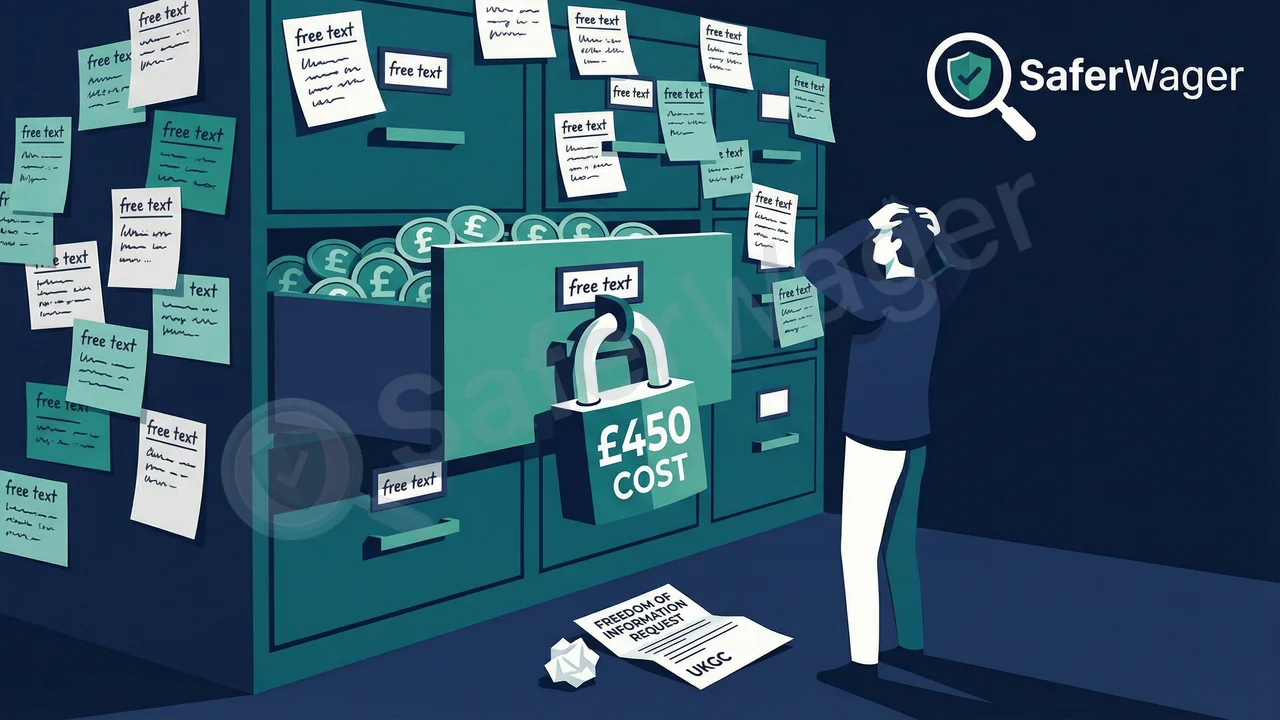
While the Commission confirmed it holds records of all complaints, it refused to provide the specific details requested. The UKGC cited Section 12 of the Freedom of Information Act, which allows public authorities to refuse requests where the cost of compliance would exceed £450, equivalent to 18 hours of staff time.
Why the Data is Inaccessible
The UKGC explained that while complaints are logged, the specific details of each case are recorded in a ‘free text’ field. To identify every complaint related to withdrawals, a staff member would need to perform a manual review of each individual record. The regulator deemed this task would far exceed the 18-hour time limit.
The response also noted that its record-keeping methods have changed over time. Prior to 2016, consumer complaints were categorised alongside ‘General Enquiries’, making historical analysis even more challenging.
Regarding fines for ‘withdrawal ID abuse’, the UKGC clarified that it does not categorise its enforcement actions in this specific way. It directed the requester to its public statements on regulatory sanctions, which detail operator failings but do not offer a searchable database for specific types of breaches.
What This Means for Consumers
This response underscores a critical lack of accessible data on a key consumer protection issue. Without clear statistics, it is difficult for the public, policymakers, and consumer groups to assess the true scale of withdrawal problems across the industry.
The inability to provide a breakdown of complaints by operator also means that consumers cannot easily identify which companies are most frequently associated with withdrawal difficulties.
The UKGC reiterated that its role is as an industry regulator, not an ombudsman for resolving individual disputes. It uses complaint data to inform its regulatory strategy and to build cases against operators that may be breaching their licence conditions. However, this FOI response shows that the way this data is currently stored prevents easy analysis and public transparency on specific, widespread issues.