
UKGC: Auto-Spin Disability Records Deleted
FOI reveals internal correspondence on 2021 ban's disability impact is no longer held, citing retention policy.
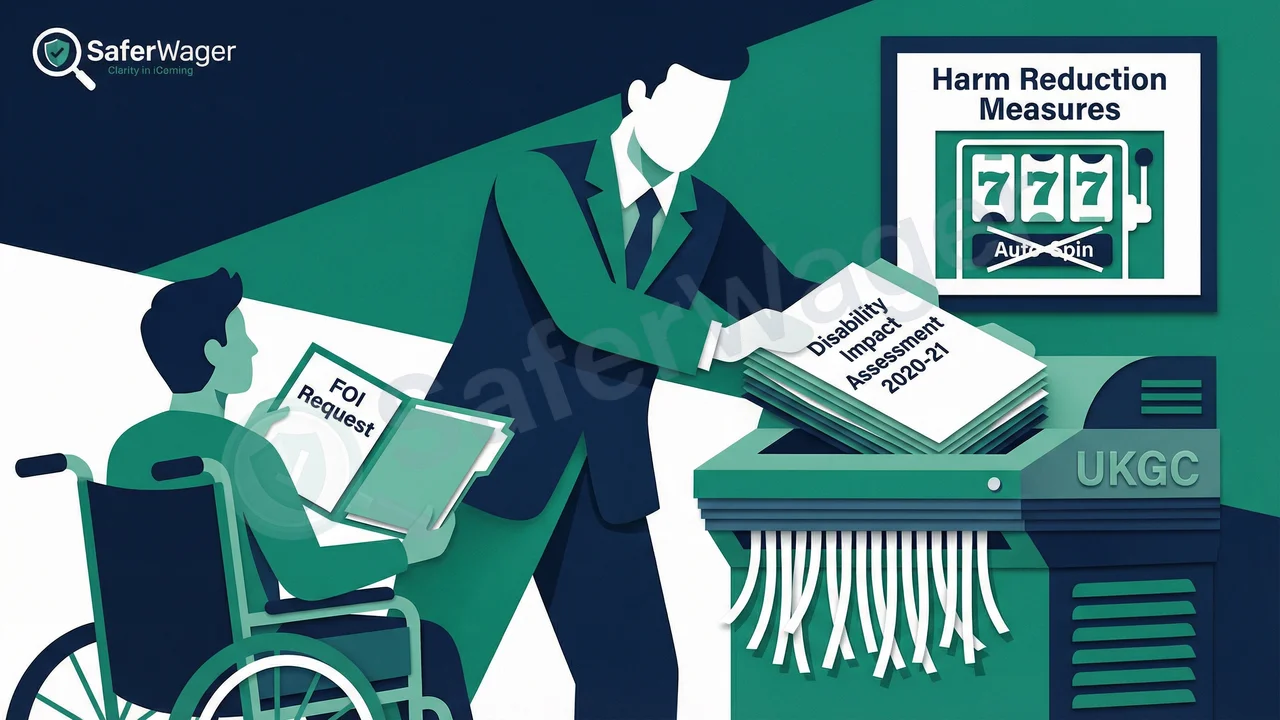
An FOI request has revealed the UK Gambling Commission no longer holds internal emails and correspondence from 2020-2021 related to the disability impact of its auto-spin ban. The regulator cited its data retention policy, pointing to public documents as evidence of its considerations.
Article Content
Key Finding
A Freedom of Information (FOI) request has revealed that the UK Gambling Commission (UKGC) no longer holds internal correspondence and emails from 2020-2021 concerning the disability impact of its ban on the “auto-spin” feature for online slots.
In its response dated 13 August 2025, the regulator stated that these records have been deleted in line with its data retention policy. The UKGC directed the requester to publicly available documents as evidence of its decision-making process.
Context: The Auto-Spin Ban
In 2021, the UKGC implemented a series of new rules for online slot games designed to reduce gambling harm. A key change was the complete removal of the auto-spin feature, which allowed players to set a number of spins to run automatically without manual input for each spin.
While the measure was intended to increase player control and reduce the intensity of play, concerns were raised that it could negatively affect players with physical disabilities or motor impairments who relied on the feature for accessibility.
Details of the FOI Request
The request sought to understand how the UKGC had considered these accessibility issues. It asked for:
- Any Equality Impact Assessments (EIAs) conducted before the decision.
- Internal notes and meeting minutes discussing the impact on people with disabilities.
- Consultation responses that raised accessibility concerns.
- The evidence base used to justify the decision, including any risk-benefit analysis for disabled players.
- Internal correspondence generated in response to complaints about disability discrimination after the ban.
The UKGC's Response
The Gambling Commission did not provide the specific internal documents requested, such as emails or meeting minutes. It cited Section 21 of the FOIA, which exempts information that is reasonably accessible elsewhere.
Instead, the regulator pointed to two documents published on its website:
- Online games design and reverse withdrawals (Consultation Response)
- Assessment of Online Games Design changes
Crucially, the response states: "Due to the Commission’s retention period correspondence and emails from this period [2020-2021] will no longer be held."
The UKGC asserted that its public consultation response demonstrates that it “considered the impact on people with particular health conditions of removing autoplay.” The regulator added that it “concluded that it was still appropriate to proceed with the change as such players were also likely to be exposed to the risks we had identified with autoplay.”
Significance for Consumers
This disclosure raises questions about regulatory transparency. While the UKGC maintains it considered the accessibility impact of the auto-spin ban, the deletion of specific internal records, such as emails and meeting notes, makes it impossible for the public to independently scrutinise the depth and detail of those considerations.
Key questions—such as what specific advice was given, which disability groups (if any) were consulted, and the nature of internal debates—cannot be fully answered by reviewing the primary documents requested.
The response highlights a conflict between broad consumer protection measures and the specific accessibility needs of a subgroup of players. The UKGC's public position is that the harm reduction benefits of removing auto-spin for all players outweighed the negative accessibility impact for some.