
UKGC formal warnings: what a gambling commission warning actually confirms
A UKGC formal warning is a published enforcement finding that a specific breach occurred. It's the lowest severity action on the enforcement scale, but it's still a public regulatory conclusion. Understanding what a warning confirms, and what it doesn't, is important for reading an operator's compliance record accurately.
Filter by Action Type
Formal Warnings List

Kalooki Sportsbook Limited
WarningFollowing a review, the Commission found that Kalooki Sportsbook Limited failed to comply with Licence Condition 2.3.1 (Technical Standards) by having inadequate information security facilities, po...
Shaftesbury Casino Limited
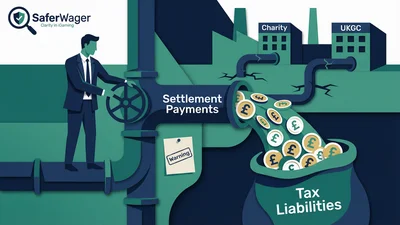
WarningShaftesbury Casino Limited received a warning for failing to cooperate and meet information requirements under the Commission's code. The licensee ceased paying regulatory settlement instalments an...

LEBOM Limited
WarningLEBOM Limited received a formal warning for failing to participate in the national multi-operator self-exclusion scheme (SRCP 3.5.5) and for breaching a licence condition related to providing regul...
What a formal warning confirms and how it differs from informal UKGC engagement
A formal warning isn't the UKGC expressing concern or asking an operator to look at something. It's a concluded enforcement action. The Commission has reviewed the conduct, determined that a breach of licence conditions occurred, and decided that a warning, rather than a financial penalty, suspension, or revocation, is the proportionate outcome. The warning is published, it's part of the operator's enforcement record, and it formally confirms what was found.
That distinction from informal engagement matters. The UKGC regularly contacts operators about potential issues outside a formal enforcement process. It issues guidance, asks for information, and raises concerns through regulatory compliance activity that doesn't produce a published finding. None of that informal contact is an enforcement action. A formal warning is different: it follows a concluded review process and it's recorded in the UKGC's enforcement register.
Why the UKGC issues a warning rather than a more serious sanction
The UKGC's choice of a warning as the outcome reflects a judgment about proportionality. Typically, a warning is appropriate where the breach was isolated rather than systemic, where the harm was limited in scope, where the operator identified and corrected the issue promptly, or where the operator cooperated fully with the UKGC's review and demonstrated immediate remediation. The warning acknowledges that a breach occurred while signalling that the Commission's concerns have been substantially addressed.
The LCCP conditions that underpin most formal warnings tend to involve technical or procedural failures rather than the kind of sustained consumer harm that drives financial penalty and suspension cases. That doesn't mean a warning is trivial. A formal published finding that a breach occurred is a permanent part of the operator's regulatory record, visible to anyone reviewing that record.
The published enforcement record and what it shows
UKGC formal warnings appear on the Commission's enforcement register. The published notice typically identifies the operator, the licence conditions or regulatory requirements that were breached, the period during which the breach occurred, and the basis for the Commission's decision to issue a warning rather than a more serious sanction. Reading the original UKGC notice gives substantially more context than secondary coverage.
Informal UKGC engagement is not enforcement: When the UKGC writes to an operator about a potential compliance issue, requests information, or issues regulatory guidance directed at a specific licensee, none of that is a formal enforcement action and none of it appears in the published enforcement register. Only formal actions, warnings, financial penalties, settlements, suspensions, and revocations, are published. An operator that received an informal query and addressed it without a formal finding isn't carrying an enforcement record for that matter.
Requirements attached to formal warnings and escalation if they're not met
A formal warning rarely stands alone. The UKGC typically accompanies warnings with specific requirements: actions the operator must complete within a defined timeframe to demonstrate that the breach has been addressed. Those requirements might involve implementing new procedures, commissioning a compliance review of the affected area, enhancing staff training, or submitting documentation confirming that specific system changes have been made.
The requirements aren't optional. They're part of the enforcement outcome. An operator that receives a formal warning but fails to meet the attached requirements hasn't resolved the enforcement matter. The UKGC monitors whether conditions are met and can escalate the enforcement if they aren't. What starts as a warning can become the basis for a more serious review if the operator demonstrates it isn't taking the compliance obligation seriously.
What the requirement-setting process looks like
When the UKGC concludes a review with a warning, the notice it issues sets out both the findings and the required remediation steps. Deadlines for each requirement are specified. The operator must provide the UKGC with evidence that each step has been completed, and that evidence is reviewed by the Commission. The process isn't self-reported compliance. It involves the operator submitting documentation that the UKGC evaluates before treating the requirements as satisfied.
Where the operator completes the requirements within the stated deadlines and the UKGC accepts the evidence as adequate, the warning is treated as resolved. The published record still shows the warning. Resolution doesn't remove the enforcement finding. It closes the active compliance obligation that accompanied it.
Escalation from warning to more serious action
- Failure to meet requirements within the deadline triggers a further UKGC review. The Commission can open a new licence review based on the failure to comply with the warning's conditions, and that review isn't bounded by the original finding. It can examine broader compliance across the licence conditions.
- Repeat breaches in the same area after a warning was issued signal to the UKGC that the warning wasn't effective in producing genuine change. A second finding in the same category is treated more seriously. The proportionality assessment shifts. A warning isn't the proportionate outcome where a prior warning for the same type of failing was already issued.
- Discovery of wider systemic failures during the period when the operator is meeting warning requirements can result in the UKGC opening a full licence review rather than closing the matter at warning level. The investigation into the specific breach that triggered the warning can reveal compliance problems in adjacent areas.
What formal warnings tell consumers about an operator's compliance culture
A single formal warning, resolved several years ago, with no subsequent enforcement activity, is a different signal from multiple warnings across a short period, or a warning that was followed by a more serious enforcement action. The raw count of enforcement actions on an operator's record matters less than the pattern they reveal.
One warning from early in an operator's operating history that reflects teething compliance issues in a growing business is not the same regulatory signal as a warning issued to an established, long-running operation that should by now have robust compliance infrastructure. Context determines what the enforcement record actually communicates about the operator's approach to its licence obligations.
Single warnings vs patterns of warnings
The UKGC publishes its enforcement outcomes with enough detail to allow the breach category to be identified. A warning for a specific procedural failure in one part of the business, addressed quickly, tells a different story from a warning for failing to implement adequate customer interaction procedures under LCCP SR Code 3.4.1, which is a condition directly tied to consumer protection.
Where multiple warnings appear across a short timeframe, the pattern raises a more substantive concern. Either the operator has a systemic compliance weakness that isolated remediation isn't addressing, or different parts of the business are failing independently, which suggests governance failures at a level above the specific breach in each case.
What the gap between warning and next enforcement action reveals
An operator that received a formal warning and then had no further enforcement activity for an extended period is demonstrating that the warning prompted genuine compliance improvement. The absence of further enforcement isn't conclusive, because the UKGC's review frequency and focus areas vary, but a long clean period after a warning is a positive signal.
An operator that received a warning and then received a financial penalty or further enforcement action in the same or related compliance area within a few years is demonstrating that the warning didn't produce lasting change. That pattern is more significant in assessing ongoing risk than the original warning alone.
- Isolated warning, resolved
- A single formal warning with requirements met and no subsequent enforcement. The operator had a specific breach, addressed it under regulatory direction, and maintained compliance afterward. Lowest concern level in the warning category.
- Warning with unresolved requirements
- A warning where the operator failed to meet the attached compliance requirements within the stated deadline. Typically escalates to a further UKGC review. A significant negative signal about the operator's willingness to comply with regulatory direction.
- Multiple warnings, same category
- Successive warnings in the same area of licence conditions. The UKGC's willingness to issue a second warning rather than escalating directly to a financial penalty depends on the circumstances, but the pattern signals that prior regulatory intervention hasn't produced effective compliance change.
- Warning preceding financial penalty
- A warning that was followed by a more serious enforcement action, particularly a financial penalty for the same type of breach. The prior warning establishes that the operator knew its approach was non-compliant and continued it anyway. This context typically increases the severity assessment for the subsequent action.
How formal warnings feed into Saferwager severity scoring and Trust Scores
Formal warnings are rated at severity 1 to 2 on Saferwager's enforcement scale. Severity 1 applies to warnings where the breach was isolated, the operator remediated promptly, and the warning has been resolved. Severity 2 applies where there are aggravating factors: the breach was more significant in scope, remediation was slow, or the warning sits alongside other enforcement activity that suggests a pattern rather than an isolated incident.
Warnings don't score at 3 or above. Those ratings are reserved for more serious enforcement outcomes like financial penalties, settlements, and sanctions that reflect sustained or systemic failures. A warning at the top of the severity scale for warnings (severity 2) is still materially less significant than a financial penalty at the bottom of its range. The distinction in the scale reflects the UKGC's own proportionality assessment: the Commission chose a warning because the breach didn't warrant a more serious outcome.
Why warnings still appear in Saferwager's enforcement index
Including formal warnings in the enforcement index is deliberate. A warning is a published regulatory finding. It confirms a breach occurred. Excluding it would create a misleading picture of an operator's enforcement history by suggesting the record is cleaner than it is. An operator profile that shows only financial penalties and settlements, while omitting formal warnings, understates the operator's engagement with the enforcement process.
For most operators, warnings are the only enforcement actions in their record. Not surfacing that record because it's at the lower end of severity would mean those operators appear to have no enforcement history at all, which isn't accurate. The severity rating and the contextual information on each warning entry make clear that the finding is a lower-severity outcome than a penalty or suspension.
Recency weighting and how warnings decay in the Trust Score
| Warning type | Severity score | Trust Score impact | Recency weighting |
|---|---|---|---|
| Single isolated warning, requirements met | 1 | Low weight in enforcement sub-score, decays relatively quickly with clean record | Fastest decay of any enforcement category; effectively minimal impact after several years of clean operation |
| Warning with aggravating factors | 2 | Moderate low weight; slower decay than severity-1 warnings | Decays more slowly, particularly where the breach touched consumer protection conditions |
| Multiple warnings, same category | 2, cumulative effect | Pattern of repeated warnings adds to the enforcement sub-score cumulatively, not just per individual action | Slower decay; pattern weighting persists longer than individual warning weight would |
| Warning preceding more serious action | 2, contextualised with subsequent action | Warning contributes context to the severity assessment of the subsequent action; both records contribute to the enforcement sub-score | The warning's own weight decays, but its role as prior notice for the subsequent breach is noted in the enforcement record |